Zhang Yingying, Li Qianbing, Wang Xiangfei
School of Journalism and Communication, Wuhan Sports University, Wuhan, China.
Front Public Health. 2025 Jul 4;13:1588041. doi: 10.3389/fpubh.2025.1588041. eCollection 2025.
Sarcopenia is a condition that adversely affects individuals' quality of life and physical health. Exposure to heavy metals poses a significant risk to human health; however, the impact of heavy metal exposure on sarcopenia remains unclear. Therefore, this study expects to construct a risk prediction machine model of heavy metal exposure on sarcopenia and to interpret and analyze it.
Model construction was based on data from the NHANES database, covering the years 2011 to 2018. The predictor variables included BA, CD, CO, CS, MN, MO, PB, SB, SN, TL, and W. Additionally, demographic characteristics and health factors were included in the study as confounders. After identifying the core variables, optimal machine learning models were constructed, and SHAP analyses were performed.
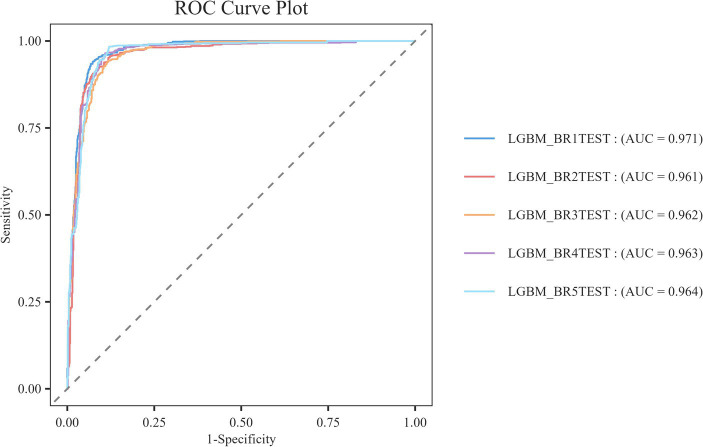
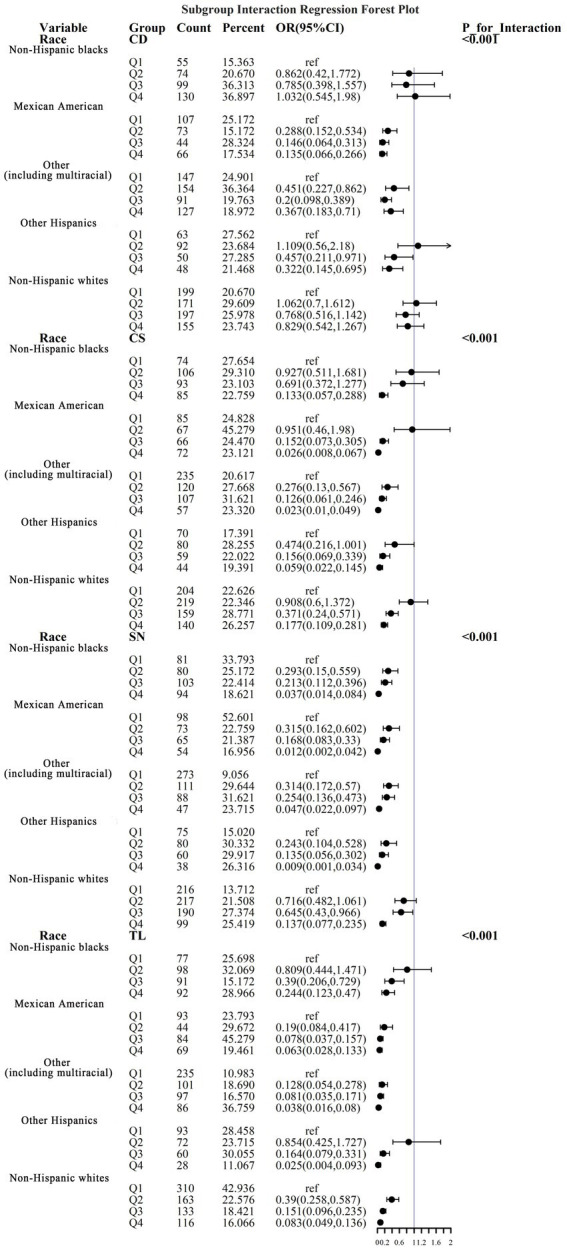
We found that the LGBM model exhibited the best predictive performance. SHAP analysis revealed that TL, SN, and CS negatively influenced the prediction of sarcopenia, while CD positively contributed to it. Additionally, le8 BMI was the covariate that had the most significant positive impact on the prediction of sarcopenia in our model.
For the first time, we have developed a machine learning (ML) model to predict sarcopenia based on indicators of heavy metal exposure. This model has accurately identified a series of key factors that are strongly associated with sarcopenia induced by heavy metal exposure. We can now identify individuals at an early stage who are suffering from sarcopenia due to heavy metal exposure, thereby reducing the physical and economic burden on public health.
肌肉减少症是一种对个体生活质量和身体健康产生不利影响的病症。接触重金属对人类健康构成重大风险;然而,重金属暴露对肌肉减少症的影响仍不清楚。因此,本研究期望构建一个关于重金属暴露对肌肉减少症的风险预测机器模型并对其进行解释和分析。
模型构建基于美国国家健康与营养检查调查(NHANES)数据库2011年至2018年的数据。预测变量包括钡(BA)、镉(CD)、一氧化碳(CO)、铯(CS)、锰(MN)、钼(MO)、铅(PB)、锶(SB)、锡(SN)、铊(TL)和钨(W)。此外,人口统计学特征和健康因素作为混杂因素纳入研究。在确定核心变量后,构建了最优机器学习模型,并进行了SHAP分析。
我们发现LightGBM模型表现出最佳预测性能。SHAP分析表明,铊(TL)、锡(SN)和铯(CS)对肌肉减少症的预测有负面影响,而镉(CD)则有正面贡献。此外,在我们的模型中,低体重指数(BMI)是对肌肉减少症预测有最显著正向影响的协变量。
我们首次开发了一种基于重金属暴露指标预测肌肉减少症的机器学习(ML)模型。该模型准确识别了一系列与重金属暴露所致肌肉减少症密切相关的关键因素。我们现在可以在早期识别出因重金属暴露而患有肌肉减少症的个体,从而减轻公共卫生的身体和经济负担。