Zheng Piao-Xue, Lu Chun-Lian, Liang Yan-Li, Ma Yu-Ming, Peng Jia-Wen, Xie Jing-Jing, Wei Jia-Li, Chen Si-Si, Ma Zhi-Dong, Zhu Hua, Liang Jie
College of Pharmacy, Guangxi University of Chinese Medicine, Nanning 530200, Guangxi Zhuang Autonomous Region, China.
Guangxi Key Laboratory of Zhuang and Yao Ethnic Medicine, Guangxi University of Chinese Medicine, Nanning 530200, Guangxi Zhuang Autonomous Region, China.
World J Diabetes. 2025 Jul 15;16(7):104512. doi: 10.4239/wjd.v16.i7.104512.
Lour leaf components (DLC) contain key active compounds such as quercetin, kaempferol, and quercitrin. They are effective for managing type 2 diabetes mellitus (T2DM), though the exact mechanism by which DLC acts remains unclear.
To investigate the material basis and mechanism underlying the therapeutic effect of DLC in T2DM.
T2DM was triggered in rats using a high-sugar, high-fat diet alongside 35 mg/kg streptozotocin. The effect of DLC on the intestinal microbiota in T2DM rats was analyzed 16S rDNA sequencing. Targeted metabolomics was conducted to evaluate the impact of DLC on the levels of nine short-chain fatty acids (SCFAs). Untargeted metabolomics examined DLC-induced alterations in fecal metabolites and associated metabolic pathways. Additionally, Spearman's correlation analysis assessed gut microbiota and fecal metabolite relationships.
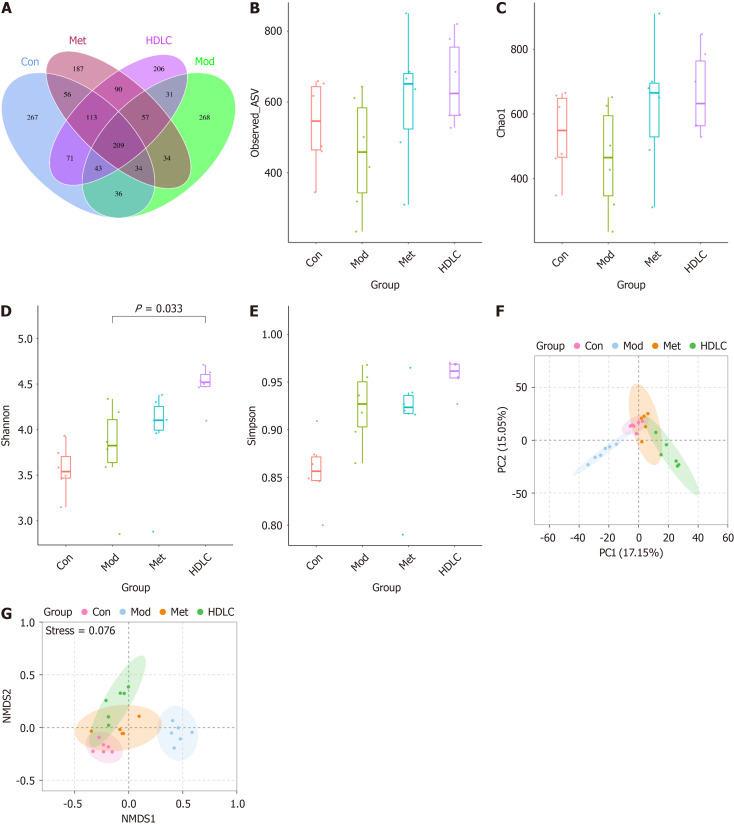
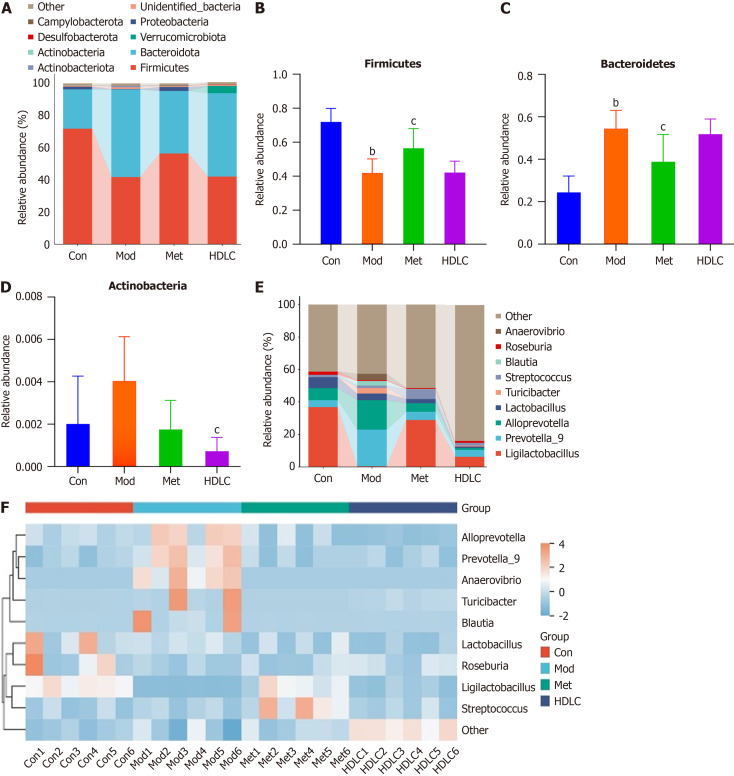
DLC significantly attenuated pathological weight loss, reduced fasting blood glucose levels, restored blood sugar homeostasis, and ameliorated dyslipidemia in T2DM rats. The 16S rDNA sequencing revealed that DLC enhanced microbial diversity and reversed intestinal dysbiosis. Targeted metabolomics indicated decreased acetic acid and propionic acid levels and increased butyric acid, isobutyric acid, and 2-methylbutyric acid levels after DLC treatment. Untargeted metabolomics revealed 57 metabolites with altered expression associated with amino acid, carbohydrate, purine, and biotin pathways. The Spearman analysis demonstrated significant links between specific gut microbiota taxa and fecal metabolites.
DLC may exert hypoglycemic effects by modulating intestinal flora genera, SCFA levels, and fecal metabolites.
罗汉果叶成分(DLC)含有槲皮素、山奈酚和芦丁等关键活性化合物。它们对2型糖尿病(T2DM)有效,不过DLC发挥作用的确切机制尚不清楚。
研究DLC对T2DM治疗作用的物质基础和机制。
采用高糖高脂饮食联合35mg/kg链脲佐菌素诱导大鼠患T2DM。通过16S rDNA测序分析DLC对T2DM大鼠肠道微生物群的影响。进行靶向代谢组学以评估DLC对9种短链脂肪酸(SCFA)水平的影响。非靶向代谢组学检测DLC诱导的粪便代谢物变化及相关代谢途径。此外,Spearman相关性分析评估肠道微生物群与粪便代谢物的关系。
DLC显著减轻了T2DM大鼠的病理性体重减轻,降低了空腹血糖水平,恢复了血糖稳态,并改善了血脂异常。16S rDNA测序显示DLC增加了微生物多样性并逆转了肠道生态失调。靶向代谢组学表明,DLC治疗后乙酸和丙酸水平降低,丁酸、异丁酸和2-甲基丁酸水平升高。非靶向代谢组学显示有57种代谢物的表达发生改变,与氨基酸、碳水化合物、嘌呤和生物素途径有关。Spearman分析表明特定肠道微生物分类群与粪便代谢物之间存在显著联系。
DLC可能通过调节肠道菌群属、SCFA水平和粪便代谢物发挥降糖作用。