• 文献检索
  • 文档翻译
  • 深度研究
  • 学术资讯
  • Suppr Zotero 插件Zotero 插件
  • 邀请有礼
  • 套餐&价格
  • 历史记录
应用&插件
Suppr Zotero 插件Zotero 插件浏览器插件Mac 客户端Windows 客户端微信小程序
定价
高级版会员购买积分包购买API积分包
服务
文献检索文档翻译深度研究API 文档MCP 服务
关于我们
关于 Suppr公司介绍联系我们用户协议隐私条款
关注我们

Suppr 超能文献

核心技术专利:CN118964589B侵权必究
粤ICP备2023148730 号-1Suppr @ 2026

文献检索

告别复杂PubMed语法,用中文像聊天一样搜索,搜遍4000万医学文献。AI智能推荐,让科研检索更轻松。

立即免费搜索

文件翻译

保留排版,准确专业,支持PDF/Word/PPT等文件格式,支持 12+语言互译。

免费翻译文档

深度研究

AI帮你快速写综述,25分钟生成高质量综述,智能提取关键信息,辅助科研写作。

立即免费体验

亲子对含糖饮料消费行为的相互影响:行为者-伙伴分析

Parent-Child Mutual Influences on Sugar-Sweetened Beverage Consumption Behaviors: Actor-Partner Analysis.

作者信息

Lwin May O, Seet Allison, Leo Seraphina, Schulz Peter J

机构信息

Wee Kim Wee School of Communication and Information, Nanyang Technological University, Singapore, Singapore.

Institute of Communication and Health, Università della Svizzera italiana, Lugano, Switzerland.

出版信息

JMIR Pediatr Parent. 2025 Jul 24;8:e76943. doi: 10.2196/76943.

DOI:10.2196/76943
PMID:40705441
原文链接:https://pmc.ncbi.nlm.nih.gov/articles/PMC12332451/
Abstract

BACKGROUND

Childhood obesity remains a significant global public health issue, with consumption of sugar-sweetened beverages (SSBs) recognized in scientific studies as a key contributing factor. While family influences on children's dietary behaviors and their effects on obesity risk are well-documented, the dynamics between parents and children in shaping SSB consumption remain underexplored.

OBJECTIVE

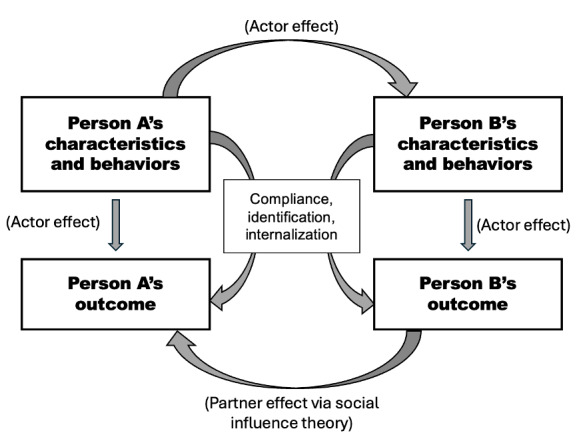
Drawing on social influence theory, this study examines how parent-child perceptions and consumption intentions regarding SSBs are interrelated and the potential mediating role of attitudes. We also studied how engagement with food-related content on social media may relate to consumption intentions.

METHODS

We conducted a face-to-face survey of 250 parent-child dyads (N=500) living in public housing in Singapore, a country tackling overweight in its population. Dichotomous items were used to measure cognitive perceptions and attitudes toward SSBs. Both parent and child participants self-reported their intention to consume SSBs. Based on the World Health Organization (WHO) definition of SSBs, visuals of culturally relevant drink products were used in the survey to visualize SSBs. Dyadic data analysis using the MEDYAD tool was conducted to test the actor-partner interdependence model (APIM) and examine the impact of the parent-child dyadic relationship on individuals' intention to consume sugary drinks.

RESULTS

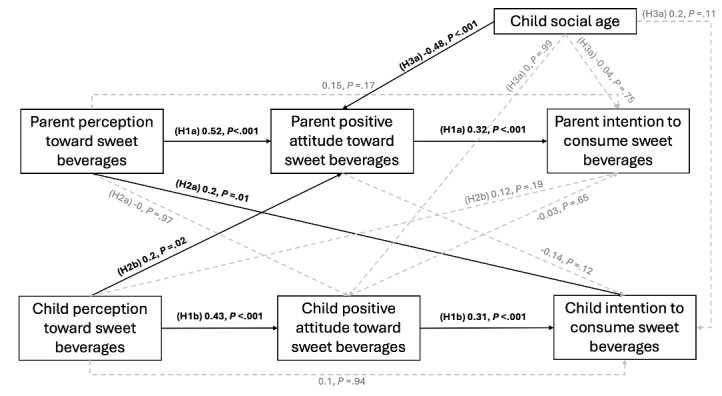
Pearson correlation results indicated positive associations between parent and child cognitive perceptions and intentions to consume SSBs. Path analysis revealed strong actor effects with both parents' (β=.52, P<.001) and children's (β=.43, P<.001) own perceptions predicting their attitudes and subsequent intentions to consume SSBs (parent: β=.32, P<.001; child: β=.31, P<.001). Partner effects also emerged: parental perceptions influenced children's intentions (β=.20, P=.01), while children's perceptions shaped parental attitudes (β=.20, P=.02), highlighting the reciprocal nature of influence. While digital food media engagement was positively associated with consumption intentions, its effects were relatively modest and not central to the dyadic pathways.

CONCLUSIONS

Our study findings highlight the reciprocal effects of both parents and children in influencing healthier behaviors and hence provide insights to aid obesity prevention efforts. By addressing the interdependent associations of parent-child dynamics, this research bridges theory and health communication practice, offering a novel framework for combating obesity through family-centered approaches.

摘要

背景

儿童肥胖仍然是一个重大的全球公共卫生问题,科学研究认为饮用含糖饮料(SSB)是一个关键的促成因素。虽然家庭对儿童饮食行为的影响及其对肥胖风险的作用已有充分记录,但父母与子女在形成含糖饮料消费习惯方面的动态关系仍未得到充分探索。

目的

本研究借鉴社会影响理论,探讨父母与子女对含糖饮料的认知和消费意愿如何相互关联,以及态度可能起到的中介作用。我们还研究了在社交媒体上接触与食品相关的内容与消费意愿之间的关系。

方法

我们对居住在新加坡公共住房中的250对亲子(N = 500)进行了面对面调查,新加坡是一个正在应对民众超重问题的国家。采用二分法项目来衡量对含糖饮料的认知和态度。父母和儿童参与者都自我报告了他们饮用含糖饮料的意愿。根据世界卫生组织(WHO)对含糖饮料的定义,调查中使用了具有文化相关性的饮料产品图片来直观呈现含糖饮料。使用MEDYAD工具进行二元数据分析,以测试行为者-伙伴相互依赖模型(APIM),并研究亲子二元关系对个人饮用含糖饮料意愿的影响。

结果

皮尔逊相关分析结果表明,父母与子女对含糖饮料的认知和饮用意愿之间存在正相关。路径分析显示出强烈的行为者效应,父母(β = 0.52,P < 0.001)和子女(β = 0.43,P < 0.001)自身的认知都能预测他们对含糖饮料的态度以及随后的饮用意愿(父母:β = 0.32,P < 0.001;子女:β = 0.31,P < 0.001)。伙伴效应也很明显:父母的认知会影响子女的意愿(β = 0.20,P = 0.01),而子女的认知会塑造父母的态度(β = 0.20,P = 0.02),突出了影响的相互性。虽然数字食品媒体参与度与消费意愿呈正相关,但其影响相对较小,并非二元路径的核心因素。

结论

我们的研究结果突出了父母和子女在影响更健康行为方面的相互作用,从而为肥胖预防工作提供了有益见解。通过解决亲子动态关系中的相互依存关联,本研究将理论与健康传播实践联系起来,提供了一个以家庭为中心的肥胖防治新框架。
https://cdn.ncbi.nlm.nih.gov/pmc/blobs/1427/12332451/15a681cac401/pediatrics_v8i1e76943_fig2.jpg
https://cdn.ncbi.nlm.nih.gov/pmc/blobs/1427/12332451/0019f5dcafb3/pediatrics_v8i1e76943_fig1.jpg
https://cdn.ncbi.nlm.nih.gov/pmc/blobs/1427/12332451/15a681cac401/pediatrics_v8i1e76943_fig2.jpg
https://cdn.ncbi.nlm.nih.gov/pmc/blobs/1427/12332451/0019f5dcafb3/pediatrics_v8i1e76943_fig1.jpg
https://cdn.ncbi.nlm.nih.gov/pmc/blobs/1427/12332451/15a681cac401/pediatrics_v8i1e76943_fig2.jpg

相似文献

1
Parent-Child Mutual Influences on Sugar-Sweetened Beverage Consumption Behaviors: Actor-Partner Analysis.亲子对含糖饮料消费行为的相互影响:行为者-伙伴分析
JMIR Pediatr Parent. 2025 Jul 24;8:e76943. doi: 10.2196/76943.
2
How pictorial warnings change parents' purchases of sugar-sweetened beverage for their children: mechanisms of impact.图片警示如何改变父母为孩子购买含糖饮料:影响机制。
Int J Behav Nutr Phys Act. 2023 Jun 23;20(1):76. doi: 10.1186/s12966-023-01469-3.
3
Healthy eating interventions delivered in early childhood education and care settings for improving the diet of children aged six months to six years.在幼儿教育和照护环境中实施的健康饮食干预措施,以改善 6 个月至 6 岁儿童的饮食。
Cochrane Database Syst Rev. 2023 Aug 22;8(8):CD013862. doi: 10.1002/14651858.CD013862.pub3.
4
Chile's 2014 sugar-sweetened beverage tax and changes in prices and purchases of sugar-sweetened beverages: An observational study in an urban environment.智利 2014 年含糖饮料税与含糖饮料价格和购买量的变化:城市环境下的观察性研究。
PLoS Med. 2018 Jul 3;15(7):e1002597. doi: 10.1371/journal.pmed.1002597. eCollection 2018 Jul.
5
Factors that influence parents' and informal caregivers' views and practices regarding routine childhood vaccination: a qualitative evidence synthesis.影响父母和非正式照顾者对常规儿童疫苗接种看法和做法的因素:定性证据综合分析。
Cochrane Database Syst Rev. 2021 Oct 27;10(10):CD013265. doi: 10.1002/14651858.CD013265.pub2.
6
Face-to-face interventions for informing or educating parents about early childhood vaccination.针对向父母宣传或教育幼儿疫苗接种情况的面对面干预措施。
Cochrane Database Syst Rev. 2018 May 8;5(5):CD010038. doi: 10.1002/14651858.CD010038.pub3.
7
Parent training interventions for Attention Deficit Hyperactivity Disorder (ADHD) in children aged 5 to 18 years.针对5至18岁儿童注意力缺陷多动障碍(ADHD)的家长培训干预措施。
Cochrane Database Syst Rev. 2011 Dec 7;2011(12):CD003018. doi: 10.1002/14651858.CD003018.pub3.
8
Parents' and informal caregivers' views and experiences of communication about routine childhood vaccination: a synthesis of qualitative evidence.父母及非正式照料者关于儿童常规疫苗接种沟通的观点与经历:定性证据综述
Cochrane Database Syst Rev. 2017 Feb 7;2(2):CD011787. doi: 10.1002/14651858.CD011787.pub2.
9
The impact of pictorial health warnings on purchases of sugary drinks for children: A randomized controlled trial.图片健康警示对儿童购买含糖饮料的影响:一项随机对照试验。
PLoS Med. 2022 Feb 1;19(2):e1003885. doi: 10.1371/journal.pmed.1003885. eCollection 2022 Feb.
10
Parental perceptions and self-efficacy in managing childhood obesity: a cross-sectional study from Türkiye.父母对儿童肥胖管理的认知与自我效能:来自土耳其的一项横断面研究。
BMC Pediatr. 2025 Jul 1;25(1):477. doi: 10.1186/s12887-025-05830-2.

本文引用的文献

1
Burdens of type 2 diabetes and cardiovascular disease attributable to sugar-sweetened beverages in 184 countries.184个国家中由含糖饮料导致的2型糖尿病和心血管疾病负担
Nat Med. 2025 Feb;31(2):552-564. doi: 10.1038/s41591-024-03345-4. Epub 2025 Jan 6.
2
Exploring Sugary Drink Consumption and Perceptions among Primary-School-Aged Children and Parents in Australia.探讨澳大利亚小学生及其家长的含糖饮料消费和认知。
Nutrients. 2024 Sep 30;16(19):3320. doi: 10.3390/nu16193320.
3
Associations of sugar-related food parenting practices and parental feeding styles with prospective dietary behavior of children and adolescents: a systematic review of the literature from 2017 to 2023.
糖相关食物养育实践和父母喂养方式与儿童和青少年预期饮食行为的关联:2017 年至 2023 年文献的系统综述。
Front Public Health. 2024 Aug 14;12:1382437. doi: 10.3389/fpubh.2024.1382437. eCollection 2024.
4
Intake of sugar sweetened beverages among children and adolescents in 185 countries between 1990 and 2018: population based study.1990 年至 2018 年 185 个国家儿童和青少年摄入含糖饮料情况:基于人群的研究。
BMJ. 2024 Aug 7;386:e079234. doi: 10.1136/bmj-2024-079234.
5
Relationship between motivations and dietary behaviours within parent-adolescent dyads: Application of actor-partner interdependence models.亲-子动机与饮食行为关系研究:演员-同伴相互依赖模型的应用。
Pediatr Obes. 2024 Oct;19(10):e13153. doi: 10.1111/ijpo.13153. Epub 2024 Aug 4.
6
Sugar-sweetened beverages consumption increases the risk of metabolic syndrome and its components in adults: Consistent and robust evidence from an umbrella review.含糖饮料摄入会增加成年人代谢综合征及其各组分的患病风险:来自伞式评价的一致性和强有力证据。
Clin Nutr ESPEN. 2023 Oct;57:655-664. doi: 10.1016/j.clnesp.2023.08.001. Epub 2023 Aug 12.
7
The global agenda on obesity: what does this mean for Singapore?全球肥胖问题议程:这对新加坡意味着什么?
Singapore Med J. 2023 Mar;64(3):182-187. doi: 10.4103/singaporemedj.SMJ-2023-018.
8
Economic burden of childhood overweight and obesity: A systematic review and meta-analysis.儿童超重和肥胖的经济负担:系统评价和荟萃分析。
Obes Rev. 2023 Feb;24(2):e13535. doi: 10.1111/obr.13535. Epub 2022 Nov 27.
9
Prospective association of family members' sugar-sweetened beverages intake with children's sugar-sweetened beverages consumption in China.中国儿童含糖饮料消费与家庭成员含糖饮料摄入的前瞻性关联研究。
Eur J Nutr. 2023 Feb;62(1):175-184. doi: 10.1007/s00394-022-02971-3. Epub 2022 Aug 5.
10
Sugar Is the Key Cause of Overweight/Obesity in Sugar-Sweetened Beverages (SSB).糖是含糖饮料(SSB)导致超重/肥胖的关键原因。
Front Nutr. 2022 Jun 28;9:885704. doi: 10.3389/fnut.2022.885704. eCollection 2022.