Zhang Linlin, Xiao Yuyao, Wang Dan, Han Xuerong, Zhou Ruoqi, Zhang Huiying, Zhu Kexin, Wu Junyao, Sun Xiance, Li Shuangyue
School of Public Health, Dalian Medical University, No. 9 West Section Lvshun South Road, Dalian 116044, China.
College of Traditional Chinese Medicine, Beijing University of Chinese Medicine, No. 6 Wangjing South Road, Beijing 102401, China.
Toxics. 2025 Jun 26;13(7):538. doi: 10.3390/toxics13070538.
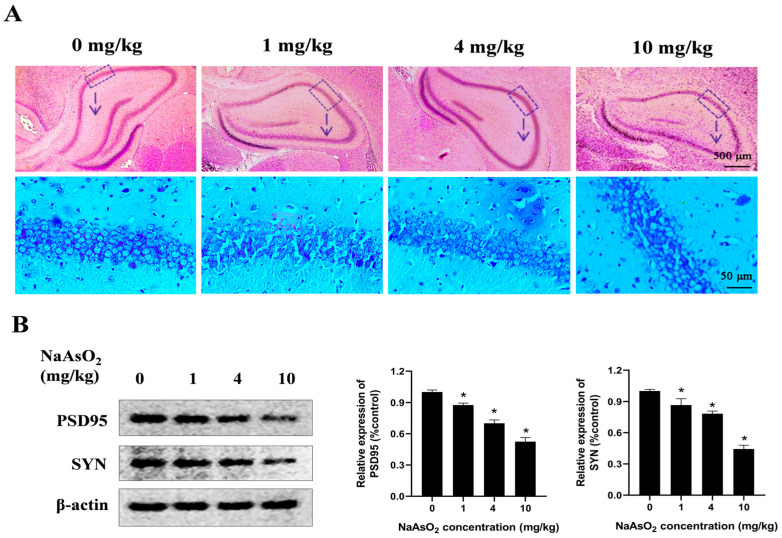
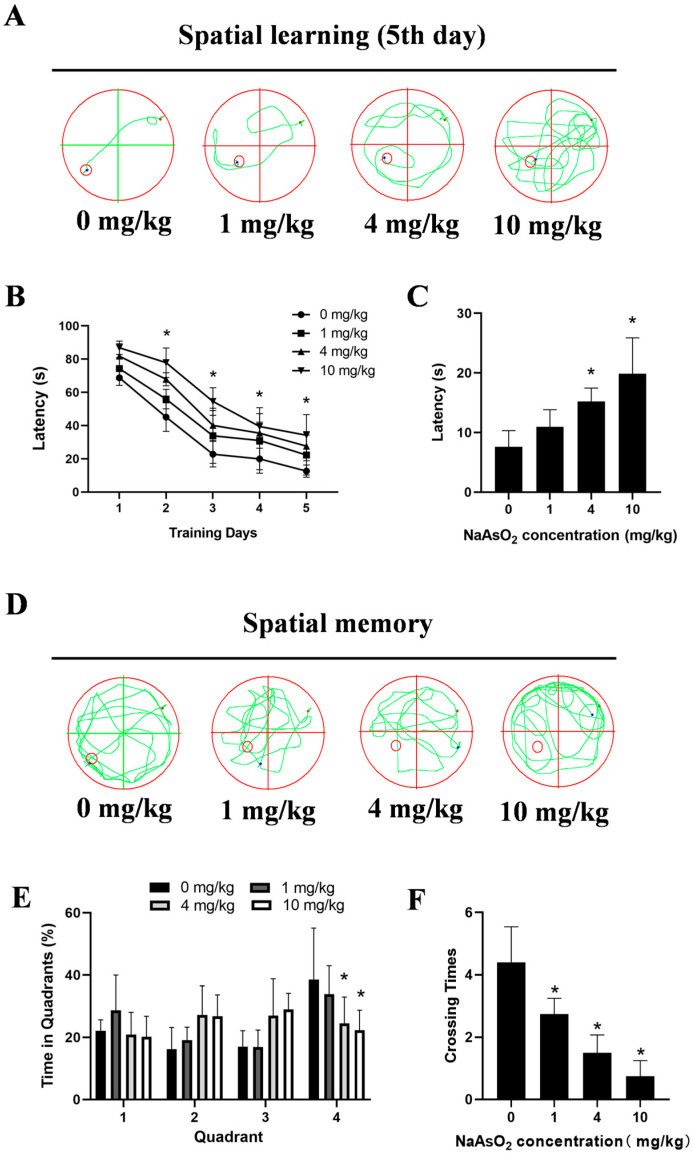
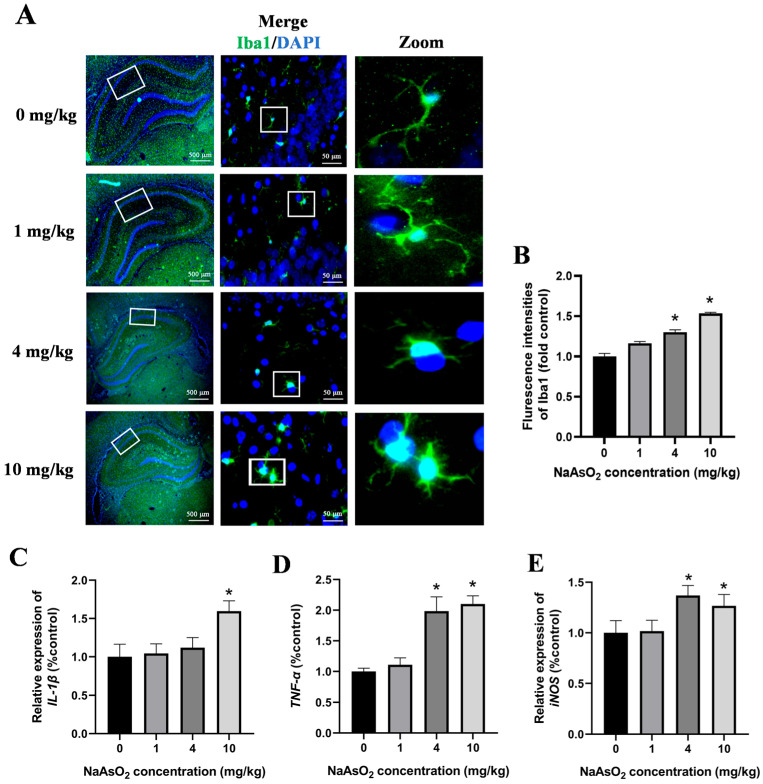
Inorganic arsenic [As(III) and As(V)] is a pervasive environmental contaminant in groundwater systems, early-life exposure to which is associated with an impaired cognitive ability and an increased risk of neurobehavioral disorders. Although the effect of As(III) on the neurons is well studied, the involvement of the microglia remains unclear. In this study, the effects of sodium arsenite (NaAsO) on microglial activation and the underlying NLRP3 inflammasome mechanism were determined. Pregnant rats were gavaged with NaAsO (0, 1, 4, and 10 mg/kg body weight), which dissociates in aqueous solutions into bioactive arsenite species [As(OH)], from gestational day 1 (GD1) to postnatal day 21 (PND21). The results showed that As(III) induces learning and memory impairments and microglial activation in the hippocampus of offspring rats (PND21). Increased expression of NLRP3, the activation of caspase-1, and the production of interleukin-1β were observed in both the hippocampus of As(III)-exposed offspring rats and As(III)-exposed microglial BV2 cells under culture conditions. Interestingly, blocking the NLRP3 inflammasome using MCC950 mitigated its activation. Furthermore, inhibition of NADPH oxidase 2 (NOX2) using apocynin or specific siRNA significantly reduced As(III)-induced microglial NLRP3 inflammasome activation. In addition, inactivation of the microglial NLRP3 inflammasome or NOX2 markedly rescued As(III)-induced neurotoxicity in the hippocampal HT22 cells. Taken together, this study reveals that NOX2/NLRP3-inflammasome-dependent microglial activation promotes As(III)-induced learning and memory impairments in developmental rats.
无机砷[As(III)和As(V)]是地下水系统中普遍存在的环境污染物,生命早期接触无机砷与认知能力受损和神经行为障碍风险增加有关。尽管对As(III)对神经元的影响已有充分研究,但小胶质细胞在其中的作用仍不清楚。在本研究中,确定了亚砷酸钠(NaAsO)对小胶质细胞活化的影响及其潜在的NLRP3炎性小体机制。从妊娠第1天(GD1)到出生后第21天(PND21),给怀孕大鼠灌胃NaAsO(0、1、4和10mg/kg体重),其在水溶液中解离为生物活性亚砷酸盐[As(OH)]。结果表明,As(III)可诱导子代大鼠(PND21)海马体出现学习和记忆障碍以及小胶质细胞活化。在As(III)暴露的子代大鼠海马体和培养条件下As(III)暴露的小胶质细胞BV2细胞中均观察到NLRP3表达增加、caspase-1活化以及白细胞介素-1β的产生。有趣的是,使用MCC950阻断NLRP3炎性小体可减轻其活化。此外,使用夹竹桃麻素或特异性小干扰RNA抑制NADPH氧化酶2(NOX2)可显著降低As(III)诱导的小胶质细胞NLRP3炎性小体活化。此外,小胶质细胞NLRP3炎性小体或NOX2失活可显著挽救As(III)诱导的海马HT22细胞神经毒性。综上所述,本研究表明,NOX2/NLRP3炎性小体依赖性小胶质细胞活化促进了As(III)诱导的发育中大鼠的学习和记忆障碍。