Su Zhiwei, Sun Ningze, Yin Chenghong, Zheng Xiaoyan
Beijing Friendship Hospital, Beijing Key Laboratory for Research on Prevention and Treatment of Tropical Diseases, Beijing Institute of Tropical Medicine, Capital Medical University, Yongan Road 95#, Xicheng District, Beijing, 100050, P.R. China.
Beijing Obstetrics and Gynecology Hospital, Beijing Maternal and Child Health Care Hospital, Capital Medical University, Beijing, 100026, China.
BMC Microbiol. 2025 Jul 25;25(1):452. doi: 10.1186/s12866-025-04192-0.
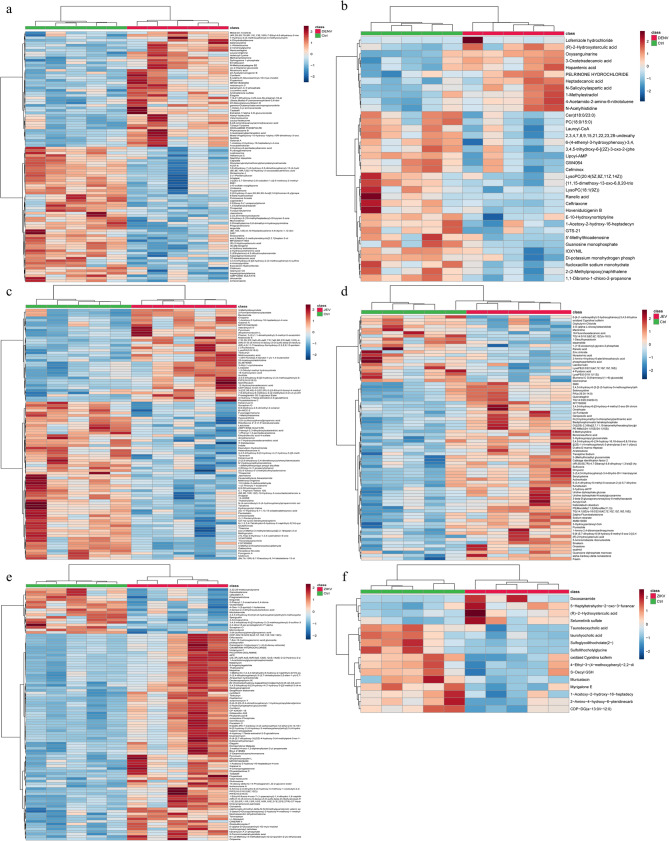
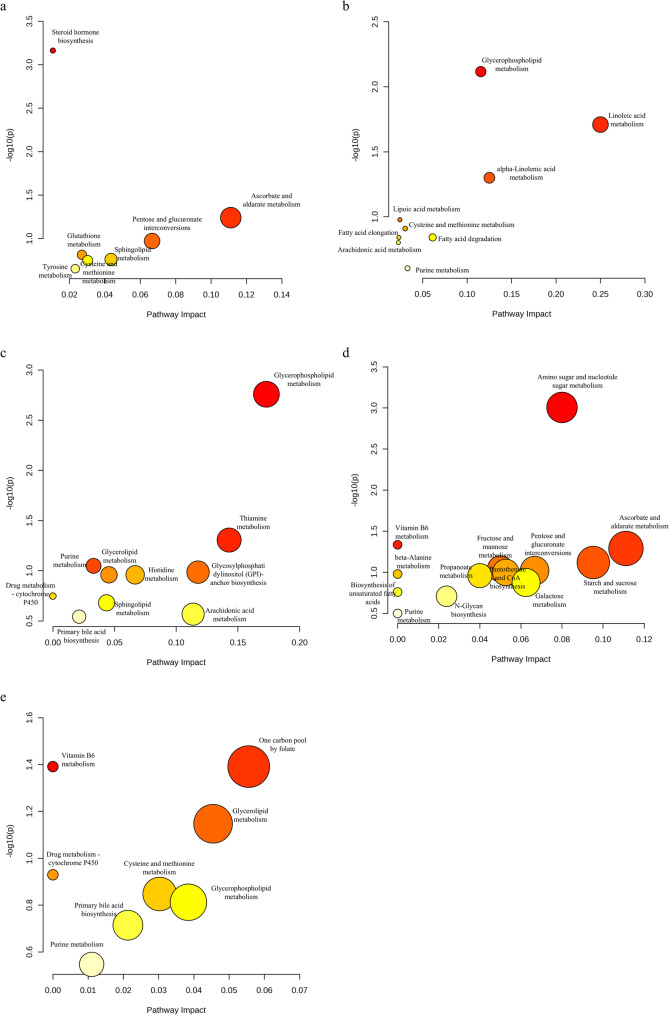
Annually, millions of people are affected by mosquito-borne Orthoflavivirus infections. These include diseases caused by the Dengue virus (DENV), Japanese encephalitis virus (JEV), and Zika virus (ZIKV), posing a formidable challenge to global public health. This research aims to explore the potential role of the Gut-Brain Axis (GBA) in Orthoflavivirus infection, particularly focusing on key metabolites involved in the process of viral invasion into the central nervous system. Given the advantages of metabolomics technology in metabolite identification. Therefore, we employed an untargeted Liquid Chromatography-Mass Spectrometry (LC-MS) metabolomics platform to examine alterations in metabolite concentrations within the feces and brain tissues of mice infected with DENV, JEV, or ZIKV, as well as uninfected controls. The results showed that 225, 240, and 252 differential metabolites were identified in the fecal metabolome of DENV, JEV, and ZIKV infections, respectively, with amino acid metabolism and lipid metabolism being significantly disrupted. In the brain metabolome, 37, 81, and 18 differential metabolites were identified for DENV, JEV, and ZIKV infections, respectively, with lipid metabolism and purine metabolism being significantly disrupted. Amino acids with low abundance in viral proteins are significantly disrupted in the amino acid metabolism pathway, suggesting that Orthoflaviviruses adapt to its needs for synthesizing viral proteins by regulating the host's amino acid composition. The disruption of purine metabolism also implies the viral genome replication process occurring in the brain. Moreover, the disturbance of lipid metabolism is highly correlated with the biological function of the Orthoflavivirus envelope, where Sphingosine 1-phosphate (S1P) may be the key for Orthoflaviviruses to enter the human central nervous system via the GBA. This research is the first to explore the potential role of GBA in Orthoflavivirus infection through joint metabolomic analysis of fecal and brain tissue samples, providing new insights into viral invasion of the central nervous system. The findings not only elucidate the characteristics of viral infection from complementary perspectives of fecal and brain tissue samples, revealing associated metabolic changes, but also establish a foundation for subsequent identification of biomarkers to diagnose disease states-particularly for predicting central nervous system infection risks. The specific patterns revealed by fecal metabolomics analysis provide the theoretical basis for developing non-invasive predictive approaches to assess brain infection status in the future.
每年,数以百万计的人受到蚊媒正黄病毒感染的影响。这些感染包括由登革热病毒(DENV)、日本脑炎病毒(JEV)和寨卡病毒(ZIKV)引起的疾病,对全球公共卫生构成了巨大挑战。本研究旨在探讨肠-脑轴(GBA)在正黄病毒感染中的潜在作用,尤其关注病毒侵入中枢神经系统过程中涉及的关键代谢物。鉴于代谢组学技术在代谢物鉴定方面的优势。因此,我们采用非靶向液相色谱-质谱联用(LC-MS)代谢组学平台,检测感染DENV、JEV或ZIKV的小鼠以及未感染对照的粪便和脑组织中代谢物浓度的变化。结果显示,在DENV、JEV和ZIKV感染的粪便代谢组中分别鉴定出225种、240种和252种差异代谢物,氨基酸代谢和脂质代谢受到显著干扰。在脑代谢组中,DENV、JEV和ZIKV感染分别鉴定出37种、81种和18种差异代谢物,脂质代谢和嘌呤代谢受到显著干扰。病毒蛋白中丰度较低的氨基酸在氨基酸代谢途径中受到显著干扰,这表明正黄病毒通过调节宿主氨基酸组成来适应其合成病毒蛋白的需求。嘌呤代谢的紊乱也意味着病毒基因组在脑中的复制过程。此外,脂质代谢的紊乱与正黄病毒包膜的生物学功能高度相关,其中鞘氨醇-1-磷酸(S1P)可能是正黄病毒通过GBA进入人类中枢神经系统的关键。本研究首次通过对粪便和脑组织样本的联合代谢组学分析,探索GBA在正黄病毒感染中的潜在作用,为病毒侵入中枢神经系统提供了新的见解。这些发现不仅从粪便和脑组织样本的互补角度阐明了病毒感染的特征,揭示了相关的代谢变化,还为后续鉴定诊断疾病状态的生物标志物奠定了基础——特别是用于预测中枢神经系统感染风险。粪便代谢组学分析揭示的特定模式为未来开发非侵入性预测方法以评估脑部感染状态提供了理论依据。