Wu Jiangmei, Zhang Jing, Lin Bin
School of Optometry, The Hong Kong Polytechnic University, Kowloon, Hong Kong.
Centre for Eye and Vision Research (CEVR), 17W Hong Kong Science Park, Shatin, Hong Kong.
J Neuroinflammation. 2025 Jul 26;22(1):193. doi: 10.1186/s12974-025-03525-0.
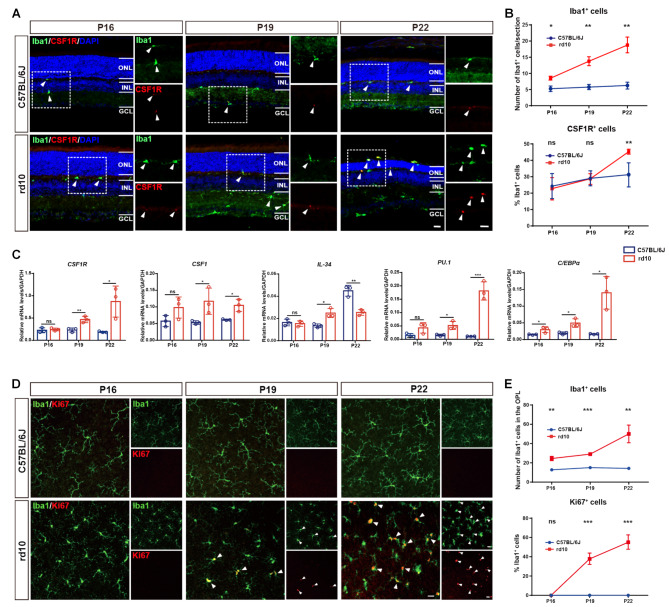
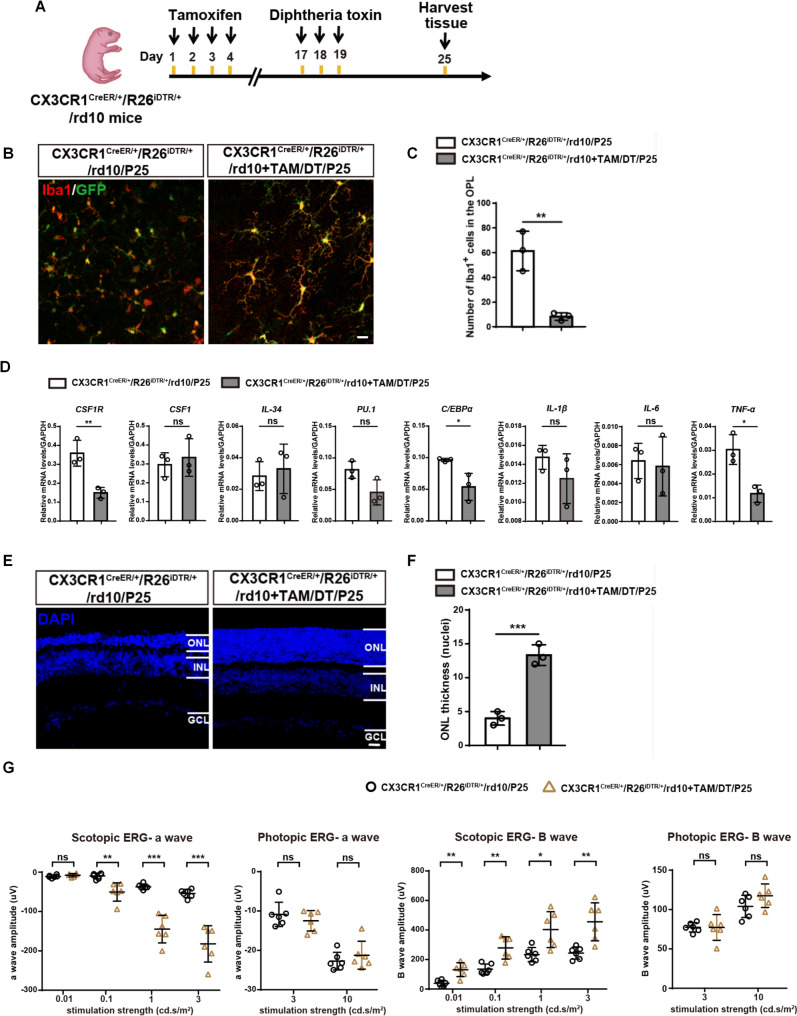
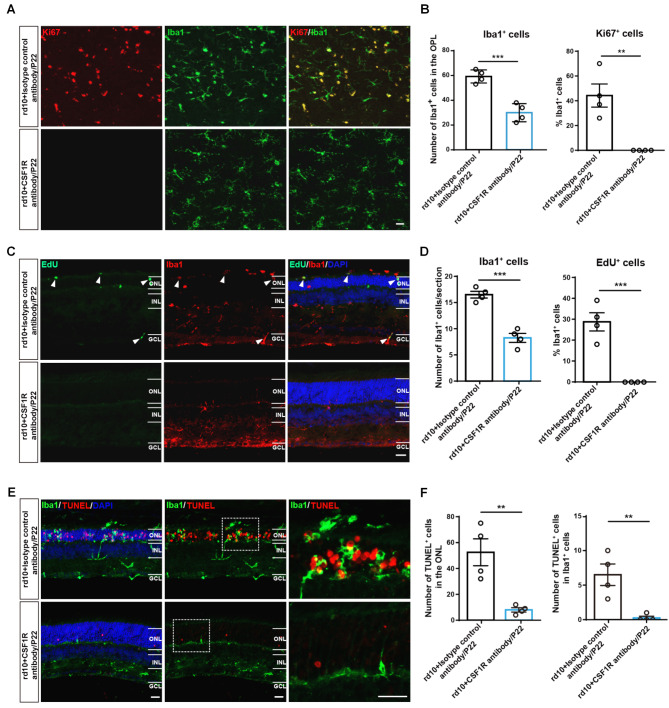
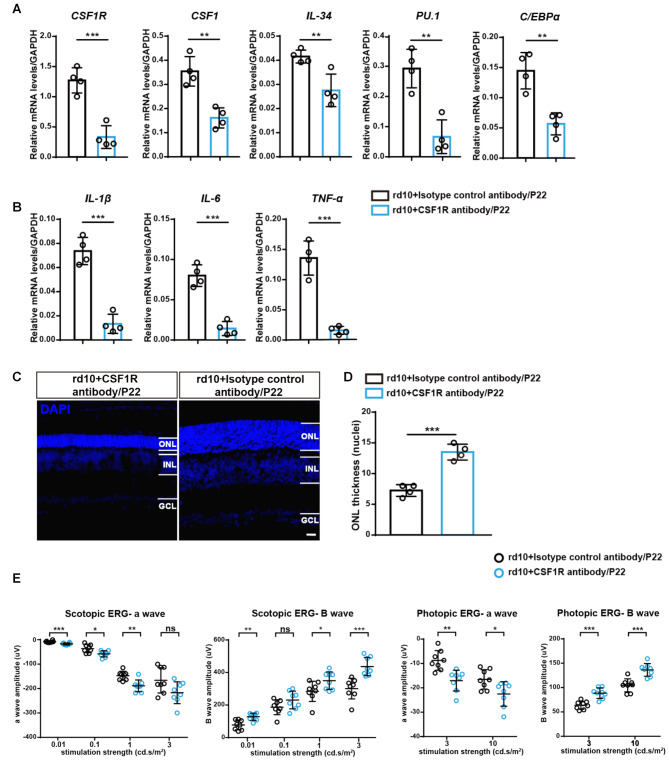
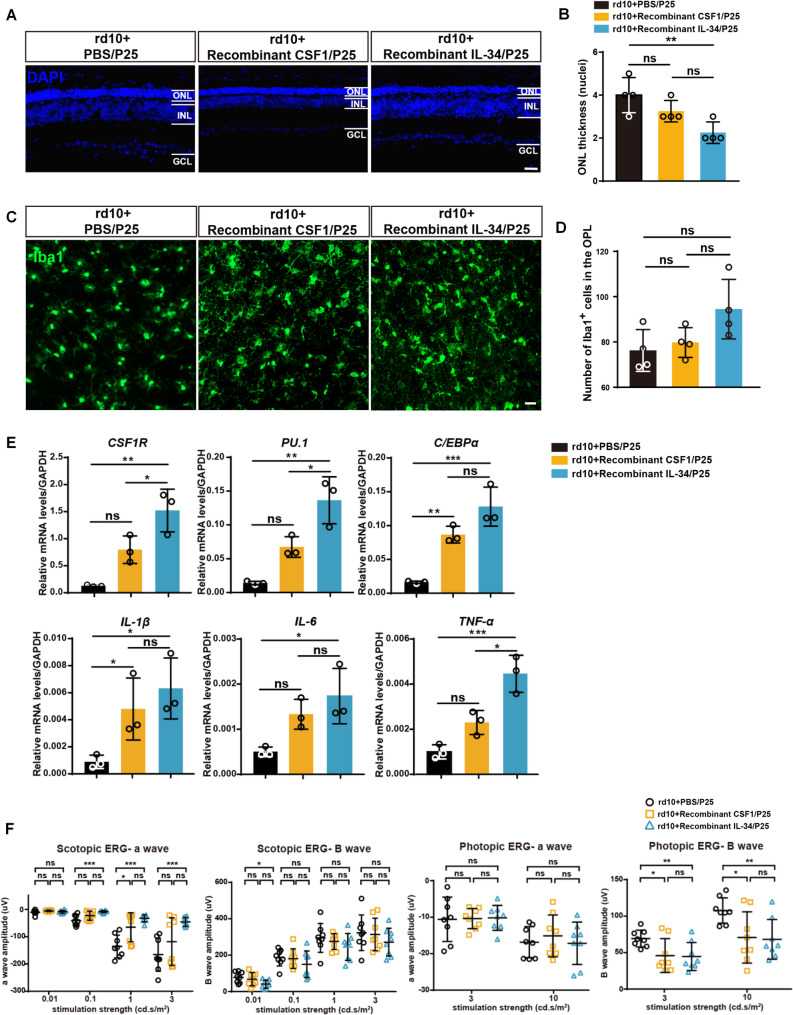
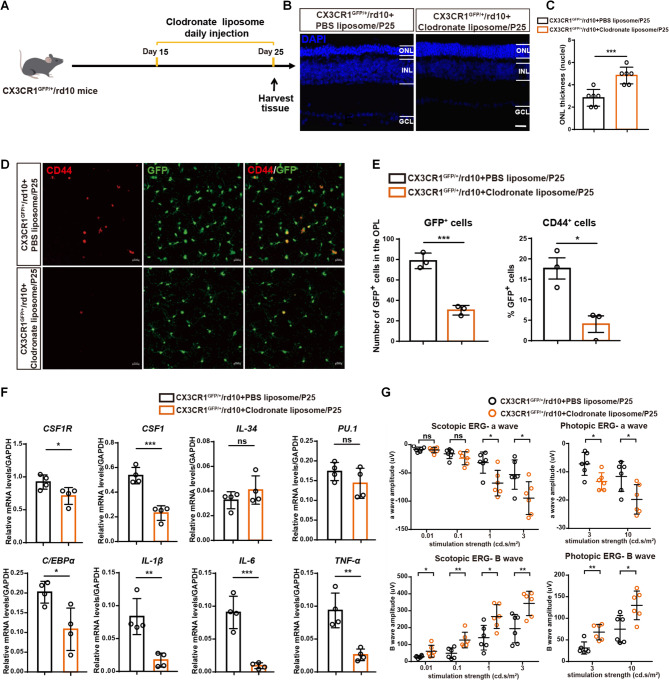
Retinitis pigmentosa (RP), a group of inherited retinal diseases characterized by progressive photoreceptor degeneration, features prominent microglial activation and monocyte-derived macrophage infiltration. While colony-stimulating factor 1 receptor (CSF1R) shows diverse roles in regulating microglial survival and behaviors in various neurodegenerative diseases, its functional significance in RP pathogenesis remains unclear. In this study, we observed upregulated CSF1R signaling specifically within disease-associated myeloid cells in the rd10 mouse model of RP. Targeted intervention via intravitreal CSF1R neutralizing antibodies and systemic PLX5622 administration achieved reduced myeloid proliferation and pro-inflammatory cytokine production and greater photoreceptor survival. Notably, CSF1R potentiation using recombinant IL-34 or CSF1 exacerbated neuroinflammation and accelerated photoreceptor degeneration. Mechanistic investigations revealed that infiltrating monocyte depletion by clodronate liposomes significantly reduced macrophage infiltration and preserved visual function. Using CX3CR1/R26/rd10 mouse model, we observed that diphtheria toxin-mediated microglia ablation preserved retinal function. Overall, our findings demonstrate the prominent role of CSF1R in neurotoxic myeloid activation in the context of RP. Our results provide preclinical proof-of-concept that dual targeting of retinal and peripheral CSF1R pathways may offer a mutation-agnostic therapeutic strategy for inherited retinal degenerations.
视网膜色素变性(RP)是一组以进行性光感受器变性为特征的遗传性视网膜疾病,其特点是小胶质细胞显著激活和单核细胞衍生的巨噬细胞浸润。虽然集落刺激因子1受体(CSF1R)在各种神经退行性疾病中调节小胶质细胞存活和行为方面发挥着多种作用,但其在RP发病机制中的功能意义仍不清楚。在本研究中,我们观察到在RP的rd10小鼠模型中,疾病相关髓样细胞内CSF1R信号特异性上调。通过玻璃体内注射CSF1R中和抗体和全身给予PLX5622进行靶向干预,可减少髓样细胞增殖和促炎细胞因子产生,并提高光感受器存活率。值得注意的是,使用重组IL-34或CSF1增强CSF1R会加剧神经炎症并加速光感受器变性。机制研究表明,用氯膦酸脂质体清除浸润的单核细胞可显著减少巨噬细胞浸润并保留视觉功能。使用CX3CR1/R26/rd10小鼠模型,我们观察到白喉毒素介导的小胶质细胞消融可保留视网膜功能。总体而言,我们的研究结果证明了CSF1R在RP背景下神经毒性髓样细胞激活中的突出作用。我们的结果提供了临床前概念验证,即双重靶向视网膜和外周CSF1R途径可能为遗传性视网膜变性提供一种与突变无关的治疗策略。