Research Laboratory of Ophthalmology, West China Hospital, Sichuan University, Chengdu, China.
Department of Ophthalmology, West China Hospital, Sichuan University, Chengdu, China.
Front Immunol. 2022 Oct 27;13:1059947. doi: 10.3389/fimmu.2022.1059947. eCollection 2022.
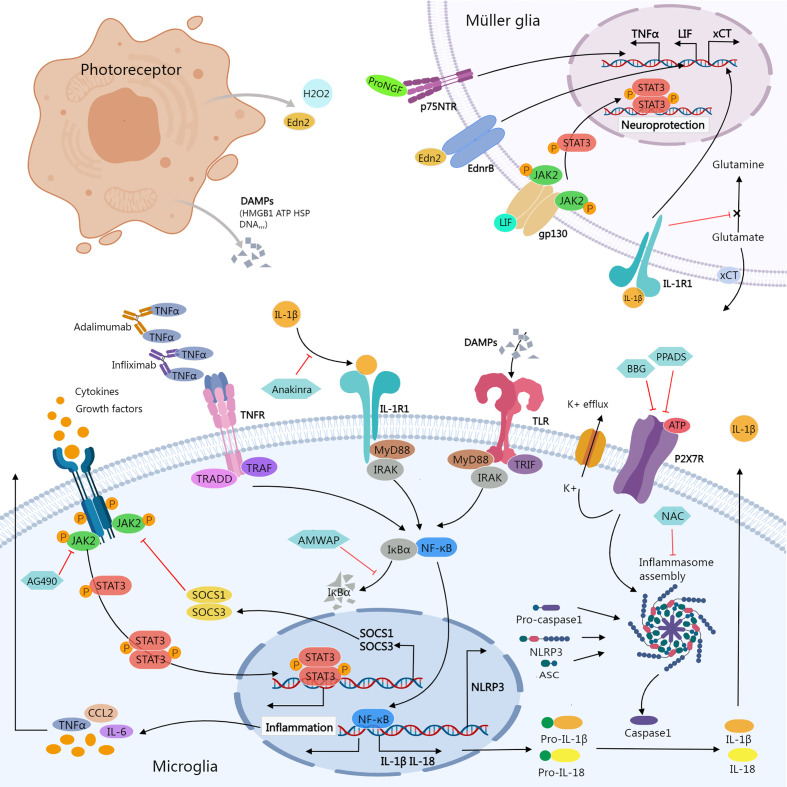
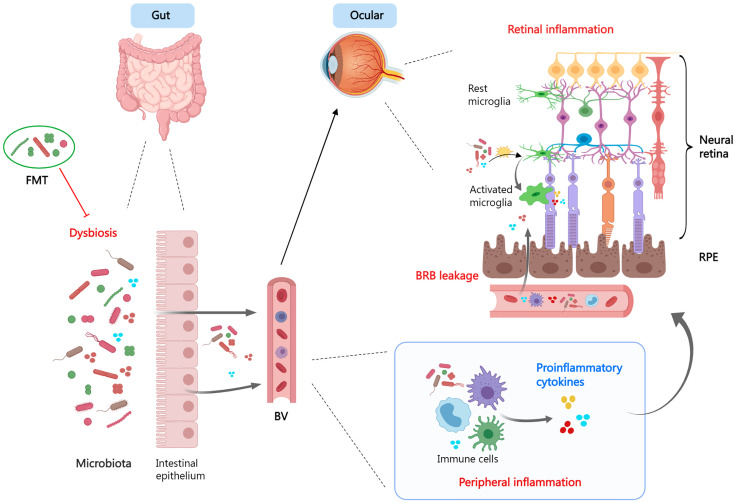
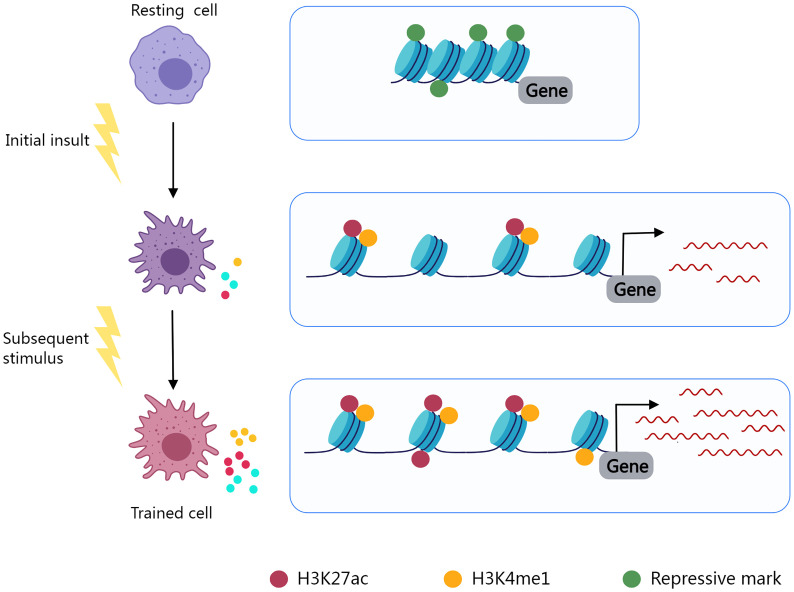
Retinitis pigmentosa (RP) is an important cause of irreversible blindness worldwide and lacks effective treatment strategies. Although mutations are the primary cause of RP, research over the past decades has shown that neuroinflammation is an important cause of RP progression. Due to the abnormal activation of immunity, continuous sterile inflammation results in neuron loss and structural destruction. Therapies targeting inflammation have shown their potential to attenuate photoreceptor degeneration in preclinical models. Regardless of variations in genetic background, inflammatory modulation is emerging as an important role in the treatment of RP. We summarize the evidence for the role of inflammation in RP and mention therapeutic strategies where available, focusing on the modulation of innate immune signals, including TNFα signaling, TLR signaling, NLRP3 inflammasome activation, chemokine signaling and JAK/STAT signaling. In addition, we describe epigenetic regulation, the gut microbiome and herbal agents as prospective treatment strategies for RP in recent advances.
色素性视网膜炎(RP)是全球范围内导致不可逆失明的重要原因,目前缺乏有效的治疗策略。虽然突变是 RP 的主要原因,但过去几十年的研究表明,神经炎症是 RP 进展的重要原因。由于免疫异常激活,持续的无菌性炎症导致神经元丧失和结构破坏。针对炎症的治疗方法已显示出在临床前模型中减轻光感受器变性的潜力。无论遗传背景如何,炎症调节都在 RP 的治疗中发挥着重要作用。我们总结了炎症在 RP 中的作用证据,并提到了现有治疗策略,重点介绍了先天免疫信号的调节,包括 TNFα 信号、TLR 信号、NLRP3 炎性小体激活、趋化因子信号和 JAK/STAT 信号。此外,我们还描述了表观遗传调控、肠道微生物组和草药制剂作为 RP 的潜在治疗策略,这是最近的进展。