Guzzoni Vinicius, Shrestha Upasana, Kesler Nicholas J, Acharya Aditya, McKee Samantha J, Cunha Tatiana Sousa, Casarini Dulce Elena, Haller Steven T, Kennedy David J, Britton Steven L, Koch Lauren Gerard
Department of Medicine, School of Medicine, Federal University of São Paulo (UNIFESP), São Paulo, Brazil.
Department of Medicine, The University of Toledo College of Medicine and Life Sciences, Toledo, Ohio, USA.
Compr Physiol. 2025 Aug;15(4):e70029. doi: 10.1002/cph4.70029.
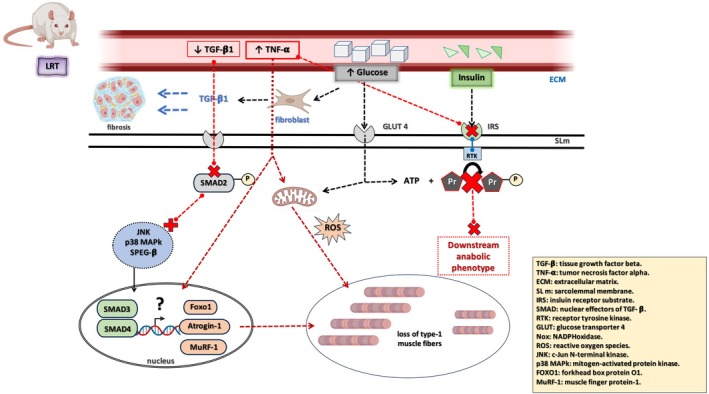
There is scientific evidence that supports the association between aerobic exercise capacity and the risk of developing complex metabolic diseases. The factors that determine aerobic capacity can be categorized into two groups: intrinsic and extrinsic components. While exercise capacity is influenced by both the intrinsic fitness levels of an organism and the extrinsic factors that emerge during training, physiological adaptations to exercise training can differ significantly among individuals. The interplay between intrinsic and acquired exercise capacities represents an obstacle to recognizing the exact mechanisms connecting aerobic exercise capacity and human health. Despite robust clinical associations between disease and a sedentary state or condition, the precise causative links between aerobic exercise capacity and disease susceptibility are yet to be fully uncovered. To provide clues into the intricacies of poor aerobic metabolism in an exercise-resistant phenotype, over two decades ago a novel rat model system was developed through two-way artificial selection and raised the question of whether large genetic differences in training responsiveness would bring about aberrant systemic disorders and closely regulate the risk factors in health and diseases. Genetically heterogeneous outbred (N/NIH) rats were used as a founder population to develop contrasting animal models of high versus low intrinsic running capacity (HCR vs. LCR) and high versus low responsiveness to endurance training (HRT vs. LRT). The underlying hypothesis was that variation in capacity for energy transfer is the central mechanistic determinant of the divide between complex disease and health. The use of the outbred, genetically heterogeneous rat models for exercise capacity aims to capture the genetic complexity of complex diseases and mimic the diversity of exercise traits among humans. Accumulating evidence indicates that epigenetic markers may facilitate the transmission of effects from exercise and diet to subsequent generations, implying that both exercise and diet have transgenerational effects on health and fitness. The process of selective breeding based on the acquired change in maximal running distance achieved during a treadmill-running tests before and after 8 weeks of training generated rat models of high response to training (HRT) and low response to training (LRT). In an untrained state, both LRT and HRT rats exhibit comparable levels of exercise capacity and show no major differences in cardiorespiratory fitness (maximal oxygen consumption, VO). However, after training, the HRT rats demonstrate significant improvements in running distance, VO, as well as other classic markers of cardiorespiratory fitness. The LRT rats, on the other hand, show no gain in running distance or VO upon completing the same training regime. The purpose of this article is to provide an overview of studies using LRT and HRT models with a focus on differences in neuromuscular adaptations. This review also summarizes the involved molecular and cellular signaling pathways underlying skeletal muscle adaptations in LRT models in comparison to the HRT model, which responds positively to endurance training. The LRT-related adverse effects in neuromuscular responses seem to be primarily driven by: (i) impaired glucose tolerance or impaired insulin sensitivity, (ii) increased extracellular matrix (ECM) remodeling, (iii) loss of type I muscle fibers, (iv) mitochondrial dysfunction, and (v) intricate cellular signaling orchestrated by TGF-ß1-JNK and TNF-α-MAPK pathways. Alternatively, the HRT model demonstrates improved neurovascular and muscle remodeling responses and increased central nervous system excitability, which might reflect an inherent protective mechanism to stress events.
有科学证据支持有氧运动能力与发生复杂代谢性疾病风险之间的关联。决定有氧运动能力的因素可分为两类:内在因素和外在因素。虽然运动能力受生物体的内在健康水平和训练期间出现的外在因素两者影响,但个体对运动训练的生理适应可能有显著差异。内在运动能力和后天获得的运动能力之间的相互作用成为认识连接有氧运动能力与人类健康的确切机制的障碍。尽管疾病与久坐状态或情况之间存在有力的临床关联,但有氧运动能力与疾病易感性之间的确切因果联系尚未完全揭示。为了深入了解运动抗性表型中不良有氧代谢的复杂性,二十多年前通过双向人工选择开发了一种新型大鼠模型系统,并提出了训练反应性的巨大遗传差异是否会导致异常的全身紊乱以及密切调节健康和疾病中的危险因素的问题。遗传异质的远交(N/NIH)大鼠被用作创始群体,以开发具有高与低内在跑步能力(HCR与LCR)以及高与低耐力训练反应性(HRT与LRT)的对比动物模型。基本假设是能量转移能力的差异是复杂疾病与健康之间差异的核心机制决定因素。使用远交、遗传异质的大鼠模型来研究运动能力旨在捕捉复杂疾病的遗传复杂性并模拟人类运动特征的多样性。越来越多的证据表明,表观遗传标记可能促进运动和饮食的影响向后代的传递,这意味着运动和饮食对健康和体能都有跨代影响。基于训练8周前后在跑步机跑步测试中获得的最大跑步距离的变化进行选择性育种过程,产生了对训练高反应(HRT)和对训练低反应(LRT)的大鼠模型。在未训练状态下,LRT和HRT大鼠表现出相当的运动能力水平,并且在心肺适应性(最大耗氧量,VO)方面没有重大差异。然而,训练后,HRT大鼠在跑步距离、VO以及其他心肺适应性经典指标方面表现出显著改善。另一方面,LRT大鼠在完成相同训练方案后,跑步距离或VO没有增加。本文的目的是概述使用LRT和HRT模型的研究,重点关注神经肌肉适应性的差异。本综述还总结了与对耐力训练有积极反应的HRT模型相比,LRT模型中骨骼肌适应性所涉及的分子和细胞信号通路。LRT相关的神经肌肉反应不良反应似乎主要由以下因素驱动:(i)葡萄糖耐量受损或胰岛素敏感性受损,(ii)细胞外基质(ECM)重塑增加,(iii)I型肌纤维丢失,(iv)线粒体功能障碍,以及(v)由TGF-β1-JNK和TNF-α-MAPK途径精心编排的复杂细胞信号传导。或者,HRT模型表现出改善的神经血管和肌肉重塑反应以及中枢神经系统兴奋性增加,这可能反映了对应激事件的一种内在保护机制。