Zhao Jixun, Qiu Yuyang, Su Junmeng, Wang Huiqun
School of Public Health, the Key Laboratory of Environmental Pollution Monitoring and Disease Control, Ministry of Education, Guizhou Medical University, No.6, Ankang Avenue, GUI 'an New District, Guiyang, 561113, Guizhou, China.
Department of Clinical Nutrition, Guizhou Rehabilitation Hospital, Guiyang, 550019, China.
Sci Rep. 2025 Jul 28;15(1):27396. doi: 10.1038/s41598-025-12628-w.
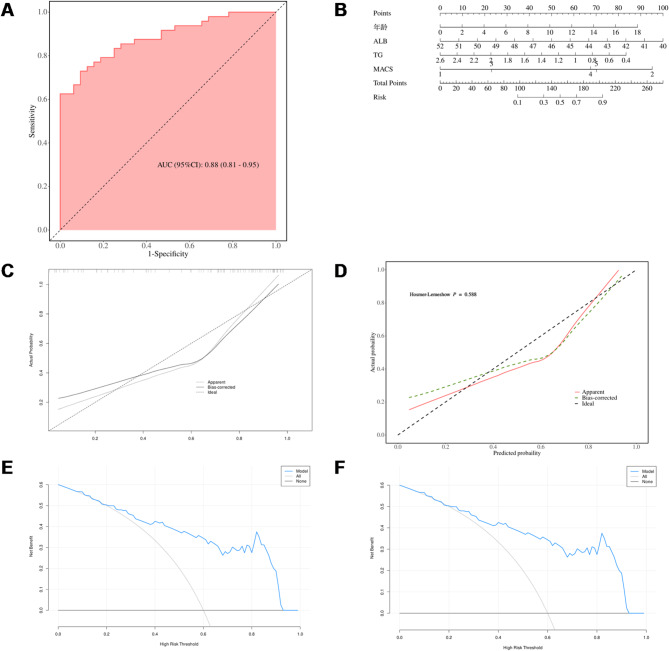
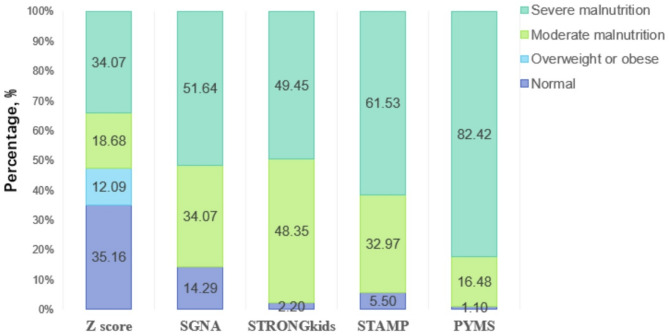
Cerebral palsy (CP) strongly affects the growth and development of children and is accompanied by a high risk of malnutrition. This study aims to characterize the nutritional status of hospitalized children with CP, evaluate the efficacy of four nutritional risk screening tools, analyze influencing factors of malnutrition. In our study, 64.8% of all 91 patients were malnourished. Nutritional status was associated with the gross motor function classification system (GMFCS) grade, the manual ability classification system (MACS) grade, caregiver concern, and age (P < 0.05). Compared with Z score, the sensitivity and consistency of the four malnutrition risk screening tools were lower. Multivariate logistic regression analysis revealed that older age, lower albumin (ALB) concentration, and MACS grade II were independent influencing factors for malnutrition. The prediction model with 4 variables, including age, albumin, triglyceride and MACS grade, was included, the AUC (95% CI) was 0.88 (0.81-0.95), and the P value of the H-L goodness-of-fit test was 0.588, which has practical value. We indicate that the rate of malnutrition in hospitalized children with CP remains high and still requires extensive attention from society, especially in clinical nutrition.
脑瘫(CP)严重影响儿童的生长发育,并伴有高营养不良风险。本研究旨在描述住院脑瘫患儿的营养状况,评估四种营养风险筛查工具的有效性,分析营养不良的影响因素。在我们的研究中,91例患者中有64.8%存在营养不良。营养状况与粗大运动功能分级系统(GMFCS)分级、手动能力分级系统(MACS)分级、照料者关注程度和年龄相关(P < 0.05)。与Z评分相比,四种营养不良风险筛查工具的敏感性和一致性较低。多因素逻辑回归分析显示,年龄较大、白蛋白(ALB)浓度较低和MACS II级是营养不良的独立影响因素。纳入年龄、白蛋白、甘油三酯和MACS分级4个变量的预测模型,AUC(95%CI)为0.88(0.81 - 0.95),H-L拟合优度检验的P值为0.588,具有实际应用价值。我们指出,住院脑瘫患儿的营养不良发生率仍然很高,仍需要社会广泛关注,尤其是在临床营养方面。