Zhang Chenshuo, Fan Tingwen, Wang Zhichun, Yu Jiamu, Guo Xiaoming, Jiang Wei, Miao Lili, Yang Huaiyi
State Key Laboratory of Microbial Diversity and Innovative Utilization, Institute of Microbiology, Chinese Academy of Sciences, Beijing 100101, China.
State Key Laboratory of Animal Biotech Breeding, College of Biological Sciences, China Agricultural University, Beijing 100193, China.
Foods. 2025 Jul 11;14(14):2444. doi: 10.3390/foods14142444.
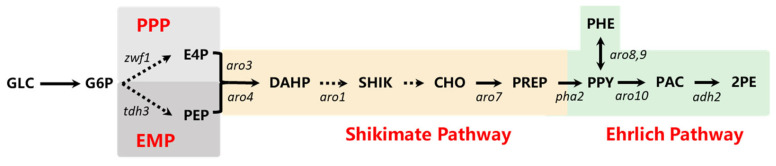
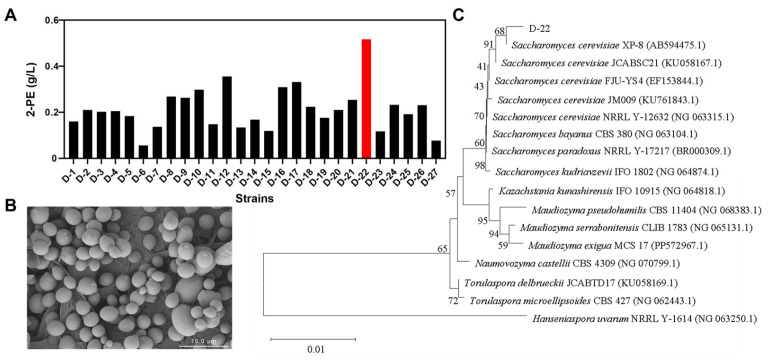
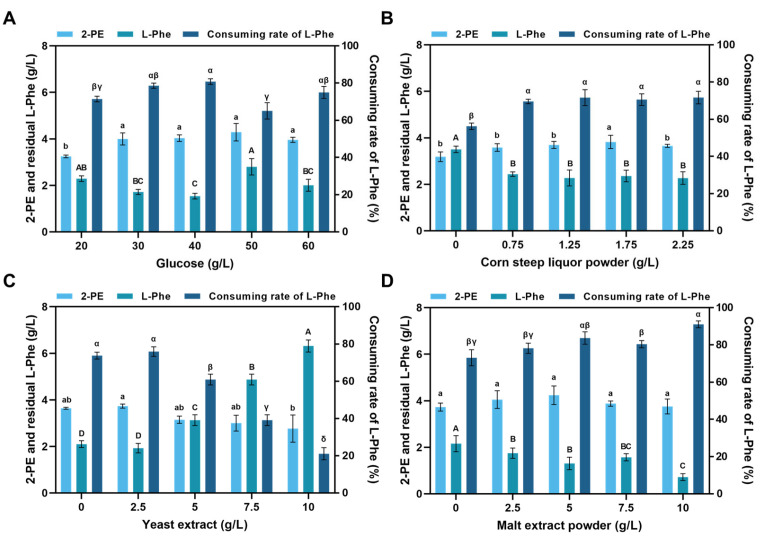
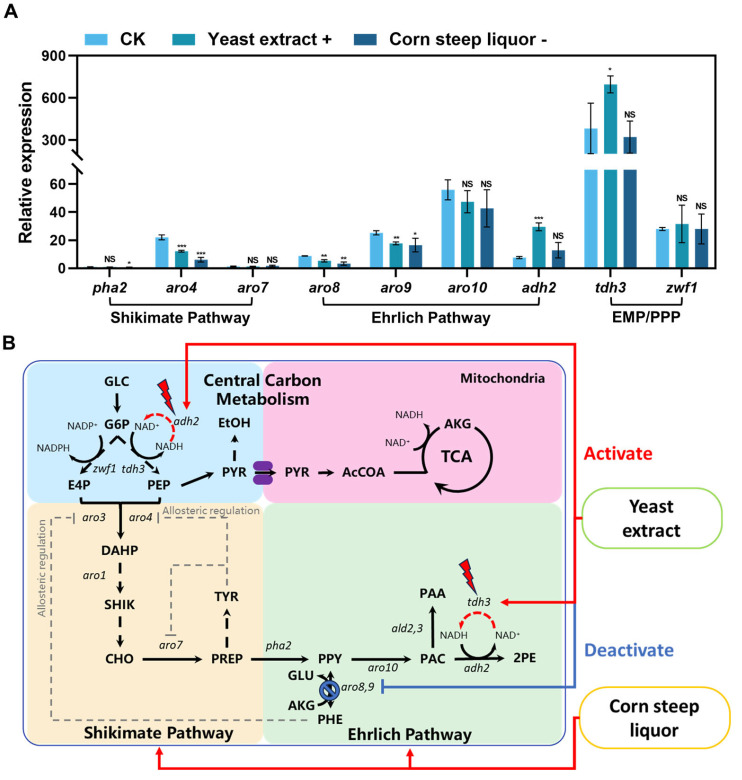
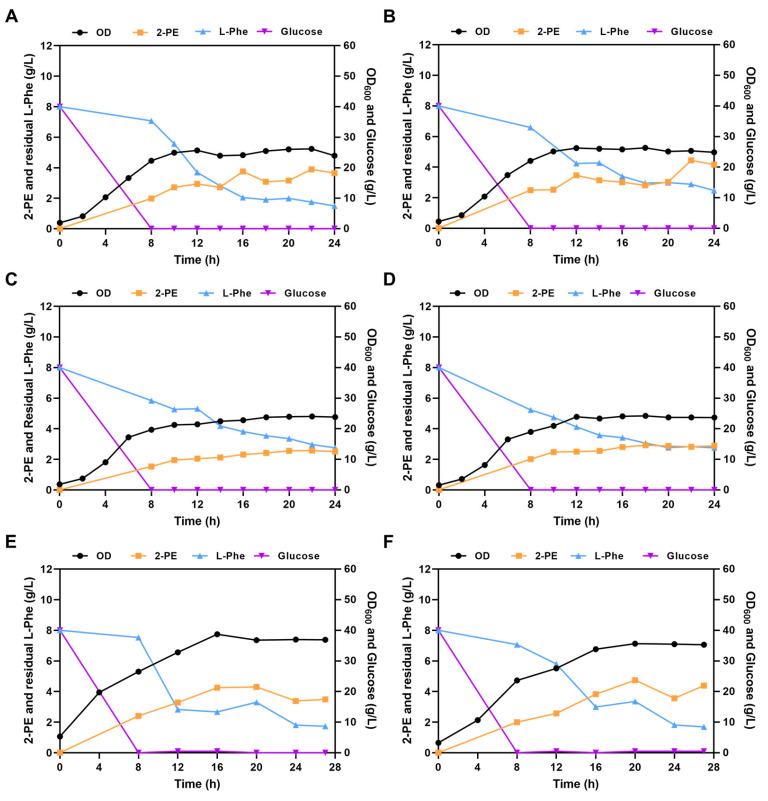
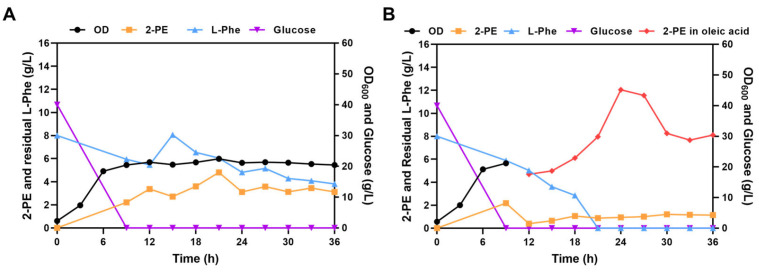
2-Phenylethanol (2-PE), an aromatic alcohol with a rose-like fragrance, is widely used in the food, pharmaceutical, and high-end cosmetic industries. In this study, a high-yield 2-PE-producing strain was isolated and identified as based on morphological characterization and taxonomic identification. Fermentation medium components (carbon and nitrogen sources) were optimized through single-factor experiments in shaking flasks, and fermentation medium with 40 g/L glucose, 5 g/L malt extract, 1.75 g/L corn steep liquor, 2.5 g/L yeast extract, 5 g/L malt extract, 1.75 g/L corn steep liquor was considered suitable for 2-PE production. RT-qPCR results indicated that corn steep liquor activates expression of genes related to the shikimate pathway and Ehrlich pathway (, , , and ), thereby promoting the synthesis of 2-PE through these pathways. Excess yeast extract inhibited the expression of and , while enhancing the expression of and , thus promoting the de novo synthesis of 2-PE. Furthermore, fermentation in a 5 L bioreactor was applied to investigate the effects of feeding strategies, inoculum proportion, and pH on 2-PE production. With a pH of 5.5 and10% inoculum proportion, the supplementation of the substrate L-Phe led to a 2-PE production of 4.81 g/L after 24 h of fermentation. Finally, in situ product recovery (ISPR) techniques was applied to alleviate 2-PE cytotoxicity, achieving a production of 6.41 g/L. This process offers a promising strategy for producing 2-PE efficiently and naturally, paving the way for further industrial applications in food, pharmaceutical, and cosmetic sectors.
2-苯乙醇(2-PE)是一种具有玫瑰香味的芳香醇,广泛应用于食品、制药和高端化妆品行业。在本研究中,通过形态学特征和分类学鉴定,分离并鉴定出一株高产2-PE的菌株。通过摇瓶单因素实验优化了发酵培养基成分(碳源和氮源),含有40 g/L葡萄糖、5 g/L麦芽提取物、1.75 g/L玉米浆、2.5 g/L酵母提取物、5 g/L麦芽提取物、1.75 g/L玉米浆的发酵培养基被认为适合2-PE生产。RT-qPCR结果表明,玉米浆激活了与莽草酸途径和埃利希途径相关基因(、、、和)的表达,从而通过这些途径促进2-PE的合成。过量的酵母提取物抑制了和的表达,同时增强了和的表达,从而促进了2-PE的从头合成。此外,在5 L生物反应器中进行发酵,以研究补料策略、接种比例和pH对2-PE生产的影响。在pH为5.5和接种比例为10%的情况下,添加底物L-苯丙氨酸,发酵24 h后2-PE产量达到4.81 g/L。最后,应用原位产物回收(ISPR)技术减轻2-PE的细胞毒性,产量达到6.41 g/L。该工艺为高效、天然地生产2-PE提供了一种有前景的策略,为在食品、制药和化妆品领域的进一步工业应用铺平了道路。