Ogata Ruiko, Luo Yi, Fujiwara-Tani Rina, Sasaki Rika, Ikemoto Ayaka, Maehana Kaho, Sasaki Ayaka, Sasaki Takamitsu, Fujii Kiyomu, Ohmori Hitoshi, Kuniyasu Hiroki
Department of Molecular Pathology, Nara Medical University School of Medicine, Kashihara 634-8521, Japan.
Int J Mol Sci. 2025 Jul 13;26(14):6722. doi: 10.3390/ijms26146722.
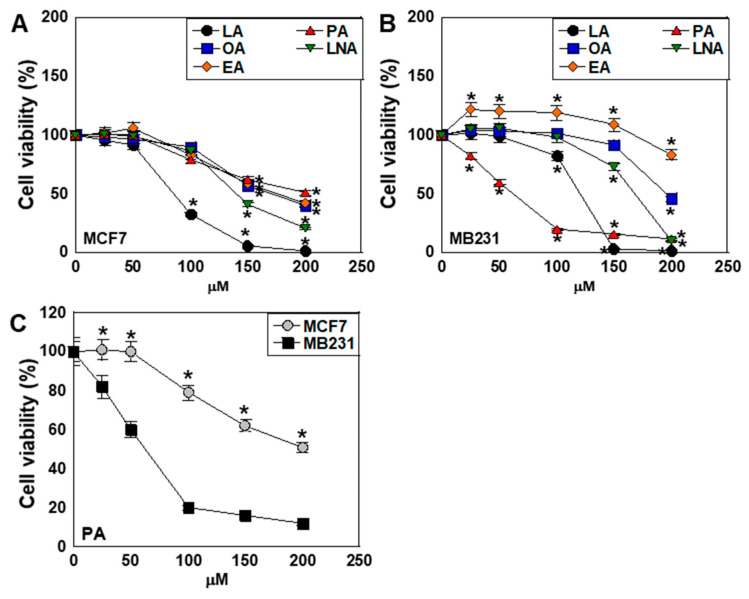
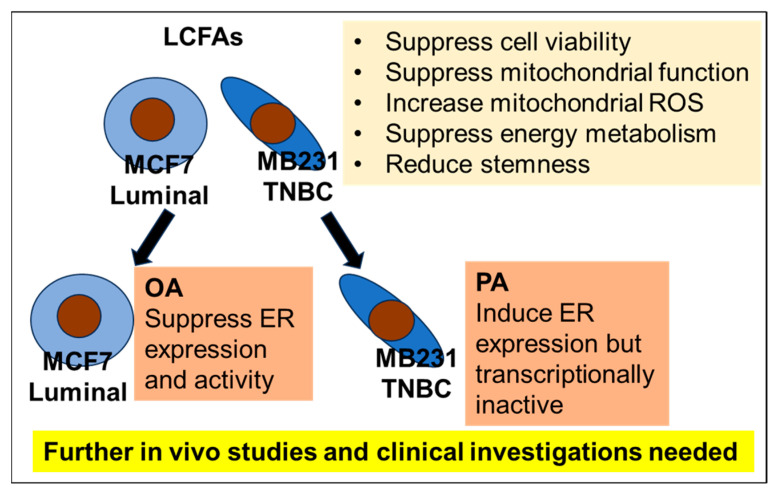
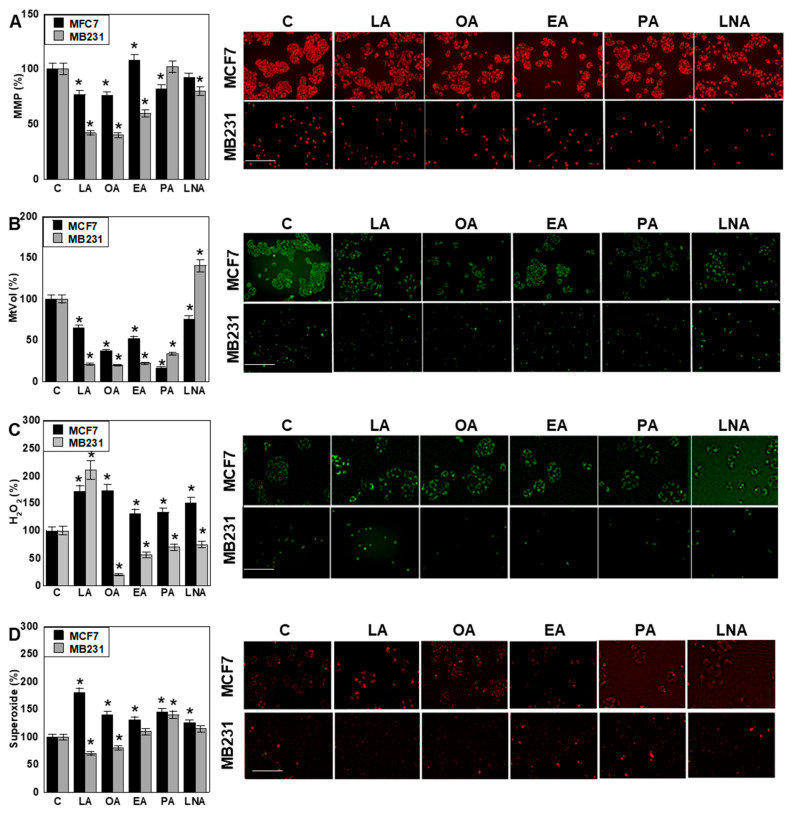
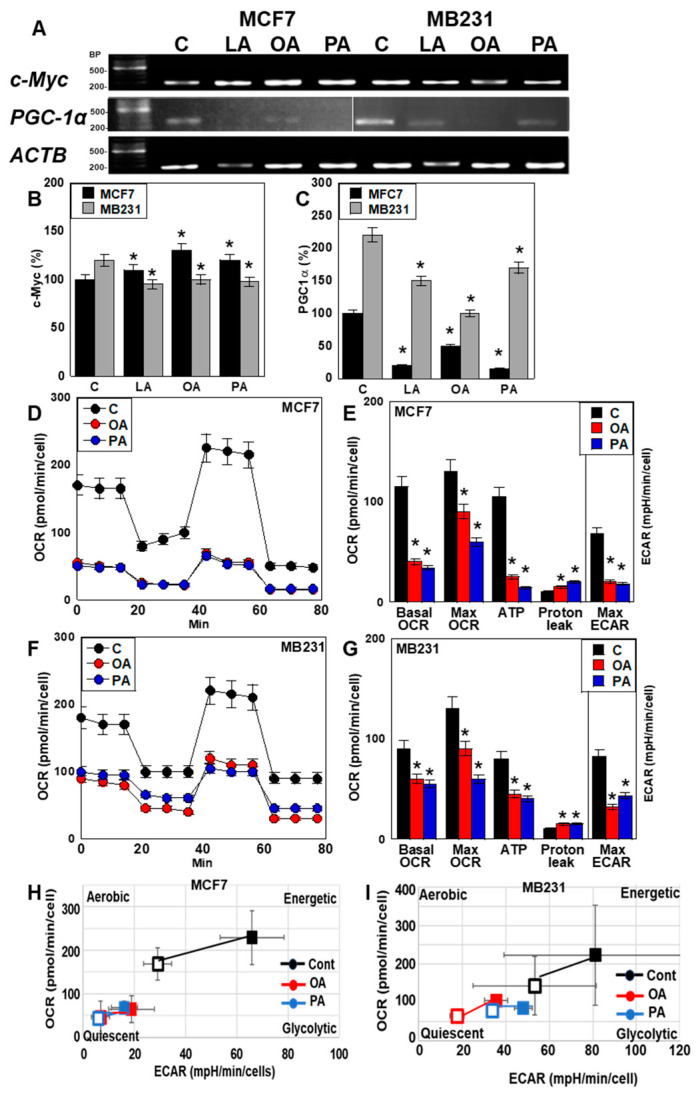
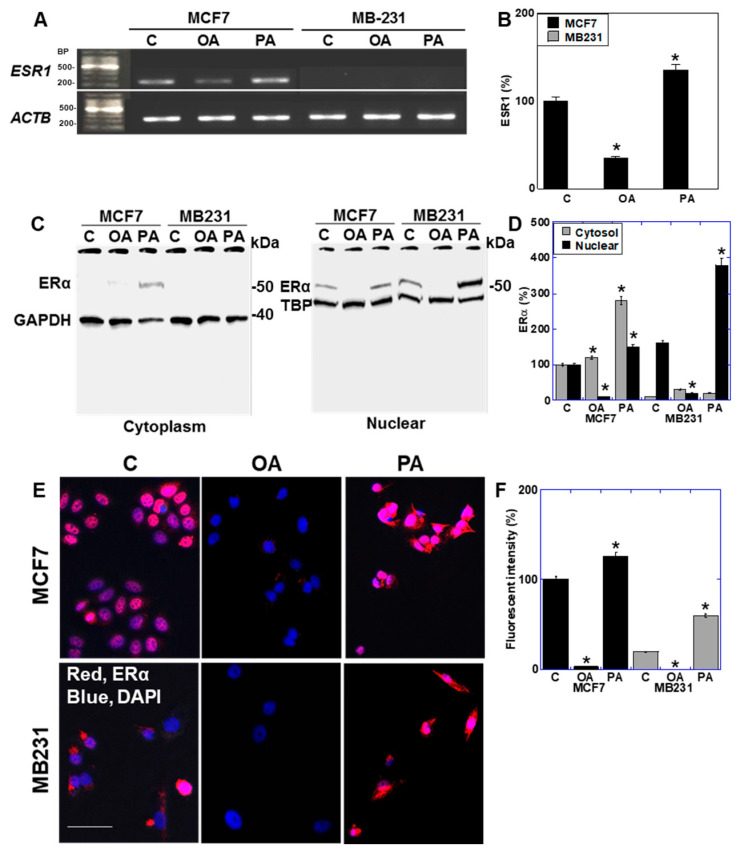
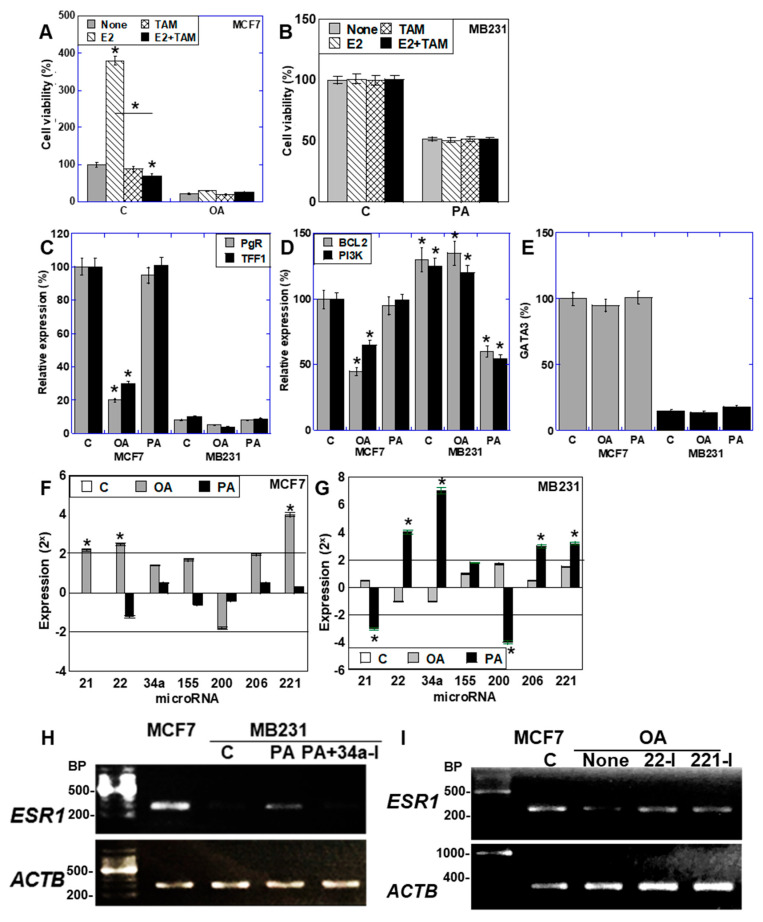
Long-chain fatty acids (LCFAs) have emerged as important regulators of cancer metabolism, but their impact on hormone receptor expression in breast cancer (BCA) remains poorly understood. In this study, we investigated the effects of five LCFAs-linoleic acid (LA), oleic acid (OA), elaidic acid (EA), palmitic acid (PA), and α-linolenic acid (LNA)-on two BCA cell lines: luminal-type MCF7 and triple-negative MDA-MB-231 (MB231). All LCFAs suppressed cell viability and mitochondrial function in a dose-dependent manner, accompanied by decreased membrane potential, increased reactive oxygen species production, and a metabolic shift. Notably, OA reduced both mRNA and nuclear protein levels of estrogen receptor alpha (ERα) in MCF7 cells, leading to impaired responses to estradiol and tamoxifen. In contrast, PA induced nuclear ERα expression in MB231 cells, although ER signaling remained inactive. MicroRNA profiling revealed that OA upregulated ER-suppressive miR-22 and miR-221 in MCF7, while PA increased miR-34a in MB231, contributing to ERα induction. These findings suggest that specific LCFAs modulate ER expression through epigenetic and post-transcriptional mechanisms, altering hormonal responsiveness in BCA. Our results offer new insights into how dietary lipids may influence therapeutic efficacy and tumor behavior by regulating nuclear receptor signaling.
长链脂肪酸(LCFAs)已成为癌症代谢的重要调节因子,但其对乳腺癌(BCA)激素受体表达的影响仍知之甚少。在本研究中,我们研究了五种长链脂肪酸——亚油酸(LA)、油酸(OA)、反油酸(EA)、棕榈酸(PA)和α-亚麻酸(LNA)——对两种乳腺癌细胞系的影响:管腔型MCF7和三阴性MDA-MB-231(MB231)。所有长链脂肪酸均以剂量依赖的方式抑制细胞活力和线粒体功能,同时伴随着膜电位降低、活性氧生成增加以及代谢转变。值得注意的是,油酸降低了MCF7细胞中雌激素受体α(ERα)的mRNA和核蛋白水平,导致对雌二醇和他莫昔芬的反应受损。相比之下,棕榈酸在MB231细胞中诱导核ERα表达,尽管ER信号仍然不活跃。微小RNA分析显示,油酸上调了MCF7中抑制ER的miR-22和miR-221,而棕榈酸在MB231中增加了miR-34a,这有助于ERα的诱导。这些发现表明,特定的长链脂肪酸通过表观遗传和转录后机制调节ER表达,改变乳腺癌的激素反应性。我们的结果为饮食脂质如何通过调节核受体信号影响治疗效果和肿瘤行为提供了新的见解。