Zhunussov Yersin, Danenov Yermek, Alimbek Galymzhan
Department of Orthopaedics and Traumatology, International Scientific Center of Traumatology and Orthopaedics, Belbulak Village, Talgar District, Almaty Region 041609, Kazakhstan.
J Clin Med. 2025 Jul 11;14(14):4917. doi: 10.3390/jcm14144917.
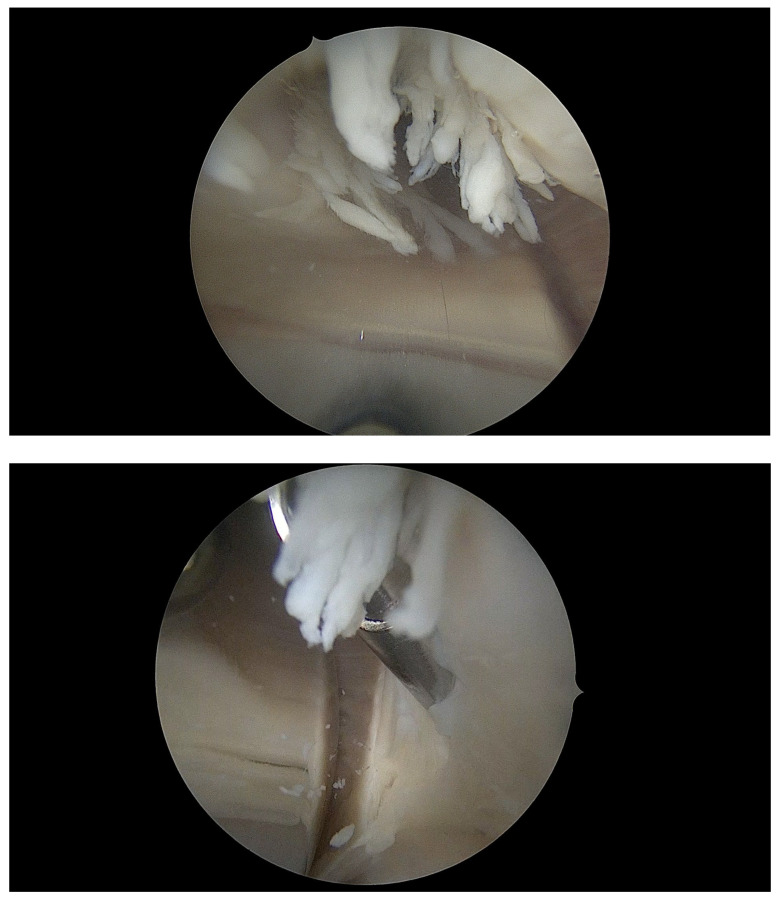
Arthrofibrosis, mixed contracture, and patellofemoral impingement are frequent complications following total knee arthroplasty (TKA), potentially leading to chronic pain and poor recovery of range of motion (ROM). The comprehensive management of these complications remains challenging and controversial. : This study analyzed the outcomes of arthroscopic arthrolysis performed in 27 patients diagnosed with arthrofibrosis, mixed contracture, and patellofemoral impingement post-TKA to evaluate the efficacy of this technique in improving knee function, enhancing ROM, and reducing pain, as assessed by the Knee Society Score (KSS). A total of 27 patients underwent arthroscopic arthrolysis following unsuccessful conservative rehabilitation. The arthroscopic procedure included removal of fibrous adhesions within the suprapatellar pouch, restoration of medial and lateral gutters, and lateral retinacular release of the patella. Intensive physiotherapy and continuous passive motion commenced immediately postoperatively. The mean follow-up period ranged from 24 to 60 months. Pain and functional outcomes were evaluated using KSSs. : Clinical improvements were evident in 26 cases, with the Knee Society Score rising from a preoperative average of 48 to 86, and pain scores improving from 30 to 41. Only one patient did not experience positive outcomes following the procedure. Arthroscopic arthrolysis appears beneficial for patients suffering from arthrofibrosis, patellofemoral impingement, and mixed contracture post-TKA, significantly improving clinical pain scores and KSS outcomes. : Further research is recommended to refine specialized surgical instruments and enhance arthroscopic arthrolysis techniques.
关节纤维化、混合性挛缩和髌股撞击是全膝关节置换术(TKA)后常见的并发症,可能导致慢性疼痛和关节活动范围(ROM)恢复不佳。这些并发症的综合管理仍然具有挑战性且存在争议。本研究分析了27例诊断为TKA后关节纤维化、混合性挛缩和髌股撞击的患者接受关节镜下松解术的结果,以评估该技术在改善膝关节功能、增加ROM和减轻疼痛方面的疗效,采用膝关节协会评分(KSS)进行评估。共有27例患者在保守康复治疗失败后接受了关节镜下松解术。关节镜手术包括清除髌上囊内的纤维粘连、恢复内外侧沟以及髌骨外侧支持带松解。术后立即开始强化物理治疗和持续被动运动。平均随访期为24至60个月。使用KSS评估疼痛和功能结果。26例患者临床症状明显改善,膝关节协会评分从术前平均48分升至86分,疼痛评分从30分降至41分。只有1例患者术后未取得积极效果。关节镜下松解术似乎对TKA后患有关节纤维化、髌股撞击和混合性挛缩的患者有益,可显著改善临床疼痛评分和KSS结果。建议进一步研究以改进专用手术器械并提高关节镜下松解术技术。