Caviglia Gian Paolo, Dileo Eleonora, Olivero Antonella, Mengozzi Giulio, Ciancio Alessia, Loglio Alessandro, Viganò Mauro, Fagiuoli Stefano, Colombatto Piero, Coco Barbara, Brunetto Maurizia Rossana, Angrisani Debora, Galeota Lanza Alfonso, Magni Carlo, Rizzardini Giuliano, Messina Vincenzo, Milella Michele, Saracino Annalisa, Marinaro Letizia, Cariti Giuseppe, Cossiga Valentina, Morisco Filomena, Cretella Silvia, Verucchi Gabriella, Biliotti Elisa, D'Offizi Giampiero, Feasi Marcello, Pontali Emanuele, Coppola Carmine, Rapetti Rachele, Pirisi Mario, Izzi Antonio, Santantonio Teresa, Di Marco Vito, Marrone Aldo, Coppola Nicola, Rizzi Marco, Cattelan Anna Maria, Niro Grazia Anna, Toniutto Pierluigi, Ponziani Francesca Romana, Belli Luca Saverio, Federico Alessandro, Bertino Gaetano, Barone Michele, Puoti Massimo, Civolani Alberto, Distefano Marco, Surace Lorenzo Antonio, Cozzolongo Raffaele, Cela Ester Marina, Teti Elisabetta, Lampertico Pietro, Stroffolini Tommaso, Rizzetto Mario
Department of Medical Sciences, University of Torino, Turin, Italy.
Division of Gastroenterology, Hepatology and Transplantation, ASST Papa Giovanni XXIII, Bergamo, Italy.
Liver Int. 2025 Sep;45(9):e70242. doi: 10.1111/liv.70242.
Ongoing migratory flows are reconstituting the hepatitis D virus (HDV) reservoir in Italy. We aimed to characterise the current clinical and virologic features of HDV infection in both native Italians and migrants.
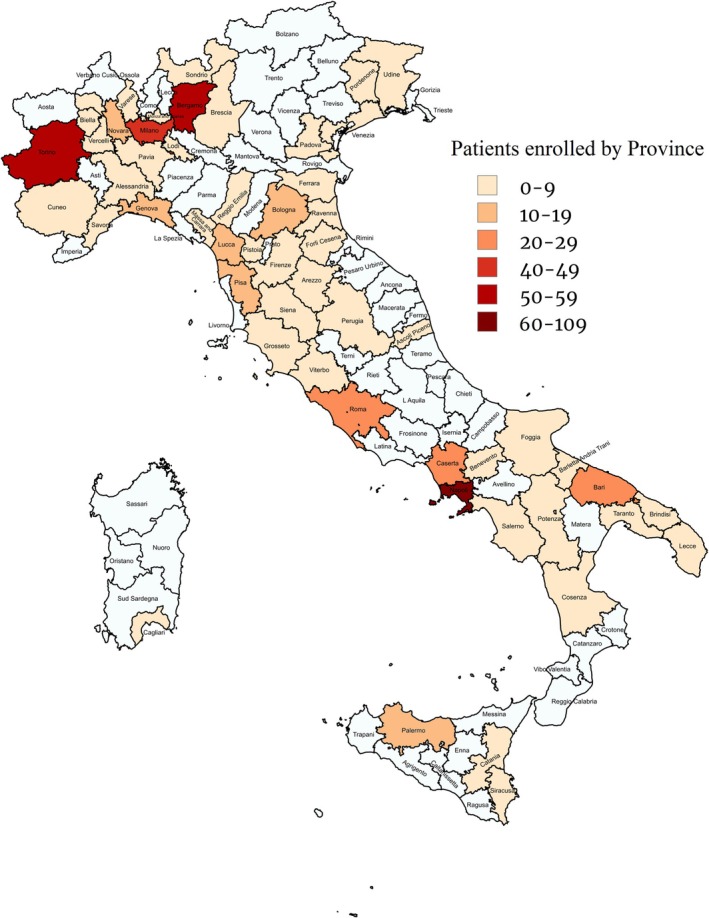
We enrolled 515 hepatitis B surface antigen (HBsAg)-positive patients with detectable anti-HDV antibodies from 32 Italian centres between August 2022 and July 2024; all patients underwent centralised virologic assessment.
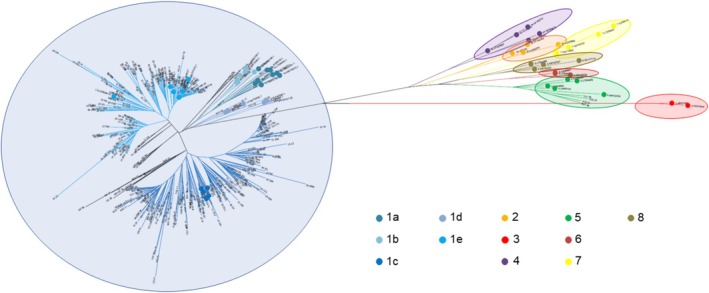
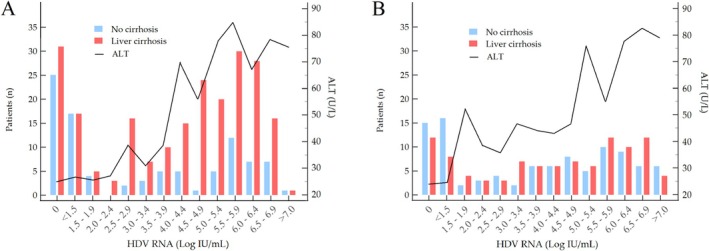
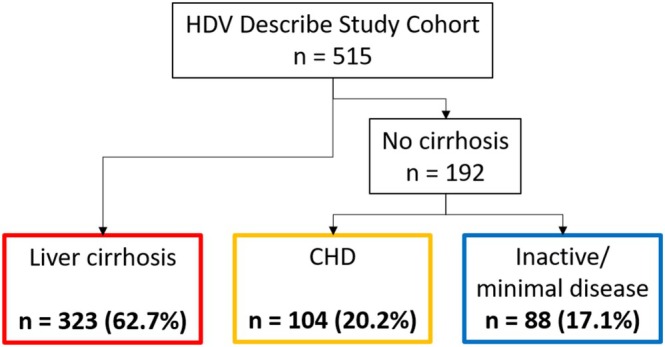
Overall, 432 out of 515 (83.9%) patients were HDV-RNA-positive (4.39, 1.30-5.82 Log IU/mL; 99.0% HDV genotype-1). HDV-RNA levels correlated with ALT (r = 0575, 0.514-0.630) and hepatitis B core-related antigen (r = 0.521, 0.455-0.581). Native Italians (n = 317; 61.6%) were older than migrants (n = 198; 38.4%) (median age: 60, 55-65 vs. 46, 39-54 years; p < 0.001) and were more frequently male (68.1% vs. 49.5%; p < 0.001), with a higher prevalence of liver cirrhosis (70.3% vs. 50.5%; p < 0.001) and hepatocellular carcinoma (14.8% vs. 0.5%; p < 0.001). Among Italians, 223 (70.3%) had liver cirrhosis, 46 (14.5%) had chronic hepatitis D (CHD) without cirrhosis and 48 (15.1%) exhibited inactive/minimal disease with low viremia (≤ 3 Log IU/mL). Among migrants, 100 (50.5%) had liver cirrhosis, 58 (29.3%) had CHD and 40 (20.2%) showed inactive/minimal disease with low viremia (≤ 3 Log IU/mL).
The current clinical landscape of chronic HDV infections in Italy is heterogeneous, changing the perspective of CHD as uniformly severe; although cirrhosis remains common, a substantial proportion of both native Italians and migrants present with milder forms of disease.
持续的移民潮正在重塑意大利的丁型肝炎病毒(HDV)储存库。我们旨在描述意大利本土人和移民中HDV感染当前的临床和病毒学特征。
2022年8月至2024年7月期间,我们从意大利32个中心招募了515名乙肝表面抗原(HBsAg)阳性且抗HDV抗体可检测到的患者;所有患者均接受了集中病毒学评估。
总体而言,515名患者中有432名(83.9%)HDV-RNA呈阳性(4.39,1.30 - 5.82 Log IU/mL;99.0%为HDV基因1型)。HDV-RNA水平与丙氨酸氨基转移酶(ALT)(r = 0.575,0.514 - 0.630)和乙肝核心相关抗原(r = 0.521,0.455 - 0.581)相关。意大利本土人(n = 317;61.6%)比移民(n = 198;38.4%)年龄更大(中位年龄:60岁,55 - 65岁 vs. 46岁,39 - 54岁;p < 0.001),男性比例更高(68.1% vs. 4(9.5%;p < 0.001),肝硬化患病率更高(70.3% vs. 50.5%;p < 0.001)以及肝细胞癌患病率更高(14.8% vs. 0.5%;p < 0.001)。在意大利人中,223名(70.3%)患有肝硬化,46名(14.5%)患有无肝硬化的慢性丁型肝炎(CHD),48名(15.1%)表现为病毒血症低(≤3 Log IU/mL)的非活动/轻度疾病。在移民中,100名(50.5%)患有肝硬化,5名(29.3%)患有CHD,40名(20.2%)表现为病毒血症低(≤3 Log IU/mL)的非活动/轻度疾病。
意大利慢性HDV感染当前的临床情况具有异质性,改变了CHD一律严重的观点;尽管肝硬化仍然常见,但相当一部分意大利本土人和移民呈现出病情较轻的形式。