Zhang Yalan, Gao Yahui, Miao Xiaomeng, Qu Lujiang, Ning Zhonghua
National Engineering Laboratory for Animal Breeding, College of Animal Science and Technology, China Agricultural University, Beijing 100193 China.
School of Life Sciences and Food Engineering, Hebei University of Engineering, Handan 056021 China.
Poult Sci. 2025 Jul 10;104(10):105554. doi: 10.1016/j.psj.2025.105554.
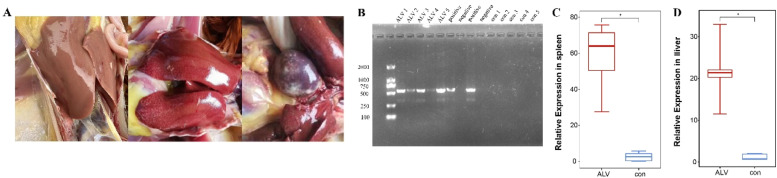
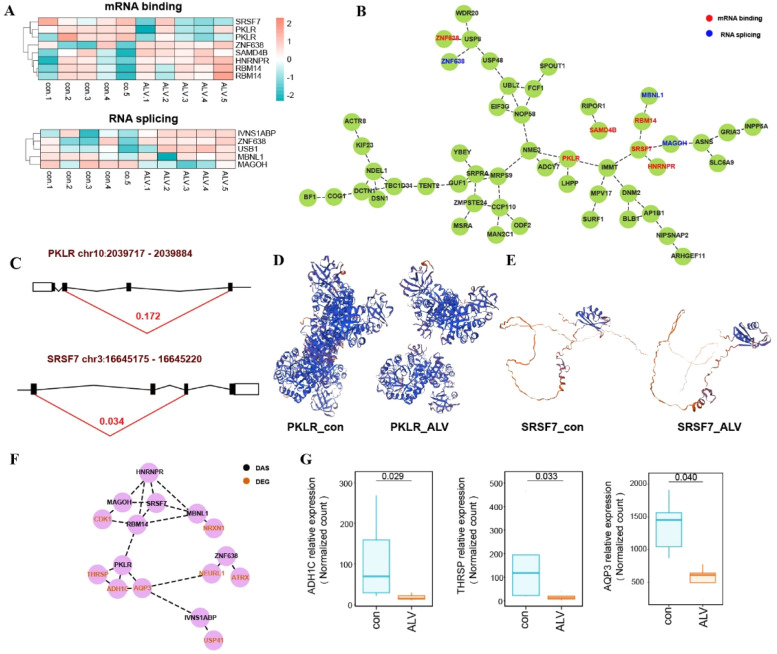
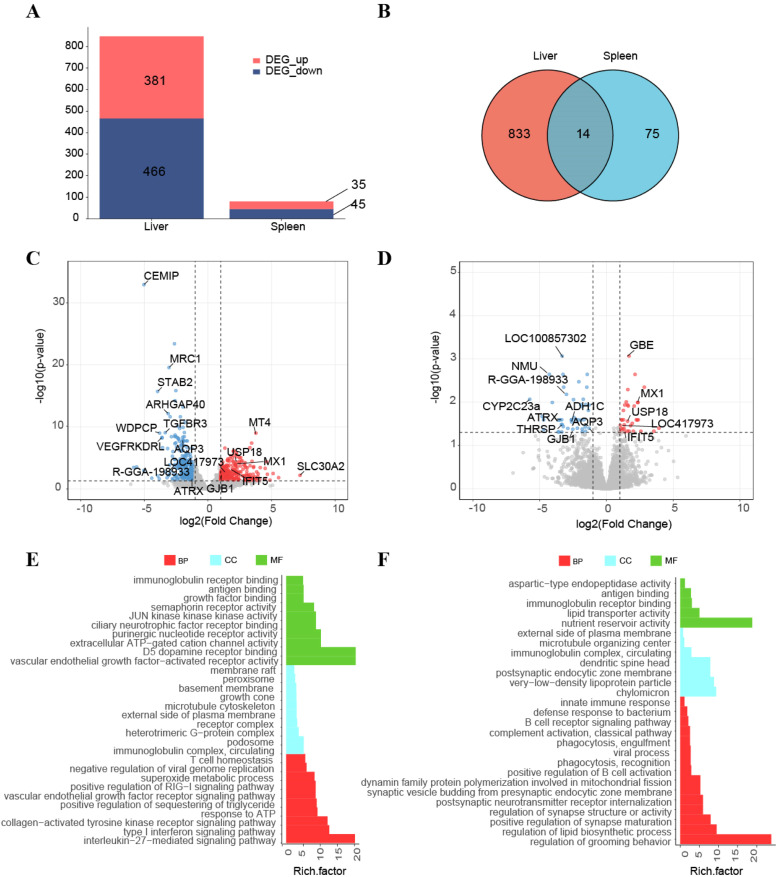
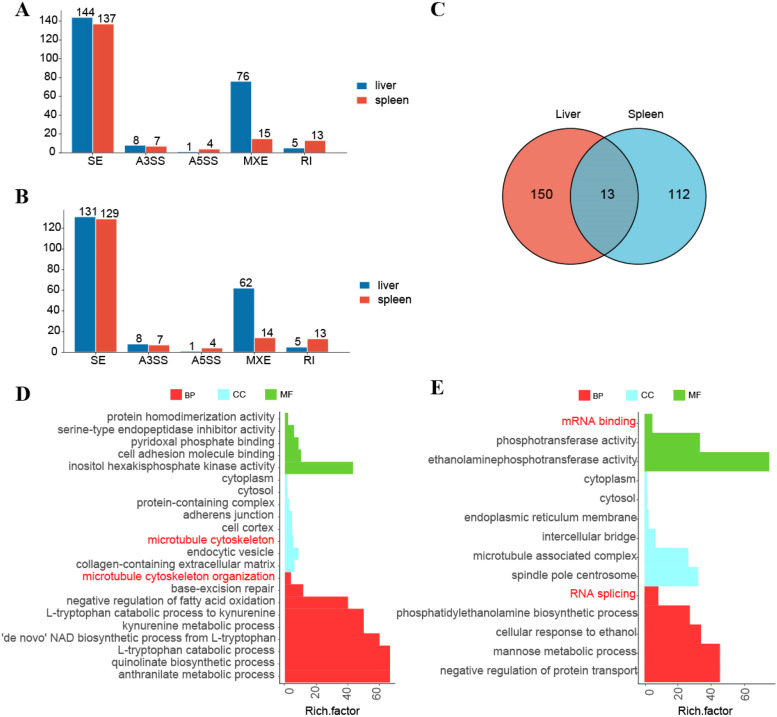
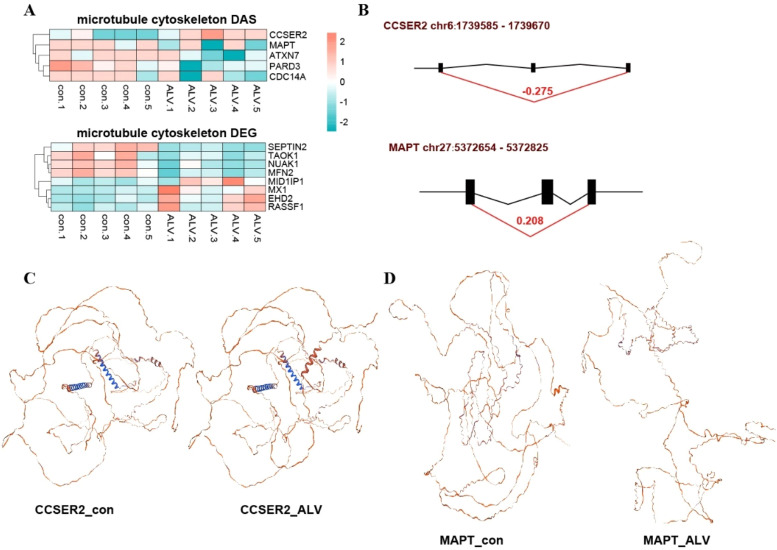
Avian leukosis in China has spread from broiler chickens to the local breeds and commercial laying hens. Studying resistance to avian leukosis is important for disease-resistant breeding programs. Gene expression and different transcripts may affect immune function. In this study, we compared five naturally infected Rhode Island Red (RIR) hens carrying tumor with five uninfected individuals to explore avian leukosis virus subgroup J (ALV-J) induced differences in gene expression and alternative splicing (AS) in the liver, spleen caused. Analyses revealed 847, 80 differentially expressed genes (DEGs), along with 207, 167 differential alternative splicing genes (DASGs) in the liver, spleen respectively. Most differential splicing events involved exon skipping. Although most genes showed no significant expression changes, their protein spatial structures were altered by AS. In the liver, microtubule cytoskeleton-related functions were co-regulated by both gene expression and splicing, with CCSER2 and MAPT exhibiting the highest splicing frequency. In the spleen, splicing predominantly affected RNA-processing genes, where PKLR and SRSF7 functioned as key regulators. Notably, PKLR-interacting genes (THRSP, ADH1C, AQP3) were significantly downregulated in infected groups, potentially promoting viral replication and tumor proliferation. These findings demonstrate that AS contributes to the host response to ALV-J infection through multiple mechanisms, including protein structural remodeling and dysregulation of coordinated interaction networks. This study provides new insights into the genetic basis of ALV-J resistance in laying hens.
中国的禽白血病已从肉鸡传播到地方品种和商品蛋鸡。研究对禽白血病的抗性对于抗病育种计划很重要。基因表达和不同的转录本可能会影响免疫功能。在本研究中,我们比较了五只自然感染肿瘤的罗德岛红鸡(RIR)母鸡和五只未感染个体,以探索禽白血病病毒J亚群(ALV-J)诱导的肝脏、脾脏基因表达和可变剪接(AS)差异。分析分别揭示了肝脏和脾脏中847个、80个差异表达基因(DEG),以及207个、167个差异可变剪接基因(DASG)。大多数差异剪接事件涉及外显子跳跃。尽管大多数基因的表达没有显著变化,但它们的蛋白质空间结构因AS而改变。在肝脏中,微管细胞骨架相关功能由基因表达和剪接共同调节,CCSER2和MAPT的剪接频率最高。在脾脏中,剪接主要影响RNA加工基因,其中PKLR和SRSF7起关键调节作用。值得注意的是,PKLR相互作用基因(THRSP、ADH1C、AQP3)在感染组中显著下调,可能促进病毒复制和肿瘤增殖。这些发现表明,AS通过多种机制促进宿主对ALV-J感染的反应,包括蛋白质结构重塑和协调相互作用网络的失调。本研究为蛋鸡对ALV-J抗性的遗传基础提供了新的见解。