Nieto-Claudín Ainoa, Palmer Jamie L, Brenn-White Maris, Esperón Fernando, Cano Santiago, Deem Sharon L
Charles Darwin Research Station, Charles Darwin Foundation, Charles Darwin Av, Santa Cruz 200350, Galapagos Islands, Ecuador.
Saint Louis Zoo Institute for Conservation Medicine and WildCare Institute Center for Chelonian Conservation, One Government Drive, Saint Louis, MO 63110, USA.
Conserv Physiol. 2025 Jul 29;13(1):coaf054. doi: 10.1093/conphys/coaf054. eCollection 2025.
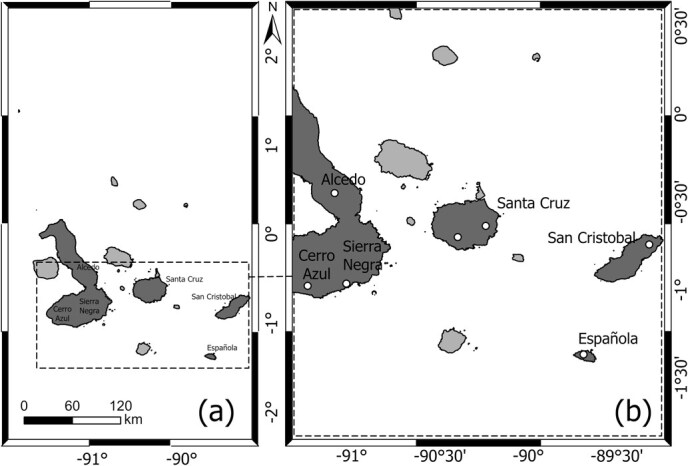
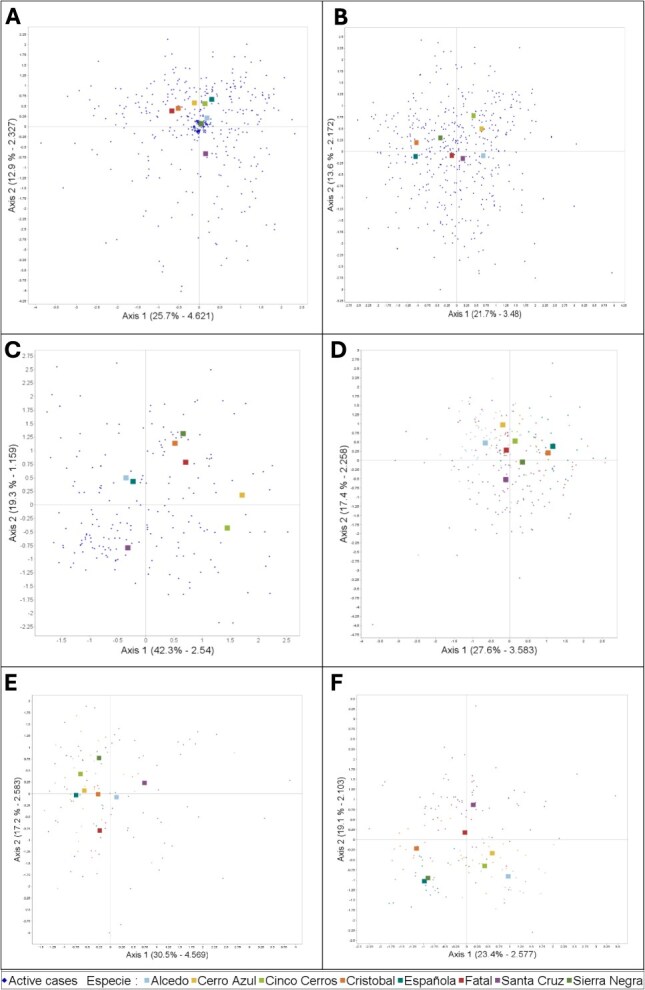
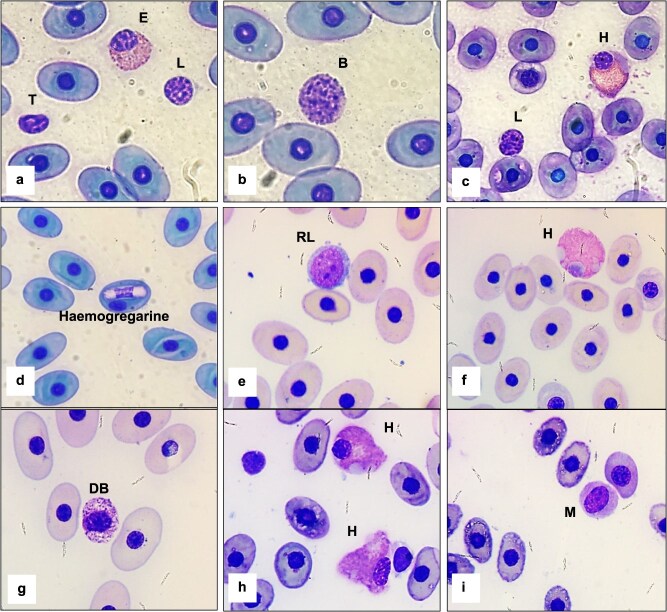
Wildlife health assessments including haematology and biochemistry parameters are essential to evaluating the well-being of free-living species. In Galapagos, the iconic giant tortoises still thrive in the archipelago despite anthropogenic pressures, with up to 13 extant species distributed across most islands and ecosystems. In previous work conducted by our research group, we described for the first-time reference intervals of haematology and plasma biochemistry in four Galapagos tortoise species. With the aim of continuing to provide cutting-edge health data for Galapagos tortoises, here we report haematology and plasma biochemistry descriptive statistics, reference intervals and cell morphology of tortoises from four different tortoise populations (i.e. Alcedo Volcano, Cerro Azul Volcano, Cinco Cerros and Sierra Negra Volcano) Additionally, we compared values between sexes and applied a principal component analysis to explore differences in haematology and biochemistry parameters between tortoise populations, including those previously published by our research group. Females presented higher calcium, phosphorus and albumin, consistent with vitellogenesis, whereas males had higher packed cell volume and sodium than females. Blood cell morphology was consistent across species. The two main principal components of the multivariate statistical model were unable to explain >44.9% of the variance across tortoise populations. We suggest additional research to explore the correlation between anthropogenic factors (i.e. climate change, pesticides, plastics) and blood values, for a deeper understanding of tortoise physiology and ultimately improved diagnostics and management actions. In the anthropogenic era, understanding the health status of bioindicator species like Galapagos tortoises is mandatory to inform current and future conservation priorities and actions.
包括血液学和生物化学参数在内的野生动物健康评估对于评估自由生活物种的健康状况至关重要。在加拉帕戈斯群岛,标志性的巨型陆龟尽管面临人为压力,但仍在该群岛繁衍生息,多达13个现存物种分布在大多数岛屿和生态系统中。在我们研究小组之前进行的工作中,我们首次描述了四种加拉帕戈斯陆龟物种的血液学和血浆生物化学参考区间。为了继续为加拉帕戈斯陆龟提供前沿的健康数据,我们在此报告来自四个不同陆龟种群(即阿尔塞多火山、塞罗阿苏尔火山、五峰和塞拉内格拉火山)的陆龟的血液学和血浆生物化学描述性统计数据、参考区间和细胞形态。此外,我们比较了不同性别的数值,并应用主成分分析来探索不同陆龟种群之间血液学和生物化学参数的差异,包括我们研究小组之前发表的数据。雌性呈现出较高的钙、磷和白蛋白水平,这与卵黄生成一致,而雄性的红细胞压积和钠含量高于雌性。不同物种的血细胞形态一致。多元统计模型的两个主要主成分无法解释陆龟种群中超过44.9%的方差。我们建议进行更多研究,以探索人为因素(即气候变化、农药、塑料)与血液值之间的相关性,以便更深入地了解陆龟生理学,并最终改进诊断和管理措施。在人为时代,了解像加拉帕戈斯陆龟这样的生物指示物种的健康状况对于为当前和未来的保护重点及行动提供信息至关重要。