Straight Chad R, McKenzie Kari L, Sargent Ava L, Racicot Kenneth, Hatch-McChesney Adrienne, Ndou Tshinanne V, O'Fallon Kevin S
Combat Capabilities Development Command Soldier Center, Natick, Massachusetts, USA.
Oak Ridge Institute for Science and Education, Oak Ridge, Tennessee, USA.
Physiol Rep. 2025 Aug;13(15):e70268. doi: 10.14814/phy2.70268.
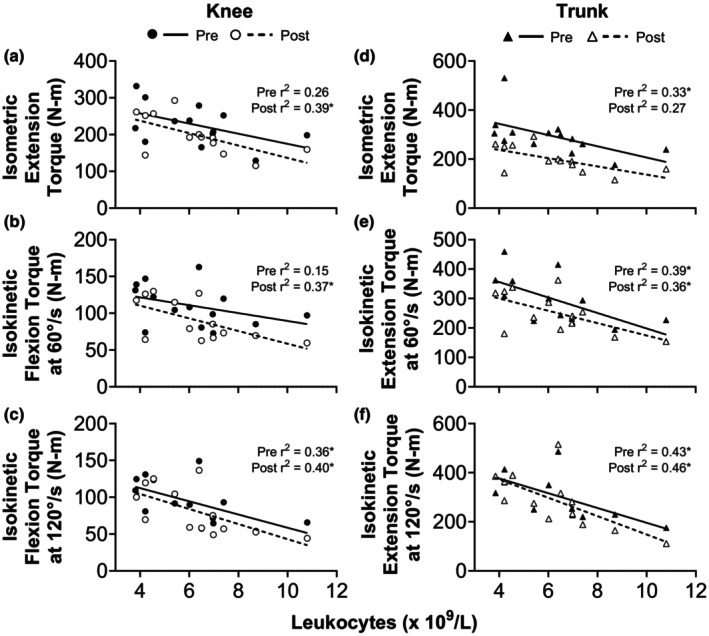
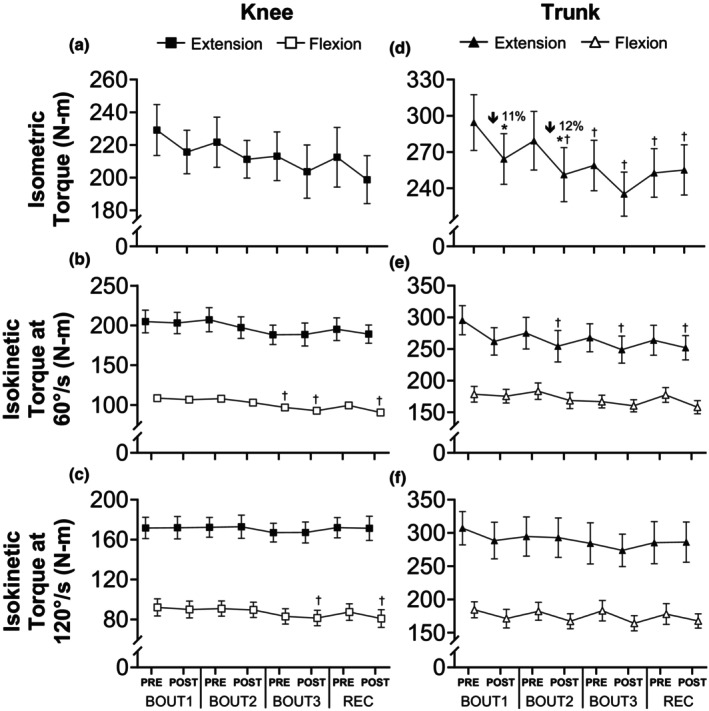
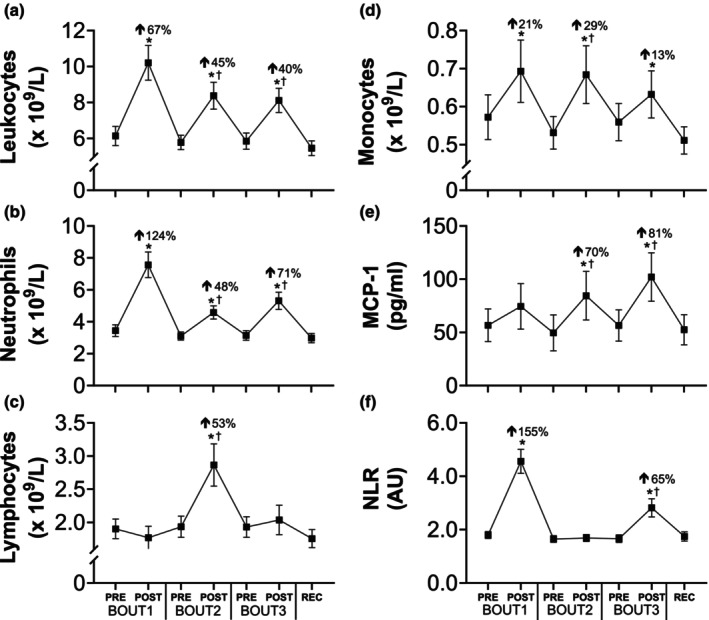
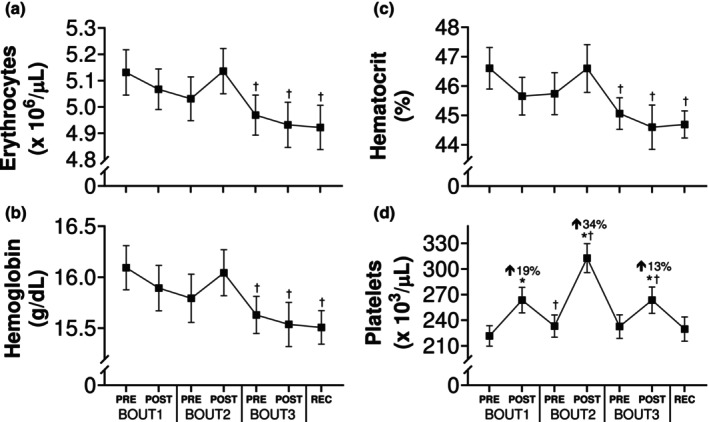
Soldiers are often required to carry heavy external loads over multiple days, which may degrade physical performance. We investigated the effects of repeated load carriage bouts on indirect markers of exercise-induced muscle damage, liver enzymes, and oxygen-carrying capacity in active-duty infantrymen. Fourteen male soldiers (age = 24.6 ± 1.1 y; BMI = 25.7 ± 0.7 kg/m) underwent a 5-day protocol, consisting of baseline/familiarization, 3 load carriage bouts, and a recovery day. There were reductions in maximal voluntary contraction strength (p < 0.05), with the knee flexors and trunk extensors showing the greatest declines. Each load carriage bout produced an inflammatory response, including increases in leukocyte subtypes (neutrophils and monocytes) and monocyte chemoattractant protein-1 (p < 0.05). At the end of the protocol, serum liver enzymes were elevated, and erythrocytes and hematocrit were lower than baseline (p < 0.05). In addition, greater circulating leukocytes at baseline predicted lower knee and trunk torque during recovery. Repeated bouts of load carriage reduce muscle strength and cause inflammation consistent with exercise-induced muscle damage, alter liver function tests, and decrease oxygen-carrying capacity in male soldiers, which could compromise readiness for prolonged and/or intense military operations.
士兵常常需要连续多日背负沉重的外部负荷,这可能会降低身体机能。我们研究了反复进行负荷行军对现役步兵运动诱导的肌肉损伤、肝酶和携氧能力间接指标的影响。14名男性士兵(年龄 = 24.6 ± 1.1岁;体重指数 = 25.7 ± 0.7 kg/m²)接受了一个为期5天的方案,包括基线/熟悉阶段、3次负荷行军以及1天恢复日。最大自主收缩力量有所下降(p < 0.05),其中屈膝肌和躯干伸肌下降最为明显。每次负荷行军都会引发炎症反应,包括白细胞亚型(中性粒细胞和单核细胞)以及单核细胞趋化蛋白-1增加(p < 0.05)。在方案结束时,血清肝酶升高,红细胞和血细胞比容低于基线水平(p < 0.05)。此外,基线时循环白细胞水平较高预示着恢复期间膝关节和躯干扭矩较低。反复进行负荷行军会降低肌肉力量,引发与运动诱导的肌肉损伤一致的炎症,改变肝功能测试结果,并降低男性士兵的携氧能力,这可能会影响他们进行长时间和/或高强度军事行动的准备状态。