Fang Quangang, Kong Weili, Zhou Huaping, Pang Yilin, Liu Haiyun
Department of Laboratory, Jiangxi Provincial People's Hospital, The First Affiliated Hospital of Nanchang Medical College, Nangchang, 330000, China.
Zhejiang Provincial Key Laboratory of Medical Genetics, School of Laboratory Medicine and Life Sciences, Wenzhou Medical University, Wenzhou, 325035, Zhejiang, China.
Eur J Med Res. 2025 Jul 30;30(1):689. doi: 10.1186/s40001-025-02953-1.
Systemic lupus erythematosus (SLE) is an incurable autoimmune disease that affects body tissues, but it can be managed with medication. Although therapeutic strategies for SLE have advanced, the underlying molecular mechanisms driving disease pathogenesis remain incompletely understood.
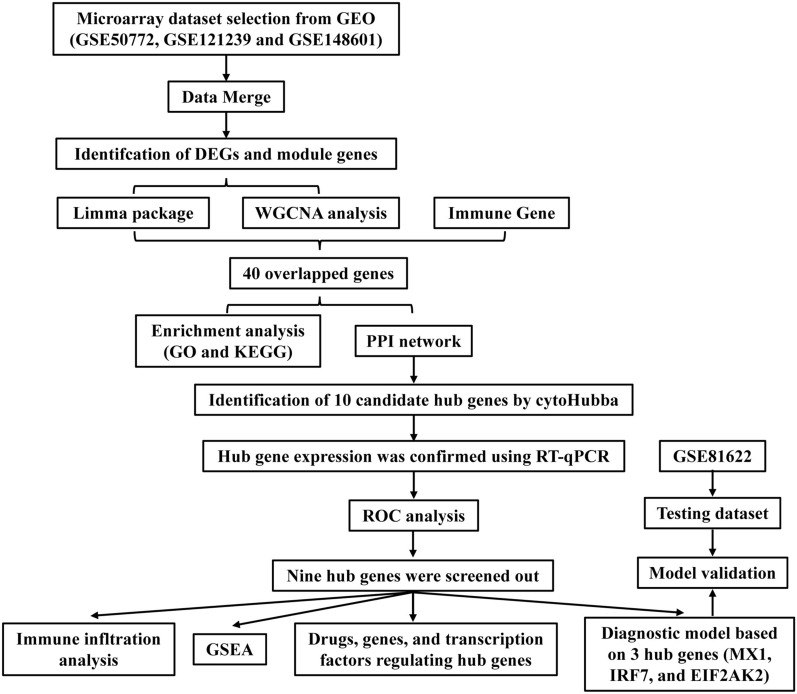
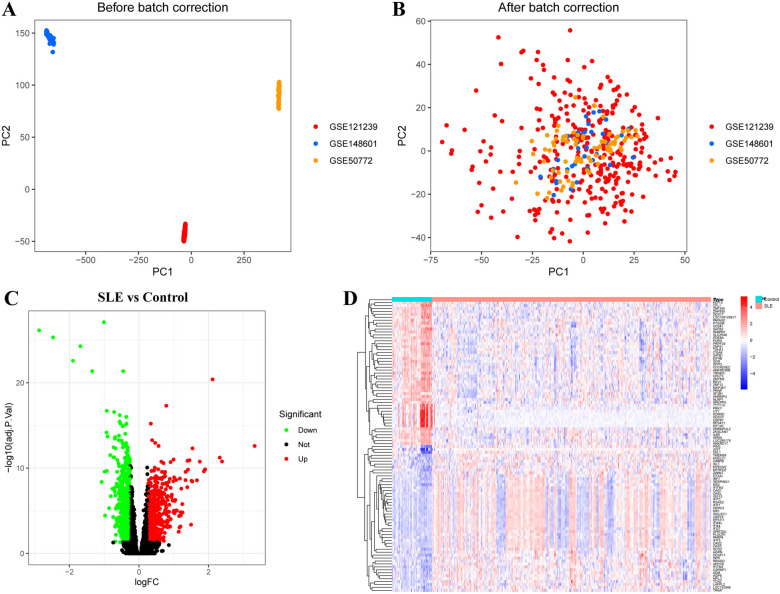
This study analyzed gene expression data from three GEO microarray datasets to explore immunity-related differentially expressed genes (DEGs) in SLE. Using WGCNA, we identified gene modules and integrated them with immune-related DEGs to find candidate hub genes, which were validated using RT-qPCR. We constructed a PPI network and performed gene enrichment analysis to identify nine hub genes through ROC curve analysis. We confirmed the link between these hub genes and immune cells, conducted GSEA, and predicted drugs, miRNAs, and transcription factors (TFs) targeting these genes. LASSO and ROC analyses validated a model using immunity-related DEGs.
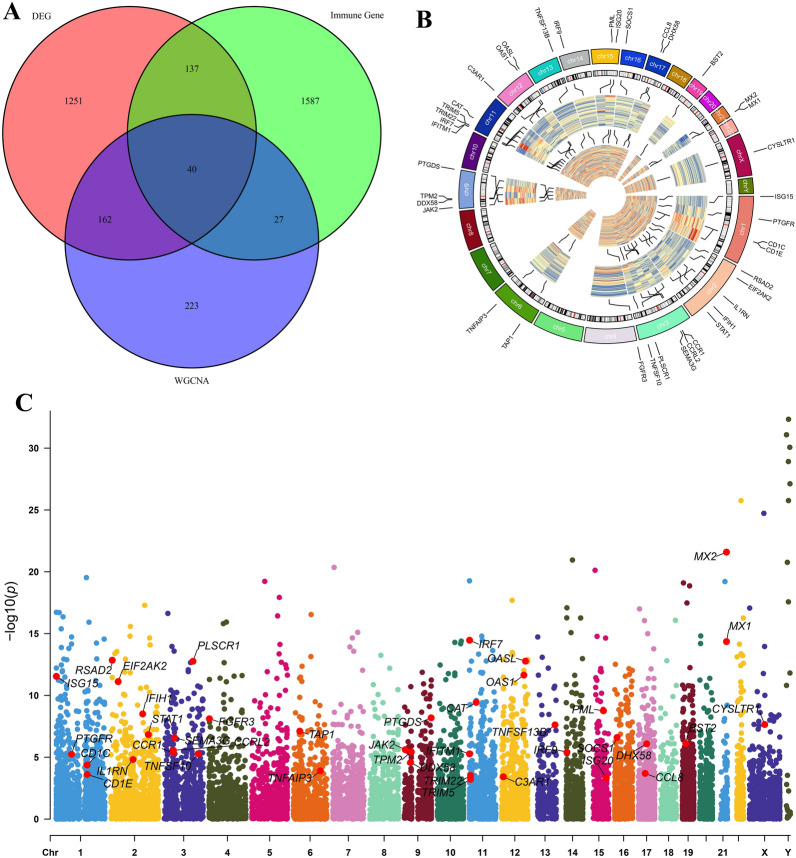
The forty immune-related DEGs were identified from a total of 1590 DEGs, 452 WGCN module genes, and 1791 immune genes. Nine hub genes (MX1, OAS1, OASL, IRF7, RSAD2, EIF2AK2, ISG15, IFIH1, and STAT1) were highlighted using Cytoscape and ROC analysis, with an AUC greater than 0.7. RT-qPCR confirmed significant overexpression of all hub genes except STAT1 in SLE. ssGSEA and GSEA linked these genes to immune cell infiltration and pathways, including "cell cycle" and "RIG-I-like receptor signaling." A diagnostic model with three immune-related hub genes (MX1, IRF7, and EIF2AK2) demonstrated high accuracy (AUC > 0.8) in distinguishing SLE from healthy controls. Additionally, 9 target drugs, 14 target miRNAs, and 23 TFs were identified for these hub genes.
MX1, IRF7, and EIF2AK2 may serve as candidate biomarkers for SLE and warrant further investigation.
系统性红斑狼疮(SLE)是一种无法治愈的自身免疫性疾病,会影响身体组织,但可以通过药物进行控制。尽管针对SLE的治疗策略已经取得进展,但驱动疾病发病机制的潜在分子机制仍未完全了解。
本研究分析了来自三个GEO微阵列数据集的基因表达数据,以探索SLE中与免疫相关的差异表达基因(DEG)。使用加权基因共表达网络分析(WGCNA),我们识别了基因模块,并将它们与免疫相关的DEG整合,以找到候选枢纽基因,并用逆转录定量聚合酶链反应(RT-qPCR)进行验证。我们构建了蛋白质-蛋白质相互作用(PPI)网络,并进行基因富集分析,通过ROC曲线分析识别出9个枢纽基因。我们证实了这些枢纽基因与免疫细胞之间的联系,进行了基因集富集分析(GSEA),并预测了靶向这些基因的药物、微小RNA(miRNA)和转录因子(TF)。套索回归和ROC分析使用免疫相关的DEG验证了一个模型。
从总共1590个DEG、452个WGCNA模块基因和1791个免疫基因中识别出40个与免疫相关的DEG。使用Cytoscape和ROC分析突出显示了9个枢纽基因(MX1, OAS1, OASL, IRF7, RSAD2, EIF2AK2, ISG15, IFIH1和STAT1),曲线下面积(AUC)大于0.7。RT-qPCR证实,除STAT1外,所有枢纽基因在SLE中均显著过表达。单样本基因集富集分析(ssGSEA)和GSEA将这些基因与免疫细胞浸润和途径联系起来,包括“细胞周期”和“视黄酸诱导基因I样受体信号传导”。一个包含三个与免疫相关的枢纽基因(MX1、IRF7和EIF2AK2)的诊断模型在区分SLE与健康对照方面显示出高准确性(AUC>0.8)。此外,可以识别出这些枢纽基因的9种靶向药物、14种靶向miRNA和23种TF。
MX1、IRF7和EIF2AK2可能作为SLE的候选生物标志物,值得进一步研究。