Zhang Hui, Zhang Jingrao, Hsu Chun Liang, Hui Edward S, Tse Kai-Hei, Mak Henry Ka-Fung, Shum David H K
Department of Rehabilitation Sciences, The Hong Kong Polytechnic University, 999077 Hong Kong, China.
Department of Imaging and Interventional Radiology, The Chinese University of Hong Kong, 999077 Hong Kong, China.
Brain Commun. 2025 Jul 17;7(4):fcaf278. doi: 10.1093/braincomms/fcaf278. eCollection 2025.
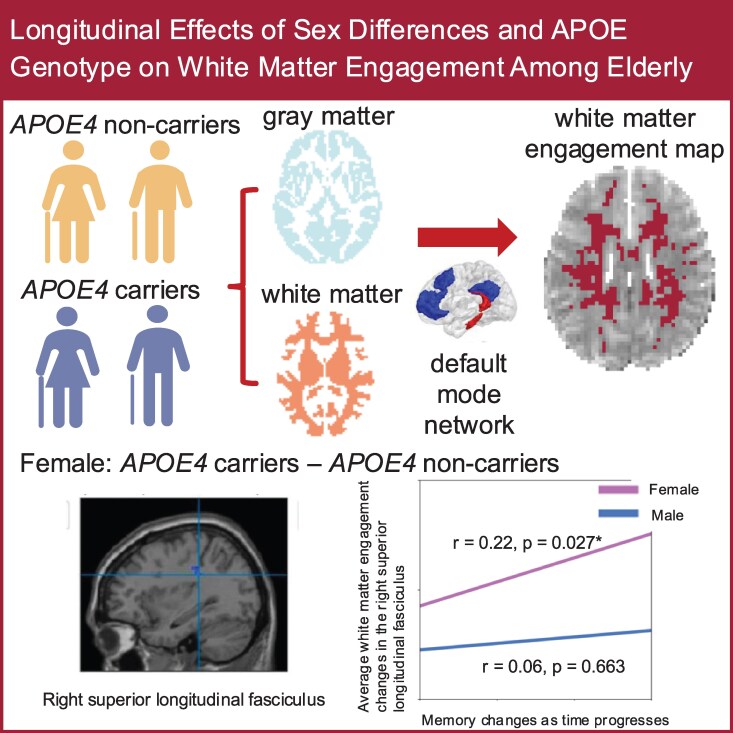
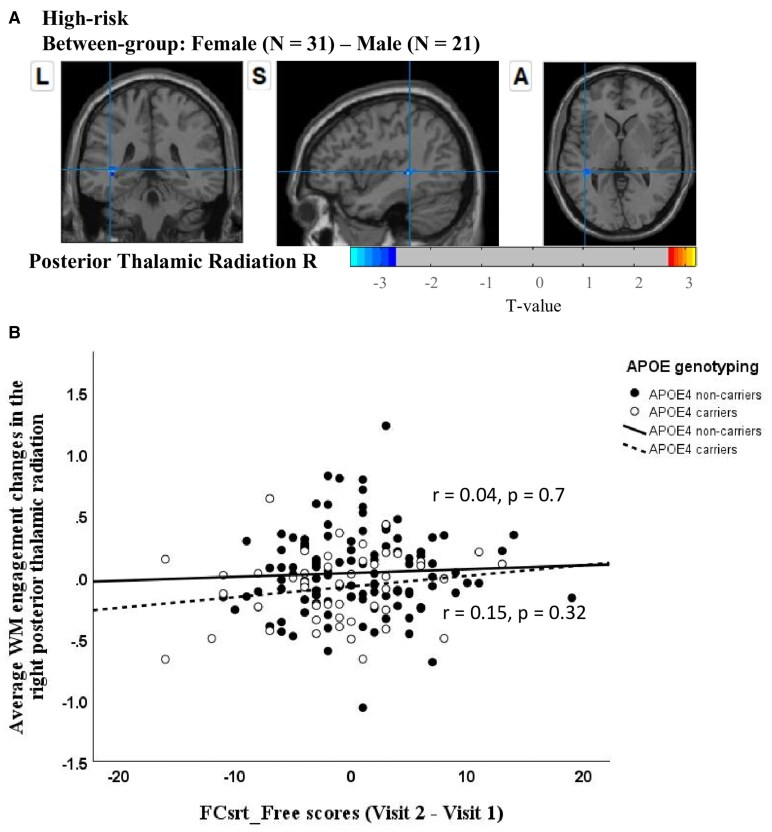
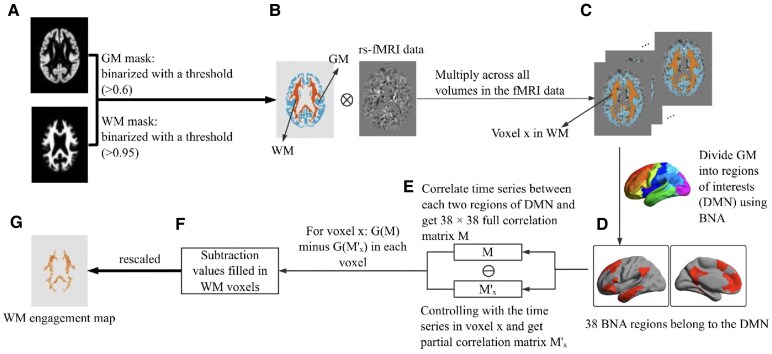
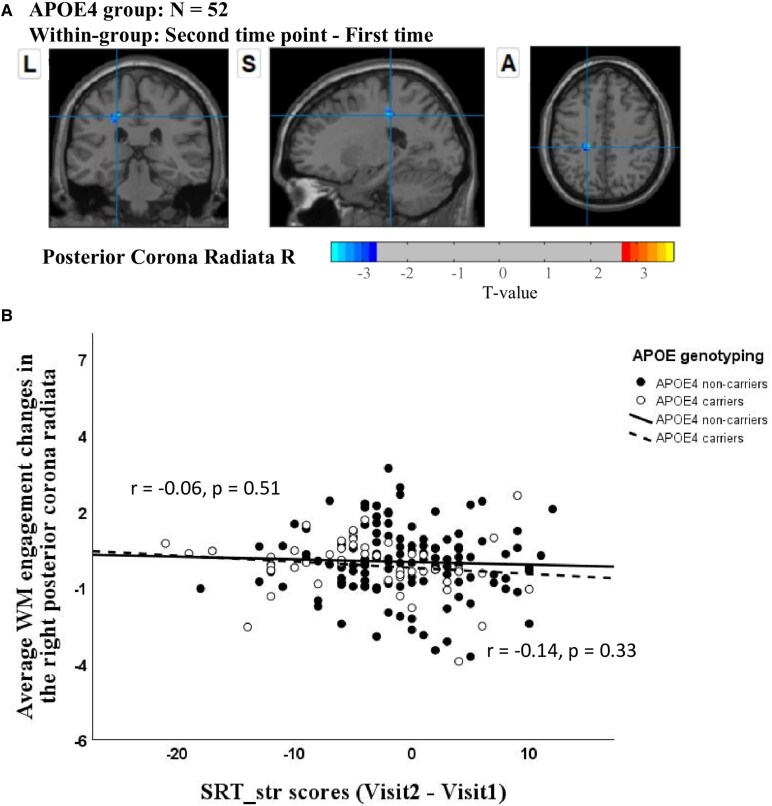
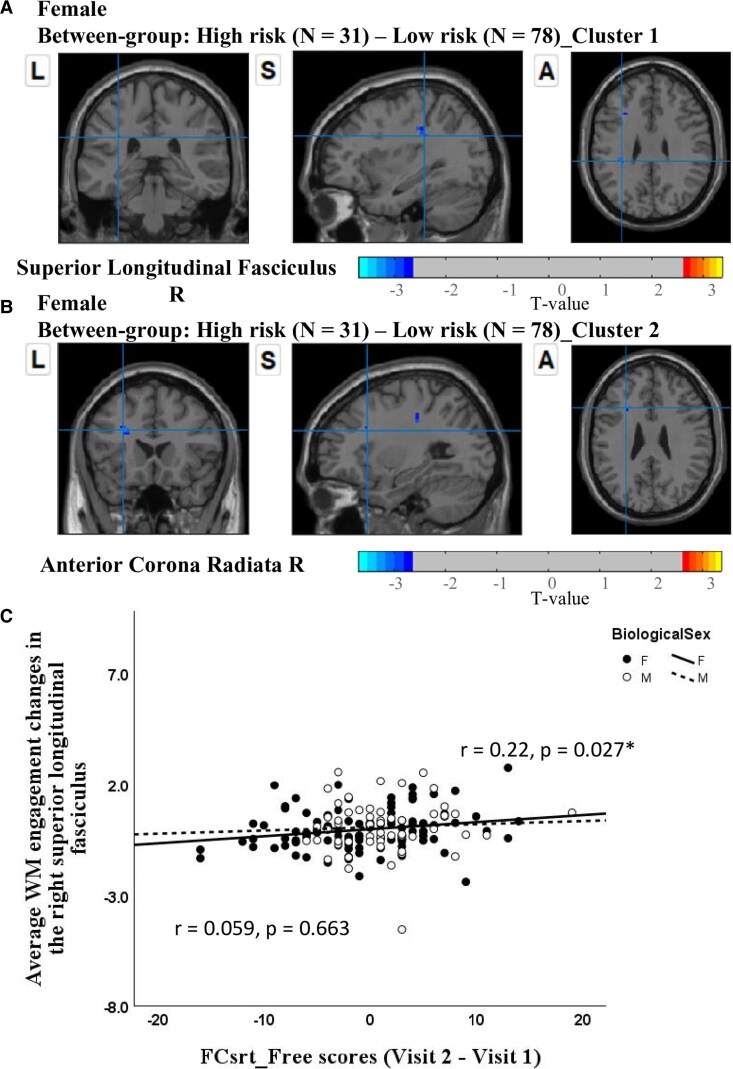
The apolipoprotein E () ɛ4 allele is the primary genetic risk factor that influences lipid metabolism and contributes to distinctive Alzheimer's disease pathologies, including increased hippocampal atrophy and accelerated cognitive decline. Synaptic dysfunction can occur in carriers even before the appearance of any clinical symptoms. Recent evidence has suggested that this genetic risk factor impacts males and females differently. The sex-specific vulnerability for females to cognitive decline, particularly memory, intensifies post-menopause and emphasizes the need for further investigation. White matter abnormalities, allele and disruptions in default mode network connectivity serve as early indicators that are crucial for better understanding Alzheimer's disease progression. This study aims to explore relationships between biological sex, , default mode network-white matter activity and memory function as measured by the Selective Reminding Test. Participants were categorized by risk level on their status. Using longitudinal data from the Harvard Aging Brain Study, we examined sex differences in default mode network-white matter engagement among older individuals with and without the allele. Our findings demonstrated a significant reduction in default mode network-white matter activity in the right posterior corona radiata in the high-risk group compared to the low-risk group. High-risk females showed reduction in default mode network-white matter activity in the right superior longitudinal fasciculus, which positively correlated with free recall performance, compared to their low-risk counterparts. Unlike females, males showed no significant changes between the low- and high-risk groups. These results underscore the effectiveness of white matter engagement mapping in differentiating longitudinal changes in memory function related to the genetic risk factor and biological sex.
载脂蛋白E(ApoE)ε4等位基因是影响脂质代谢并导致独特的阿尔茨海默病病理特征的主要遗传风险因素,这些病理特征包括海马萎缩加剧和认知衰退加速。即使在任何临床症状出现之前,ε4等位基因携带者也可能发生突触功能障碍。最近的证据表明,这种遗传风险因素对男性和女性的影响不同。女性在认知衰退,尤其是记忆方面的性别特异性易感性在绝经后加剧,这突出了进一步研究的必要性。白质异常、ε4等位基因以及默认模式网络连接中断是早期指标,对于更好地理解阿尔茨海默病的进展至关重要。本研究旨在探讨生物学性别、ε4等位基因、默认模式网络-白质活动与通过选择性回忆测试测量的记忆功能之间的关系。参与者根据其ε4等位基因状态的风险水平进行分类。利用哈佛衰老大脑研究的纵向数据,我们研究了有和没有ε4等位基因的老年人在默认模式网络-白质参与方面的性别差异。我们的研究结果表明,与低风险组相比,高风险组右侧放射冠后部的默认模式网络-白质活动显著降低。与低风险女性相比,高风险女性右侧上纵束的默认模式网络-白质活动降低,这与自由回忆表现呈正相关。与女性不同,男性在低风险组和高风险组之间没有显著变化。这些结果强调了白质参与映射在区分与遗传风险因素ε4等位基因和生物学性别相关的记忆功能纵向变化方面的有效性。