
用于基于主体的疟疾传播模型仿真与校准的多任务深度学习
Multitask deep learning for the emulation and calibration of an agent-based malaria transmission model.
作者信息
Mondal Agastya, Anirudh Rushil, Selvaraj Prashanth
机构信息
Divisions of Epidemiology and Biostatistics, School of Public Health, University of California, Berkeley, California, United States of America.
Amazon, Palo Alto, California, United States of America.
出版信息
PLoS Comput Biol. 2025 Jul 31;21(7):e1013330. doi: 10.1371/journal.pcbi.1013330. eCollection 2025 Jul.
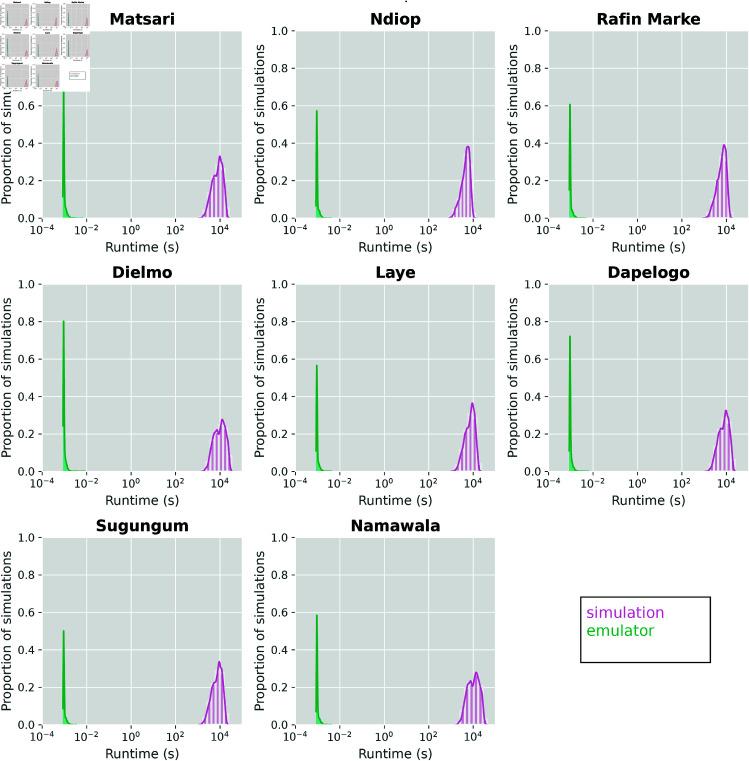
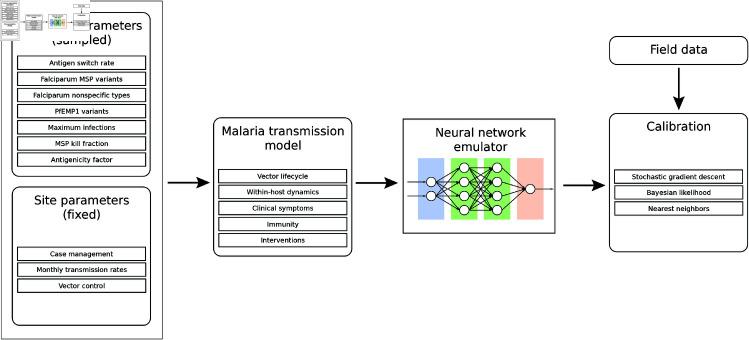
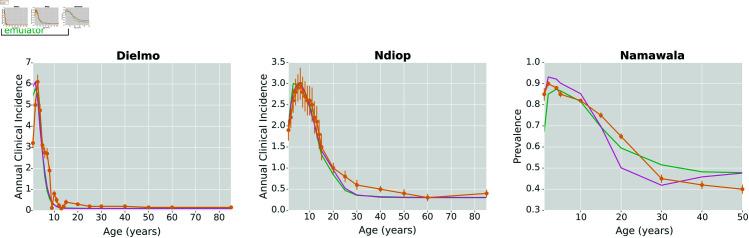
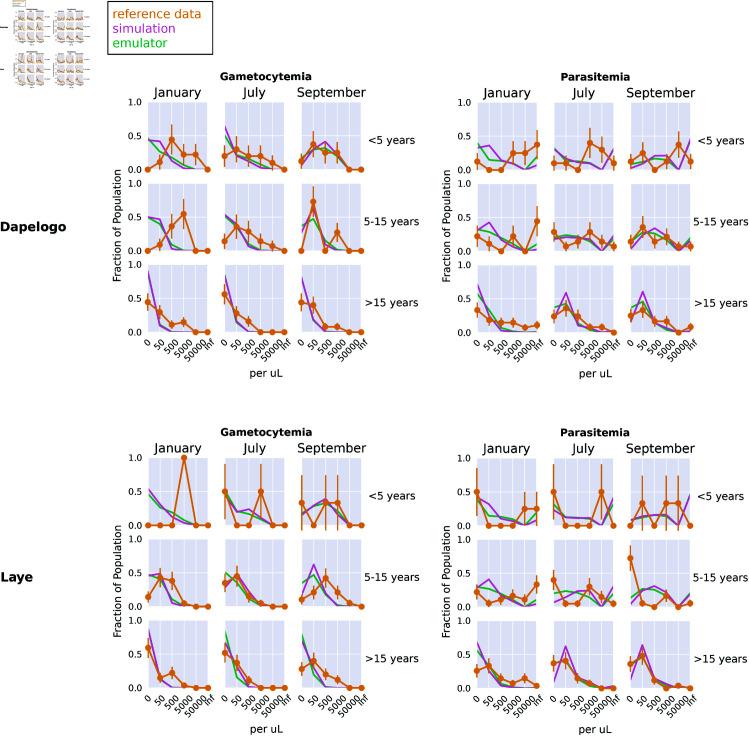
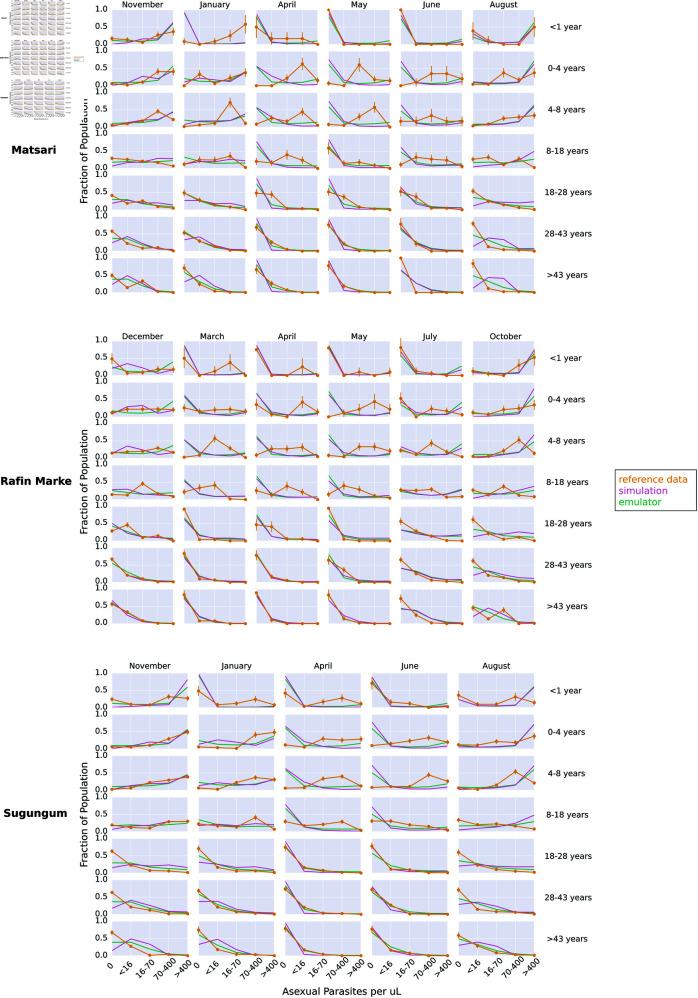
Agent-based models of malaria transmission are useful tools for understanding disease dynamics and planning interventions, but they can be computationally intensive to calibrate. We present a multitask deep learning approach for emulating and calibrating a complex agent-based model of malaria transmission. Our neural network emulator was trained on a large suite of simulations from the EMOD malaria model, an agent-based model of malaria transmission dynamics, capturing relationships between immunological parameters and epidemiological outcomes such as age-stratified incidence and prevalence across eight sub-Saharan African study sites. We then use the trained emulator in conjunction with parameter estimation techniques to calibrate the underlying model to reference data. Taken together, this analysis shows the potential of machine learning-guided emulator design for complex scientific processes and their comparison to field data.
基于主体的疟疾传播模型是理解疾病动态和规划干预措施的有用工具,但校准这些模型可能需要大量计算资源。我们提出了一种多任务深度学习方法,用于模拟和校准一个复杂的基于主体的疟疾传播模型。我们的神经网络模拟器是在来自EMOD疟疾模型的大量模拟数据上进行训练的,EMOD疟疾模型是一个基于主体的疟疾传播动力学模型,它捕捉了免疫参数与流行病学结果之间的关系,如撒哈拉以南非洲八个研究地点的年龄分层发病率和患病率。然后,我们将训练好的模拟器与参数估计技术结合使用,以将基础模型校准到参考数据。综合来看,该分析展示了机器学习引导的模拟器设计在复杂科学过程中的潜力,以及它们与实地数据的比较。
 Zotero 插件