Institute for Disease Modeling, Bill & Melinda Gates Foundation, Seattle, WA, USA.
Department of Life Sciences, Imperial College London, South Kensington, London, UK.
Malar J. 2022 Jul 26;21(1):226. doi: 10.1186/s12936-022-04242-2.
Gene drives are a genetic engineering method where a suite of genes is inherited at higher than Mendelian rates and has been proposed as a promising new vector control strategy to reinvigorate the fight against malaria in sub-Saharan Africa.
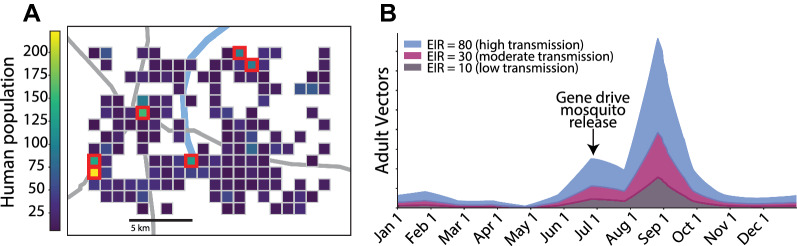
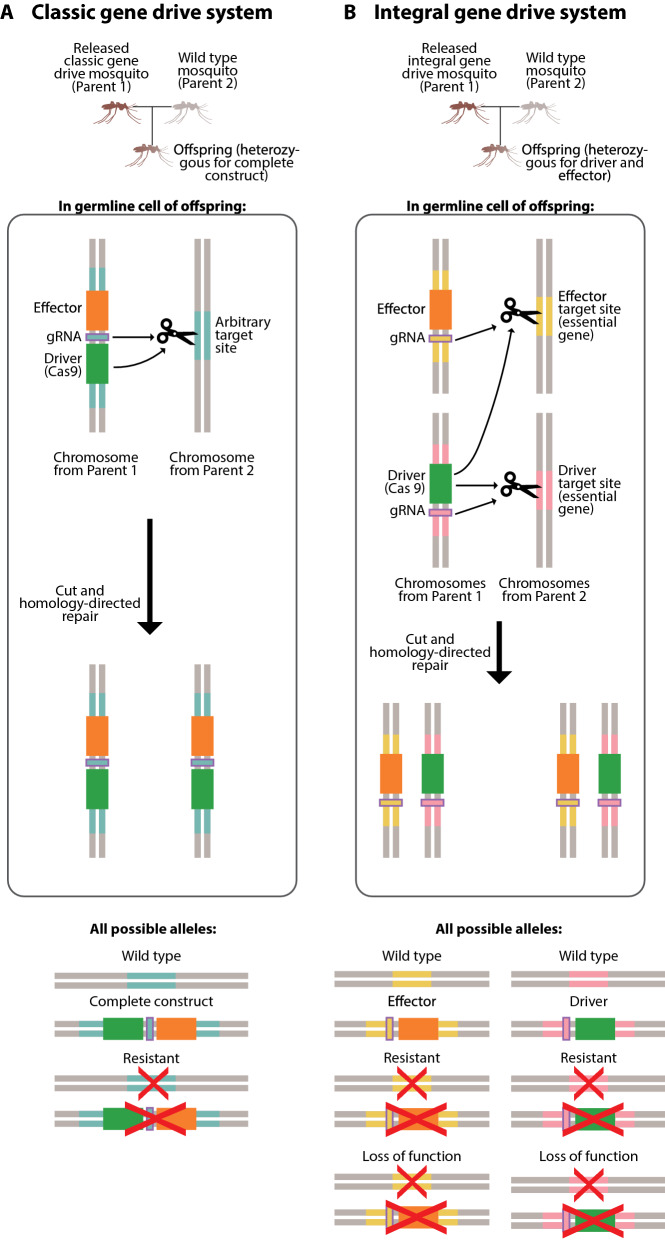
Using an agent-based model of malaria transmission with vector genetics, the impacts of releasing population-replacement gene drive mosquitoes on malaria transmission are examined and the population replacement gene drive system parameters required to achieve local elimination within a spatially-resolved, seasonal Sahelian setting are quantified. The performance of two different gene drive systems-"classic" and "integral"-are evaluated. Various transmission regimes (low, moderate, and high-corresponding to annual entomological inoculation rates of 10, 30, and 80 infectious bites per person) and other simultaneous interventions, including deployment of insecticide-treated nets (ITNs) and passive healthcare-seeking, are also simulated.
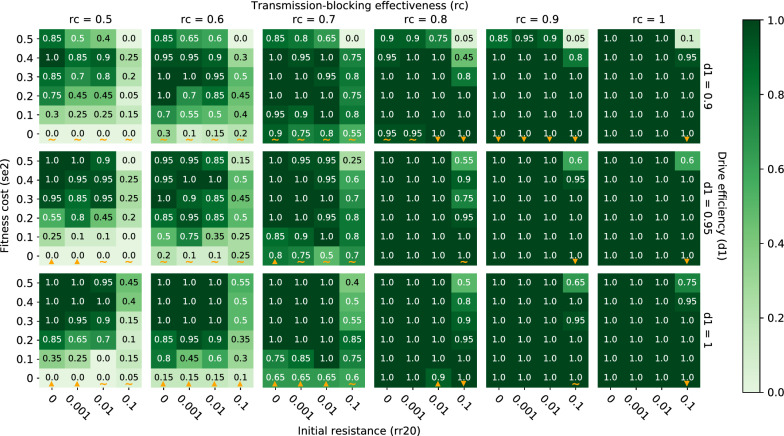
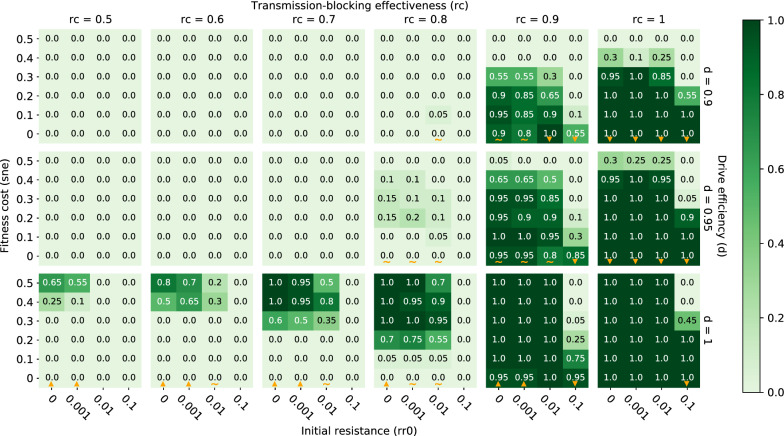
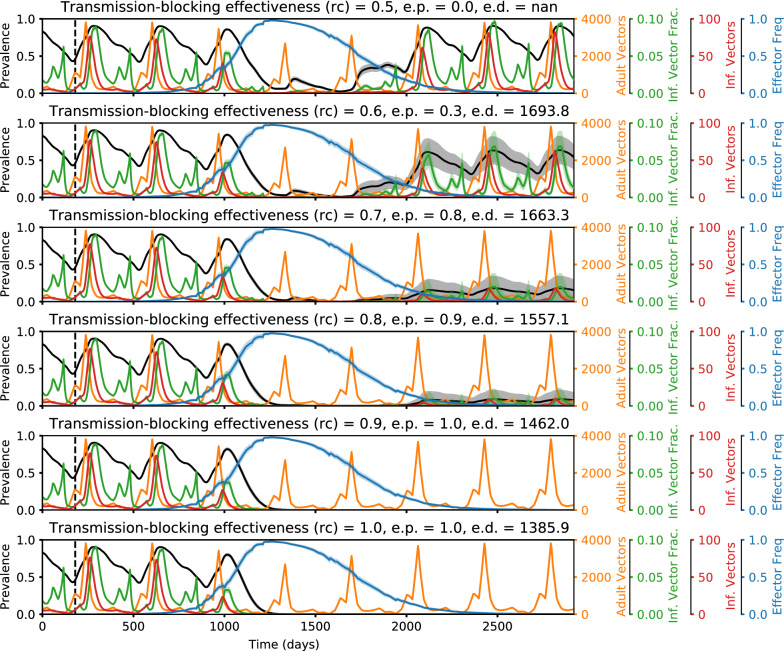
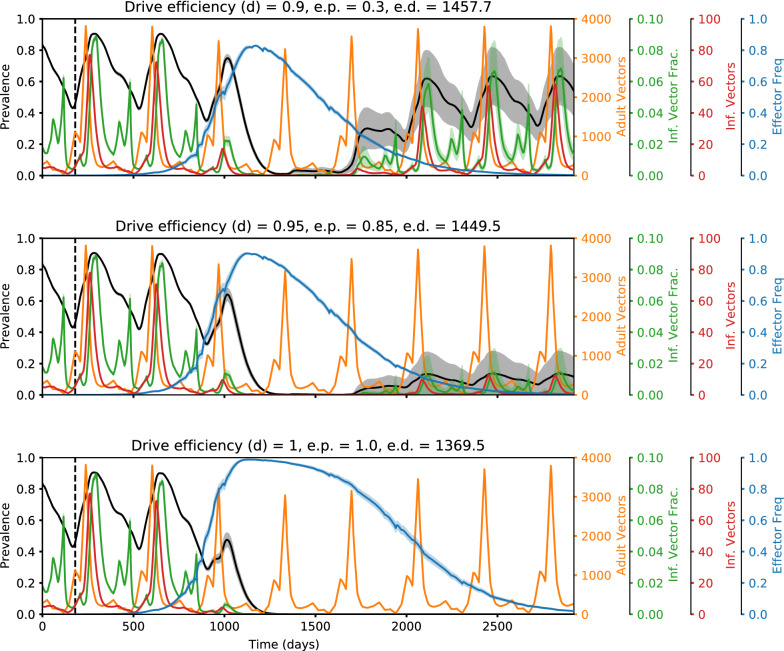
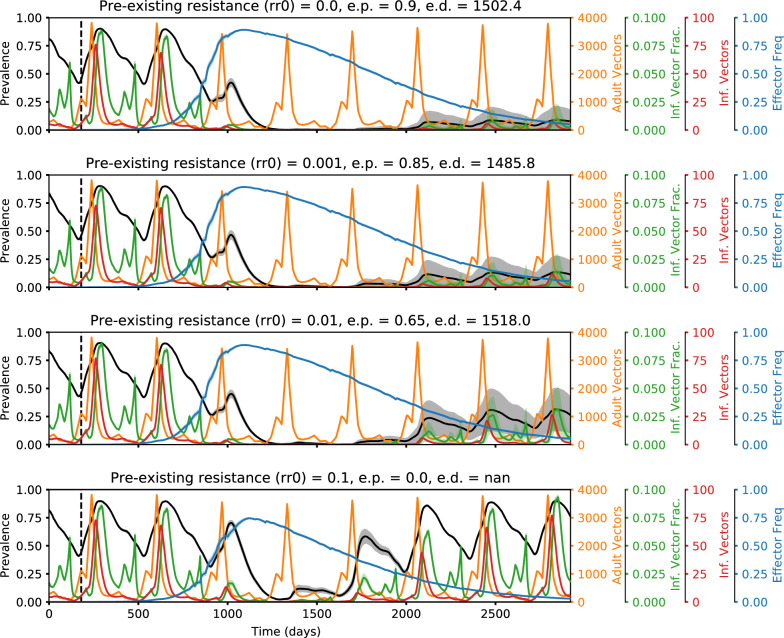
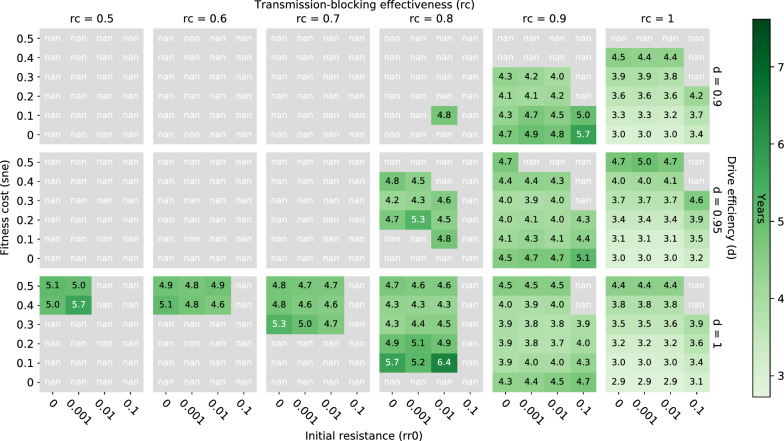
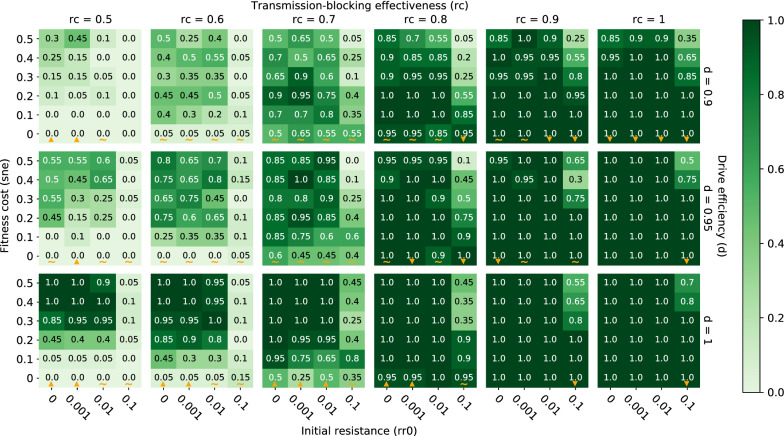
Local elimination probabilities decreased with pre-existing population target site resistance frequency, increased with transmission-blocking effectiveness of the introduced antiparasitic gene and drive efficiency, and were context dependent with respect to fitness costs associated with the introduced gene. Of the four parameters, transmission-blocking effectiveness may be the most important to focus on for improvements to future gene drive strains because a single release of classic gene drive mosquitoes is likely to locally eliminate malaria in low to moderate transmission settings only when transmission-blocking effectiveness is very high (above ~ 80-90%). However, simultaneously deploying ITNs and releasing integral rather than classic gene drive mosquitoes significantly boosts elimination probabilities, such that elimination remains highly likely in low to moderate transmission regimes down to transmission-blocking effectiveness values as low as ~ 50% and in high transmission regimes with transmission-blocking effectiveness values above ~ 80-90%.
A single release of currently achievable population replacement gene drive mosquitoes, in combination with traditional forms of vector control, can likely locally eliminate malaria in low to moderate transmission regimes within the Sahel. In a high transmission regime, higher levels of transmission-blocking effectiveness than are currently available may be required.
基因驱动是一种遗传工程方法,其中一套基因以高于孟德尔的比率遗传,并被提议作为一种有前途的新的媒介控制策略,以重振撒哈拉以南非洲地区对抗疟疾的斗争。
使用具有媒介遗传学的疟疾传播的基于代理的模型,研究了释放种群替代基因驱动蚊子对疟疾传播的影响,并量化了在空间分辨的季节性萨赫勒地区实现局部消除所需的种群替代基因驱动系统参数。评估了两种不同的基因驱动系统-"经典"和"积分"-的性能。模拟了各种传播模式(低、中和高-对应于每年 10、30 和 80 个感染性叮咬/人的昆虫学接种率)和其他同时干预措施,包括使用驱虫蚊帐(ITN)和被动医疗保健寻求。
局部消除概率随目标人群中已有抗性频率的增加而降低,随引入的抗寄生虫基因和驱动效率的阻断传播效果的增加而增加,并且与引入基因相关的适应度成本有关,因环境而异。在这四个参数中,阻断传播效果可能是未来基因驱动菌株改进的最重要关注点,因为只有当阻断传播效果非常高(高于80-90%)时,单次释放经典基因驱动蚊子才可能在低到中度传播环境中局部消除疟疾。然而,同时部署 ITN 和释放积分而不是经典基因驱动蚊子可以显著提高消除概率,使得消除在低到中度传播环境中仍然很有可能,直到阻断传播效果值低至50%,在高传播环境中阻断传播效果值高于~80-90%。
在撒哈拉以南非洲地区,单次释放目前可实现的种群替代基因驱动蚊子,结合传统的媒介控制形式,可能会在低到中度传播环境中局部消除疟疾。在高传播环境中,可能需要比目前可用的更高水平的阻断传播效果。