Zhao Xuan, Tang Weiyun, Liu Qiuyan, Cao Hongtao, Chen Fei
College of Business Administration, Shanghai Urban Construction Vocational College, Shanghai, 200000, China.
School of Economy and Management, Zhejiang University of Water Resources and Electric Power, Hangzhou, 310000, China.
Sci Rep. 2025 Jul 31;15(1):27929. doi: 10.1038/s41598-025-14073-1.
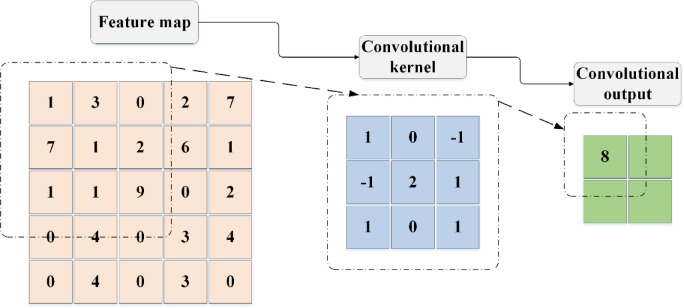
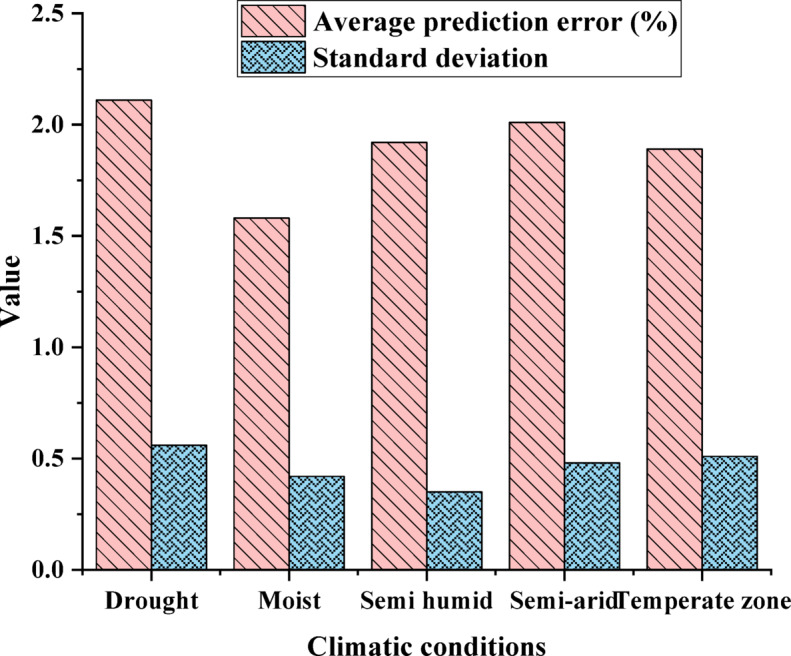
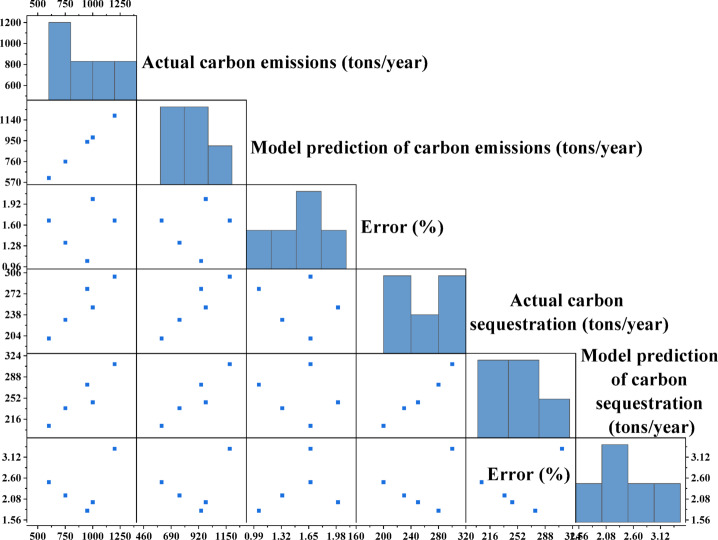
This study provides scientific evidence to support sustainable agricultural development and advance the dual carbon goals. A hybrid deep learning model-combining Convolutional Neural Networks and Long Short-Term Memory networks-is developed to evaluate the effects of agricultural industry transformation. Convolutional Neural Networks are used to extract spatial features from agricultural data, while Long Short-Term Memory networks processed time series data. To enhance model performance, the slime mould algorithm is employed for parameter optimization. Experimental results demonstrated that the hybrid model achieves excellent predictive accuracy, with crop yield prediction exceeding 99%. The average error between the model's evaluation and the actual transformation outcomes is only 3.33%. Across various climatic conditions, the average prediction error remains below 2.5%, indicating strong adaptability and stability. Compared with traditional methods-such as deep neural networks, support vector machines, and linear regression-the proposed model effectively integrates static and dynamic agricultural data. Static features, including farmland distribution and soil types, are extracted using Convolutional Neural Networks, while temporal trends in variables such as weather patterns and policy changes are captured by the Long Short-Term Memory network. This adaptive fusion of multidimensional data significantly improves the accuracy of both crop yield forecasting and agricultural transformation assessment. In conclusion, the model offers a robust, high-accuracy decision-support tool for promoting low-carbon agricultural development. It provides practical insights for advancing sustainability and supporting the national dual carbon strategy.
本研究为支持可持续农业发展和推进双碳目标提供了科学依据。开发了一种结合卷积神经网络和长短期记忆网络的混合深度学习模型,以评估农业产业转型的影响。卷积神经网络用于从农业数据中提取空间特征,而长短期记忆网络则处理时间序列数据。为了提高模型性能,采用黏菌算法进行参数优化。实验结果表明,该混合模型具有出色的预测精度,作物产量预测准确率超过99%。模型评估与实际转型结果之间的平均误差仅为3.33%。在各种气候条件下,平均预测误差均保持在2.5%以下,表明具有很强的适应性和稳定性。与深度神经网络、支持向量机和线性回归等传统方法相比,所提出的模型有效地整合了静态和动态农业数据。利用卷积神经网络提取包括农田分布和土壤类型在内的静态特征,同时通过长短期记忆网络捕捉天气模式和政策变化等变量的时间趋势。这种多维数据的自适应融合显著提高了作物产量预测和农业转型评估的准确性。总之,该模型为促进低碳农业发展提供了一个强大、高精度的决策支持工具。它为推进可持续发展和支持国家双碳战略提供了实际见解。