Chen Ying-Tsun, Liu Zihua, Fucich Dario, Giulieri Stefano G, Liu Zhe, Wadhwa Ridhima, Rios Gustavo, Henschel Henning, Tyagi Nupur, Olivier Françios A B, Monk Ian R, Shah Shivang S, Sridhar Shwetha H, Drikic Marija, Bianco Colleen, Lohia Gaurav K, Beg Ayesha Z, Planet Paul J, Lewis Ian A, Sebra Robert, Traven Ana, Hachani Abderrahman, Stinear Timothy P, Howden Benjamin P, Boyd Jeffrey M, Riquelme Sebastian A, Wang Chu, Prince Alice, Wong Fok Lung Tania
Department of Pediatrics, Columbia University, New York, NY, USA.
Peking-Tsinghua Center for Life Sciences, Academy for Advanced Interdisciplinary Studies, Peking University, Beijing, China.
Nat Commun. 2025 Aug 1;16(1):7050. doi: 10.1038/s41467-025-62453-y.
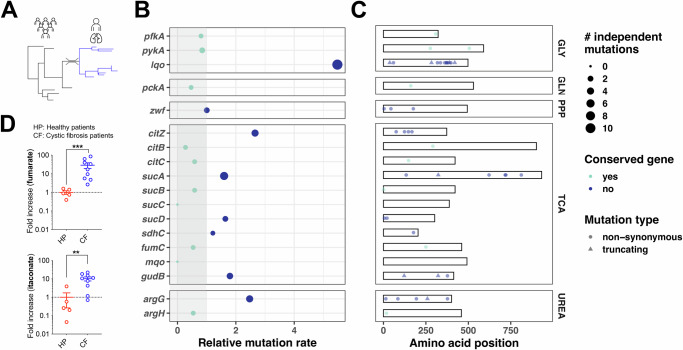
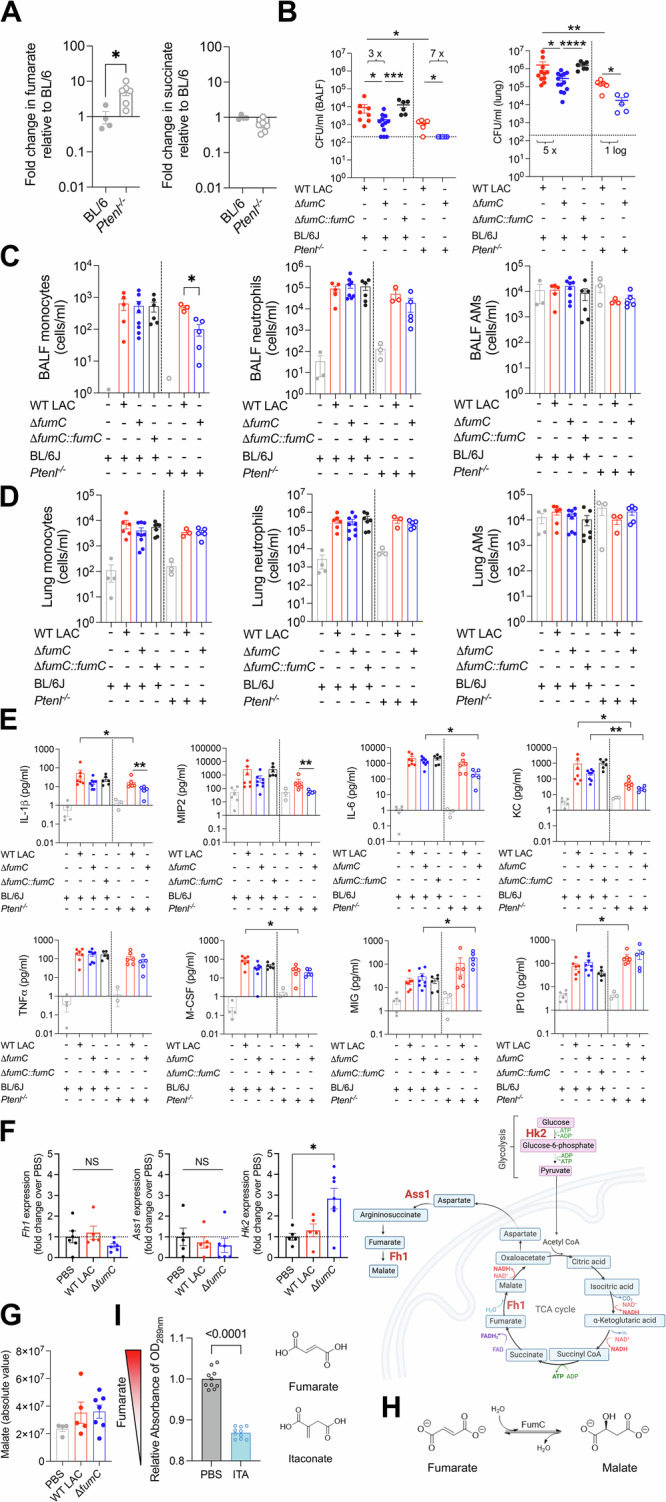
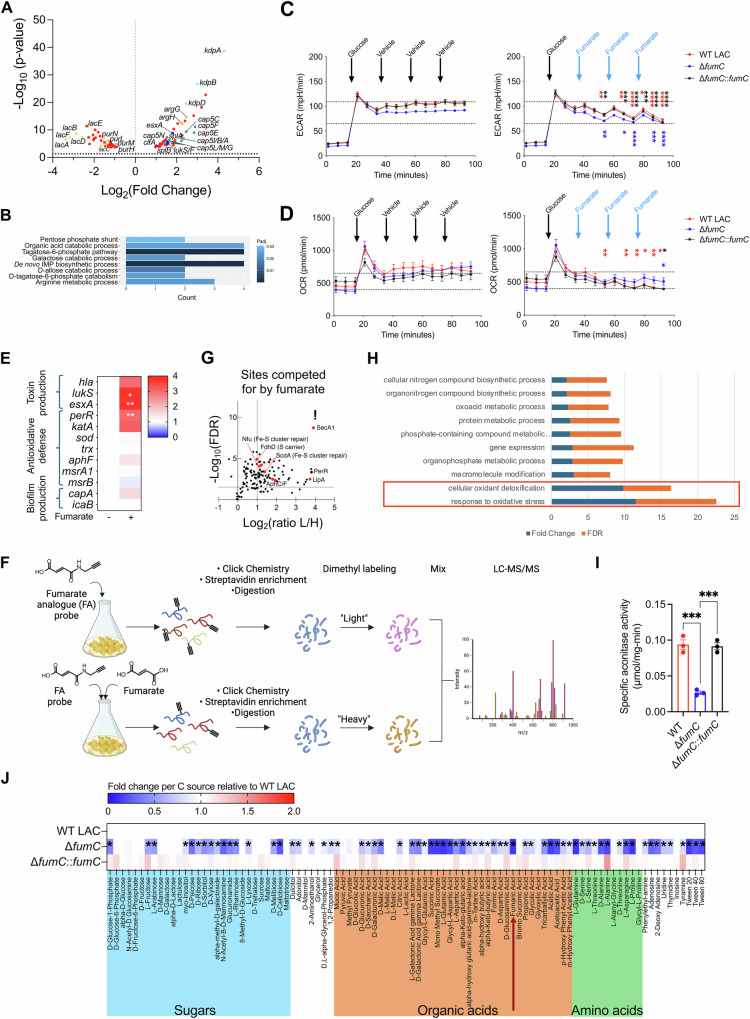
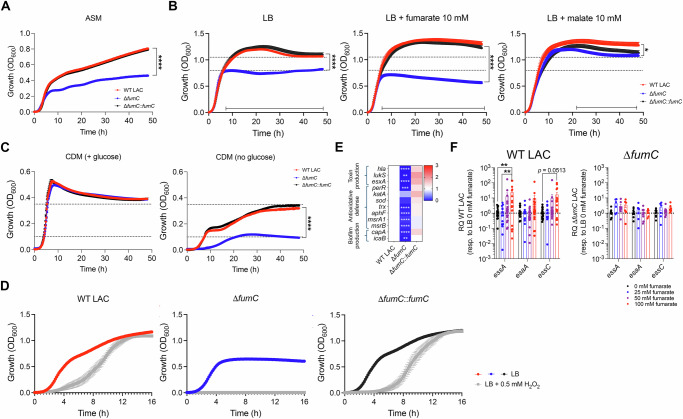
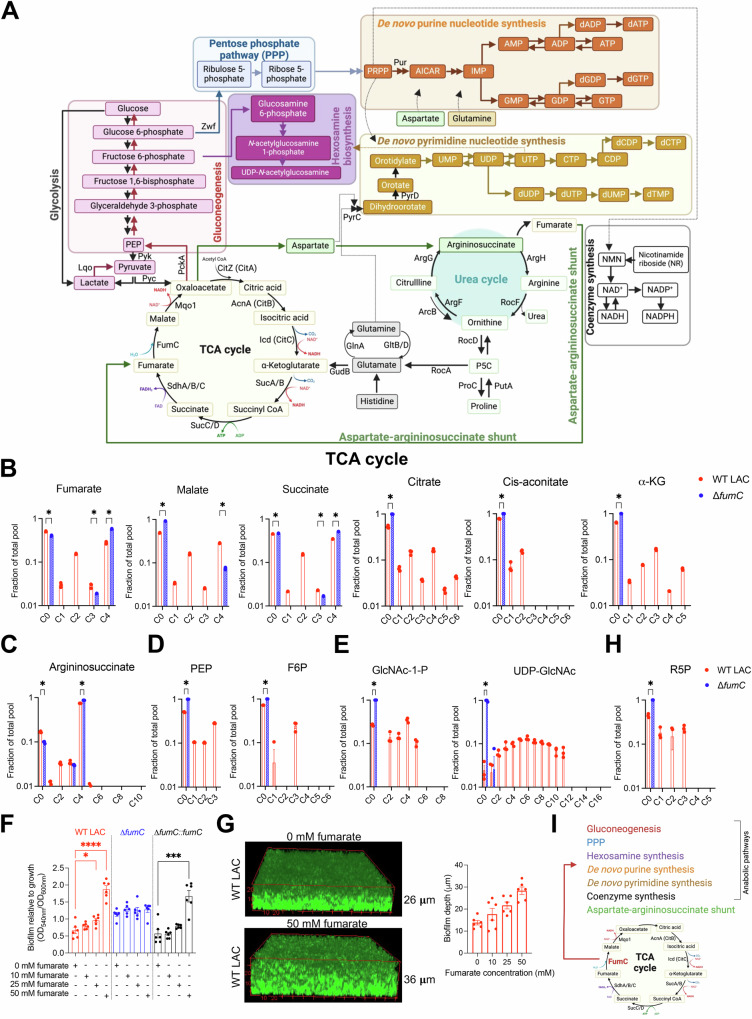
Staphylococcus aureus is a leading cause of healthcare-associated pneumonia, contributing significantly to morbidity and mortality worldwide. As a ubiquitous colonizer of the upper respiratory tract, S. aureus must undergo substantial metabolic adaptation to achieve persistent infection in the distinctive microenvironment of the lung. We observed that fumC, which encodes the enzyme that converts fumarate to malate, is highly conserved with low mutation rates in S. aureus isolates from chronic lung infections. Fumarate, a pro-inflammatory metabolite produced by macrophages during infection, is regulated by the host fumarate hydratase (FH) to limit inflammation. Here, we demonstrate that fumarate, which accumulates in the chronically infected lung, is detrimental to S. aureus, blocking primary metabolic pathways such as glycolysis and oxidative phosphorylation (OXPHOS). This creates a metabolic bottleneck that drives staphylococcal FH (FumC) activity for airway adaptation. FumC not only degrades fumarate but also directs its utilization into critical pathways including the tricarboxylic acid (TCA) cycle, gluconeogenesis and hexosamine synthesis to maintain metabolic fitness and form a protective biofilm. Itaconate, another abundant immunometabolite in the infected airway enhances FumC activity, in synergy with fumarate. In a mouse model of pneumonia, a ΔfumC mutant displays significant attenuation compared to its parent and complemented strains, particularly in fumarate- and itaconate-replete conditions. Our findings underscore the pivotal role of immunometabolites in promoting S. aureus pulmonary adaptation.
金黄色葡萄球菌是医疗保健相关肺炎的主要病因,在全球范围内对发病率和死亡率有重大影响。作为上呼吸道普遍存在的定植菌,金黄色葡萄球菌必须经历大量的代谢适应,才能在肺部独特的微环境中实现持续感染。我们观察到,编码将富马酸盐转化为苹果酸盐的酶的fumC,在慢性肺部感染的金黄色葡萄球菌分离株中高度保守,突变率低。富马酸盐是巨噬细胞在感染过程中产生的一种促炎代谢物,受宿主富马酸水合酶(FH)调节以限制炎症。在此,我们证明在慢性感染的肺部中积累的富马酸盐对金黄色葡萄球菌有害,会阻断糖酵解和氧化磷酸化(OXPHOS)等主要代谢途径。这造成了一个代谢瓶颈,驱动葡萄球菌FH(FumC)活性以适应气道环境。FumC不仅降解富马酸盐,还将其利用导向包括三羧酸(TCA)循环、糖异生和己糖胺合成在内的关键途径,以维持代谢适应性并形成保护性生物膜。衣康酸盐是感染气道中另一种丰富的免疫代谢物,与富马酸盐协同增强FumC活性。在肺炎小鼠模型中,与亲本菌株和互补菌株相比,ΔfumC突变体表现出显著的毒力减弱,尤其是在富马酸盐和衣康酸盐充足的条件下。我们的研究结果强调了免疫代谢物在促进金黄色葡萄球菌肺部适应中的关键作用。