Karami Esmail, Sarkaki Alireza, Farbood Yaghoob, Moradi Vastegani Sadegh
Clinical Biomechanics and Ergonomics Research Center, AJA University of Medical Sciences, Tehran, Iran.
Persian Gulf Physiology Research Center, Medical Basic Sciences Research Institute, Ahvaz Jundishapur University of Medical Sciences, Ahvaz, Iran.
Sci Rep. 2025 Aug 4;15(1):28362. doi: 10.1038/s41598-025-13760-3.
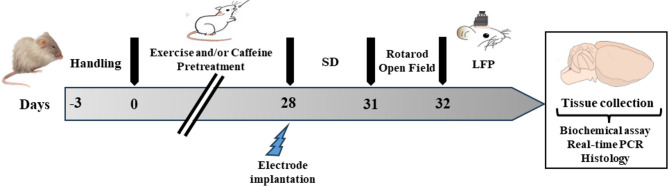
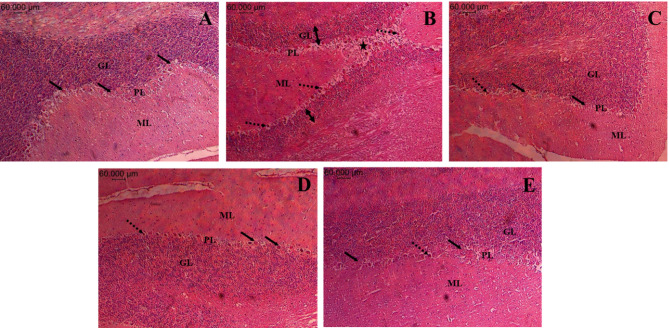
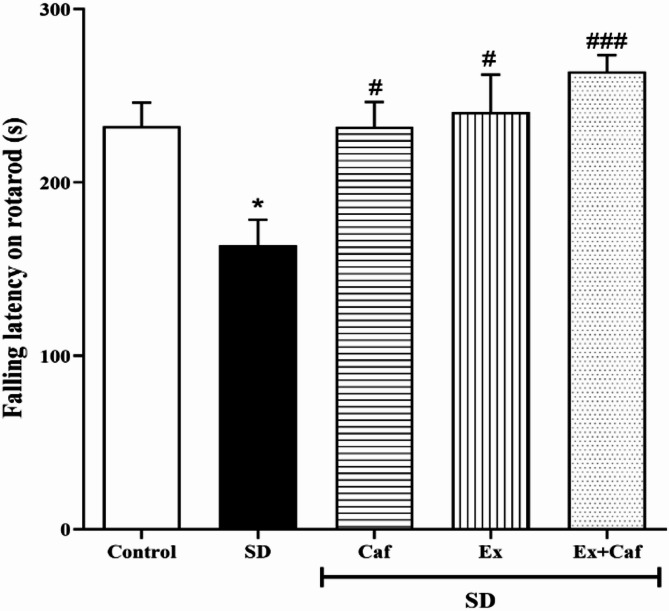
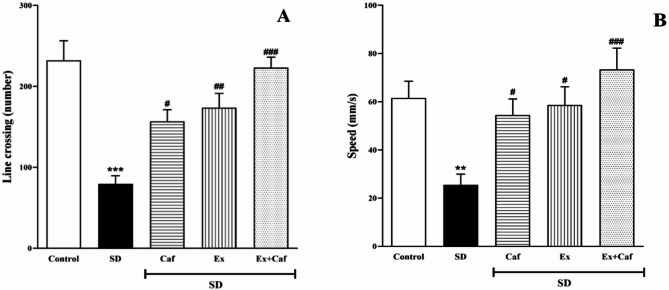
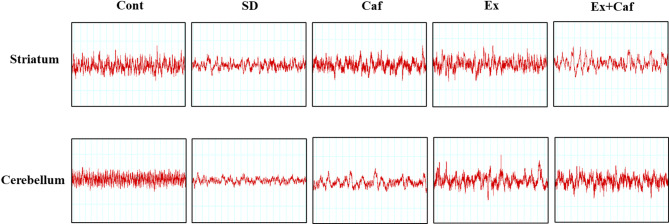
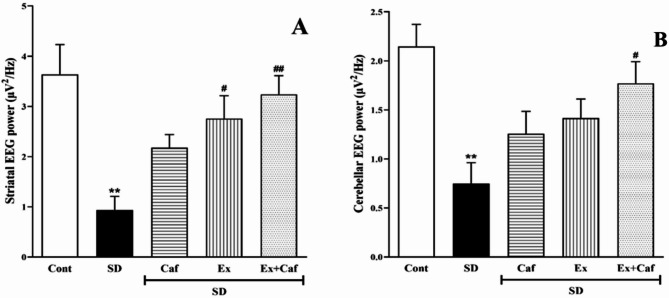
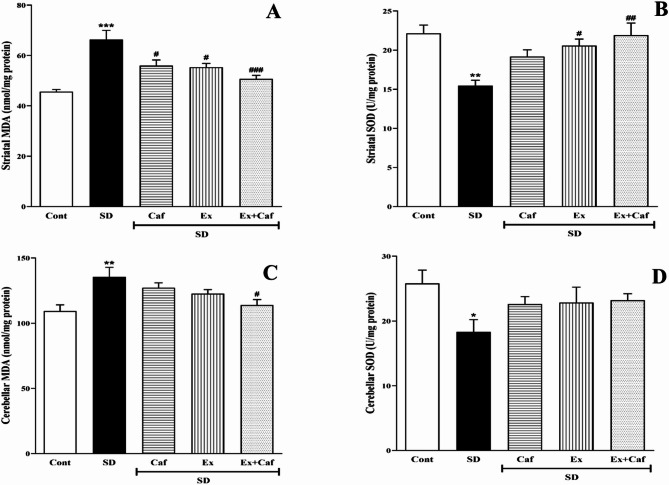
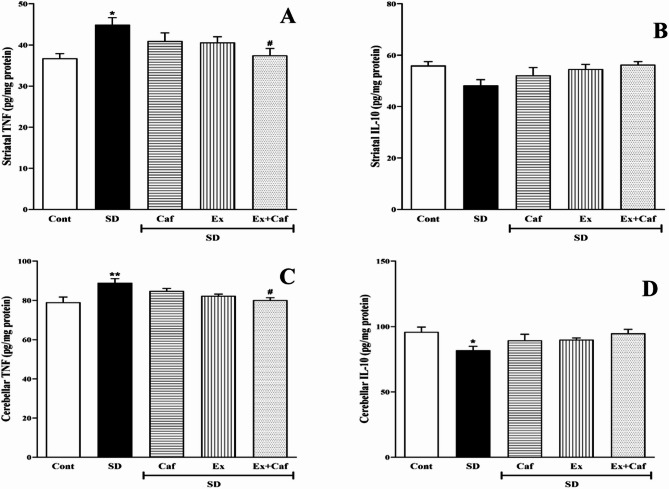
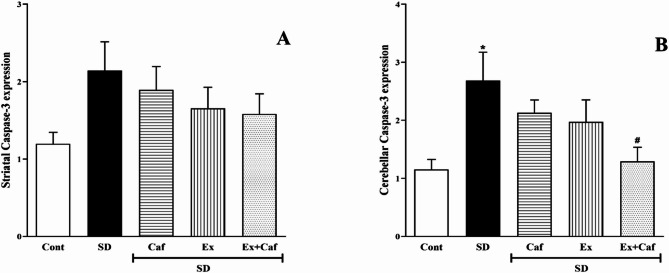
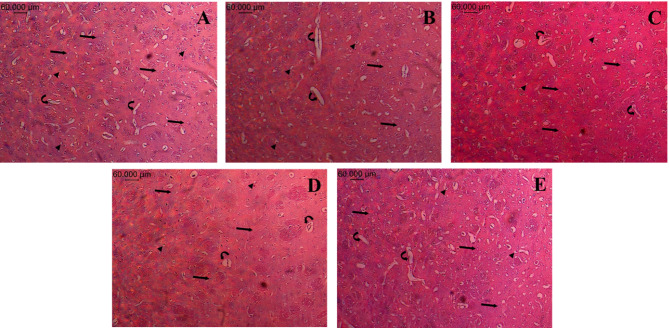
Sleep deprivation (SD) is a common problem that can lead to various neurological disorders. This study was carried out to examine how SD impacts locomotor performance and coordination in rats. Moreover, we aimed to investigate the potential synergistic benefits of caffeine supplementation coupled with treadmill exercise in mitigating any locomotor disorders induced by SD. Male rats were assigned to five groups: control, SD, SD + caffeine, SD + exercise, SD + caffeine + exercise. After 5 weeks of receiving caffeine supplementation (30 mg/kg) and/or treadmill exercise, the rats underwent 72 h of REM-SD, followed by behavioral tests. Subsequently, various analyses, including electrophysiology recordings, oxidative stress levels, neuroinflammation markers, apoptosis indicator, and histological changes were evaluated in the striatum and cerebellum. REM-SD significantly impaired motor and balance function, decreased neuronal activity, and increased oxidative stress, inflammatory, and apoptotic markers in the striatum and cerebellum. The study also found that REM-SD led to induce histopathological changes in these brain regions. Importantly, the administration of caffeine or regular exercise helped mitigate these adverse effects of REM-SD on motor, neuronal, molecular, and histological measures. Moreover, the combination of caffeine and exercise proved particularly effective, as it not only improved the motor and neuronal deficits, but also reduced the oxidative stress, inflammatory and apoptotic factors. The findings suggest that caffeine and exercise synergistically mitigate REM-SD-induced locomotor and neuronal deficits, particularly in locomotion and balance-related brain regions, potentially through reducing oxidative stress, inflammation, and apoptosis.
睡眠剥夺(SD)是一个常见问题,可导致各种神经障碍。本研究旨在探讨睡眠剥夺如何影响大鼠的运动性能和协调性。此外,我们旨在研究补充咖啡因与跑步机运动相结合在减轻睡眠剥夺引起的任何运动障碍方面的潜在协同益处。雄性大鼠被分为五组:对照组、睡眠剥夺组、睡眠剥夺+咖啡因组、睡眠剥夺+运动组、睡眠剥夺+咖啡因+运动组。在接受咖啡因补充剂(30毫克/千克)和/或跑步机运动5周后,大鼠经历72小时的快速眼动睡眠剥夺,随后进行行为测试。随后,在纹状体和小脑中评估了各种分析,包括电生理记录、氧化应激水平、神经炎症标志物、凋亡指标和组织学变化。快速眼动睡眠剥夺显著损害了运动和平衡功能,降低了神经元活动,并增加了纹状体和小脑中的氧化应激、炎症和凋亡标志物。该研究还发现,快速眼动睡眠剥夺导致这些脑区出现组织病理学变化。重要的是,给予咖啡因或定期运动有助于减轻快速眼动睡眠剥夺对运动、神经元、分子和组织学指标的这些不利影响。此外,咖啡因和运动的组合被证明特别有效,因为它不仅改善了运动和神经元缺陷,还降低了氧化应激、炎症和凋亡因子。研究结果表明,咖啡因和运动协同减轻快速眼动睡眠剥夺引起的运动和神经元缺陷,特别是在与运动和平衡相关的脑区,可能是通过减少氧化应激、炎症和凋亡实现的。