Ma Tianming, Xiang Xiaoqing, Liu Guijun
The Second Affiliated Hospital of Heilongjiang University of Chinese Medicine, Harbin City, Heilongjiang Province, People's Republic of China.
Heilongjiang University of Chinese Medicine, Harbin City, Heilongjiang Province, People's Republic of China.
J Multidiscip Healthc. 2025 Jul 29;18:4365-4376. doi: 10.2147/JMDH.S532383. eCollection 2025.
This study aims to investigate the relationship between Relative Fat Mass (RFM) and the risk of psoriasis based on data from the US National Health and Nutrition Examination Survey (NHANES) from 2009 to 2014.
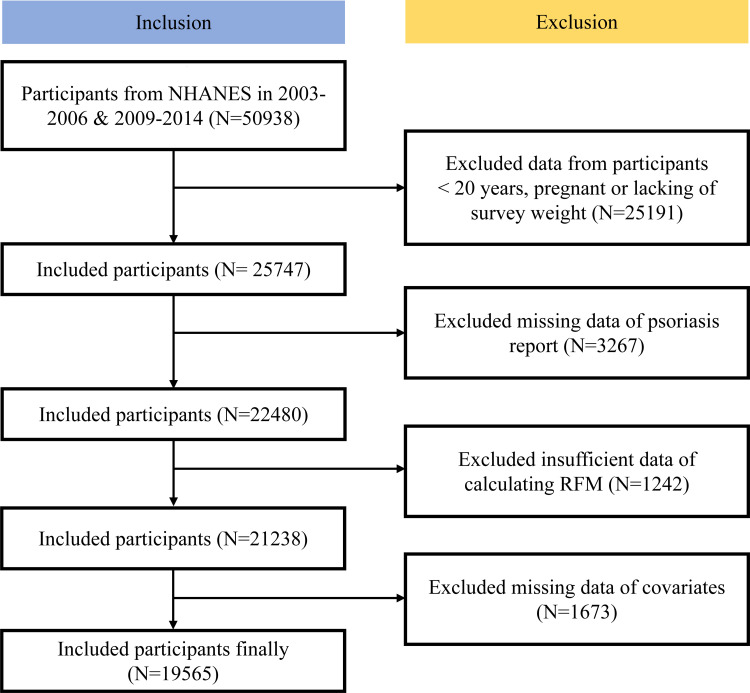
This cross-sectional study included 19,565 adults aged 20 years and older. Psoriasis diagnosis was determined using self-reported questionnaires, and RFM was calculated based on established formulas. Multivariable logistic regression models were used to analyze the association between RFM and psoriasis risk, adjusting for covariates such as age, gender, race, socioeconomic factors, and health behaviors. Nonlinear relationships and potential threshold effects between RFM and psoriasis were assessed using restricted cubic splines.
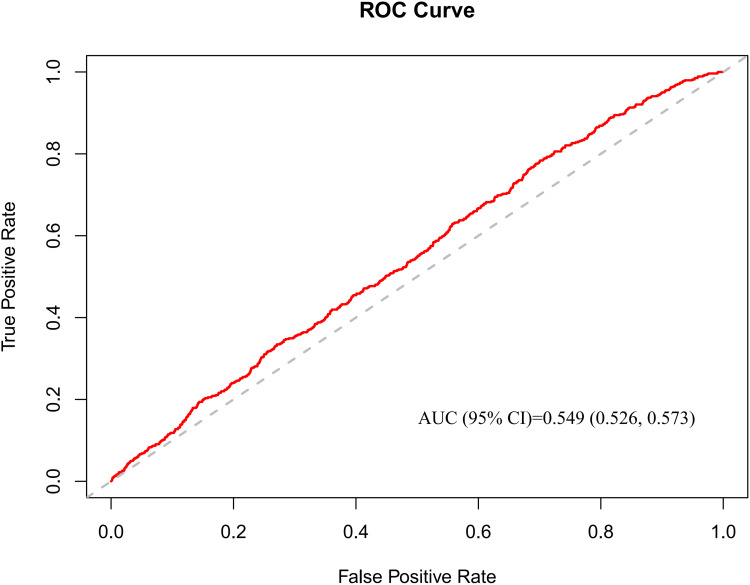
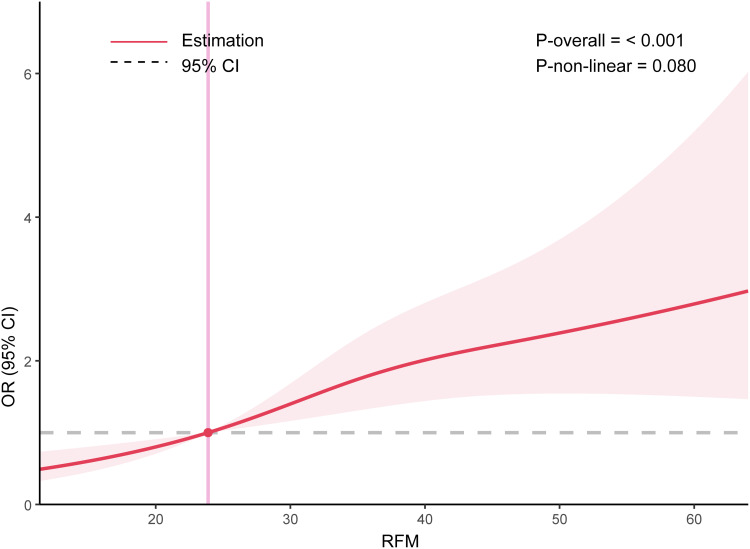
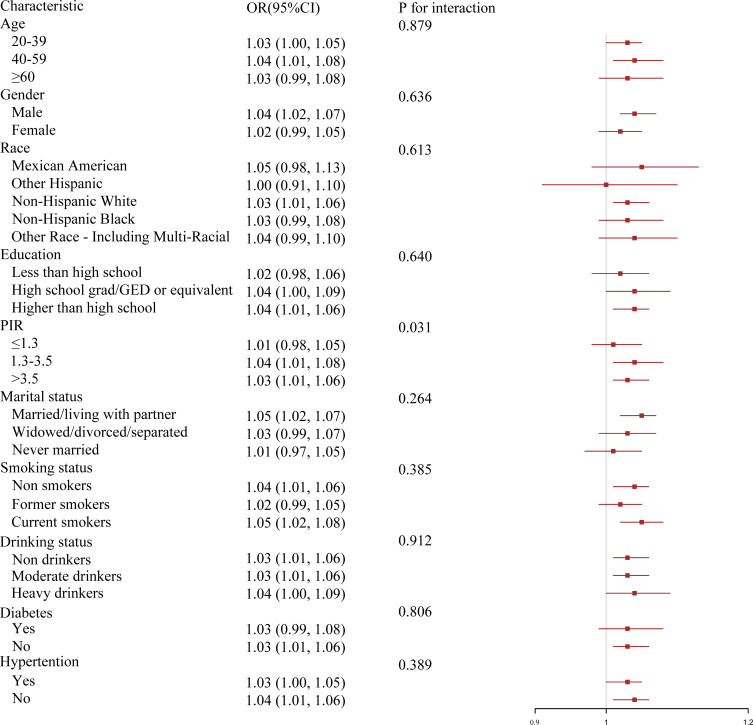
The analysis revealed a significant positive association between RFM and psoriasis risk. Each 1-unit increase in RFM was associated with a 3% higher likelihood of psoriasis (OR=1.03, 95% CI: 1.02-1.05, <0.05). The restricted cubic spline analysis showed a nonlinear relationship between RFM and psoriasis risk (_non-linear=0.028). Subgroup analysis further demonstrated that income level (with lower associations observed among those with a poverty-to-income ratio ≤1.3) moderated the relationship. RFM exhibited moderate predictive performance for psoriasis risk, with an area under the receiver operating characteristic curve (AUC) of 0.549.
RFM is significantly associated with increased psoriasis risk, with a dose-response relationship observed. These findings suggest that RFM may serve as a useful predictor for psoriasis risk and could be incorporated into screening strategies for early detection and prevention.
本研究旨在基于2009年至2014年美国国家健康与营养检查调查(NHANES)的数据,调查相对脂肪量(RFM)与银屑病风险之间的关系。
这项横断面研究纳入了19565名20岁及以上的成年人。银屑病诊断通过自我报告问卷确定,RFM根据既定公式计算。多变量逻辑回归模型用于分析RFM与银屑病风险之间的关联,并对年龄、性别、种族、社会经济因素和健康行为等协变量进行调整。使用受限立方样条评估RFM与银屑病之间的非线性关系和潜在阈值效应。
分析显示RFM与银屑病风险之间存在显著正相关。RFM每增加1个单位,患银屑病的可能性就会增加3%(OR=1.03,95%CI:1.02-1.05,P<0.05)。受限立方样条分析显示RFM与银屑病风险之间存在非线性关系(P非线性=0.028)。亚组分析进一步表明,收入水平(贫困与收入比≤1.3的人群中关联较低)调节了这种关系。RFM对银屑病风险具有中等预测性能,受试者工作特征曲线下面积(AUC)为0.549。
RFM与银屑病风险增加显著相关,呈现剂量反应关系。这些发现表明,RFM可能是银屑病风险的有用预测指标,可纳入早期检测和预防的筛查策略。