Algethami Mashael, Shoqafi Ahmed, Lashen Ayat, Alqahtani Shatha, Spicer Jake, ALtayyar Ahmad, Tosun Çağla, Jeyapalan Jennie N, Mongan Nigel P, James Victoria, Rakha Emad A, Madhusudan Srinivasan
Biodiscovery Institute, School of Medicine, University of Nottingham, University Park, Nottingham, NG7 3RD, UK.
Department of Pathology, Nottingham University Hospital, City Campus, Hucknall Road, Nottingham, NG51PB, UK.
Sci Rep. 2025 Aug 5;15(1):28579. doi: 10.1038/s41598-025-11052-4.
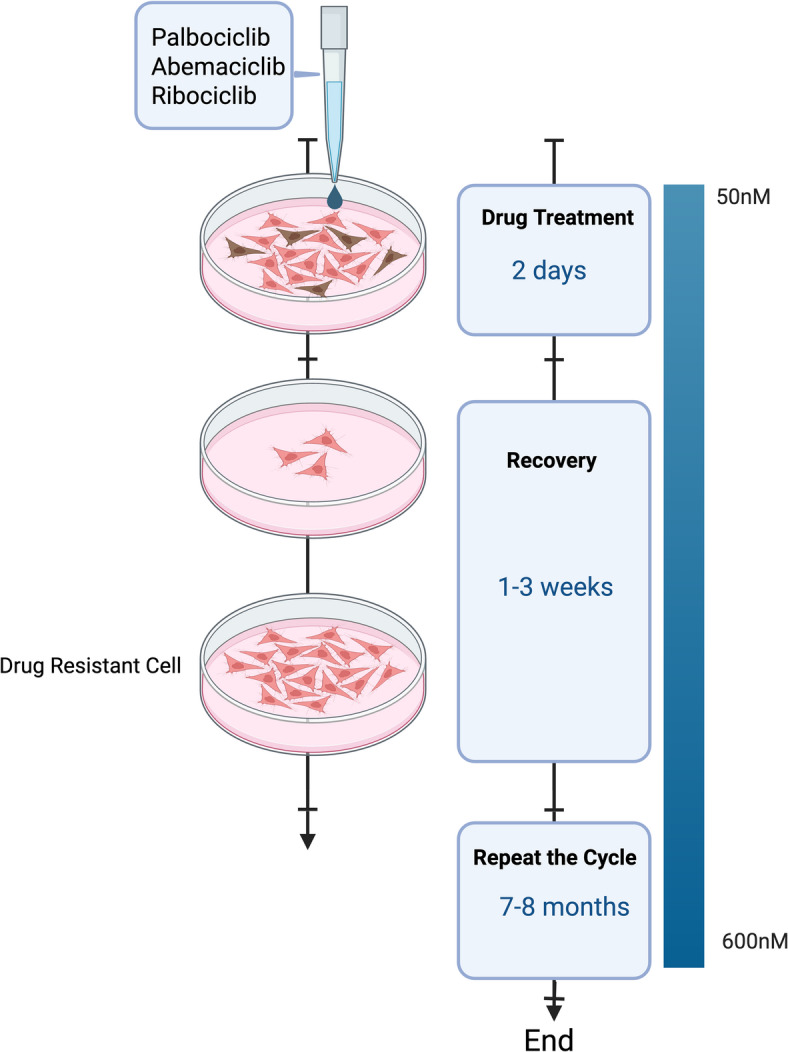
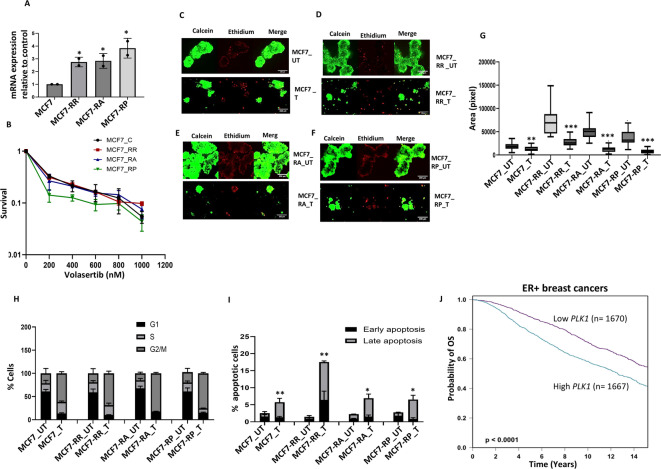
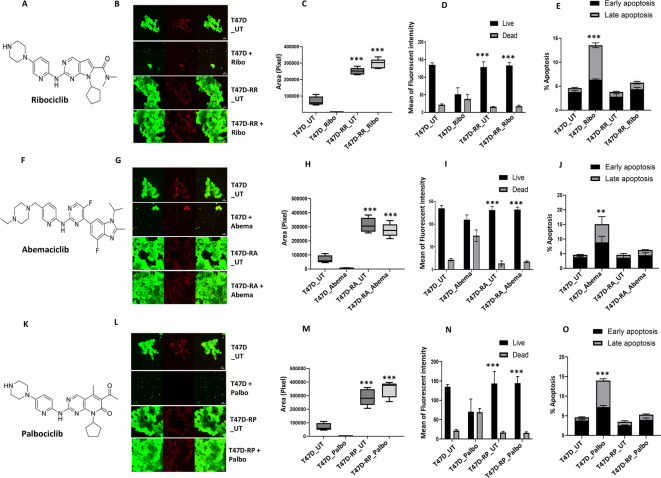
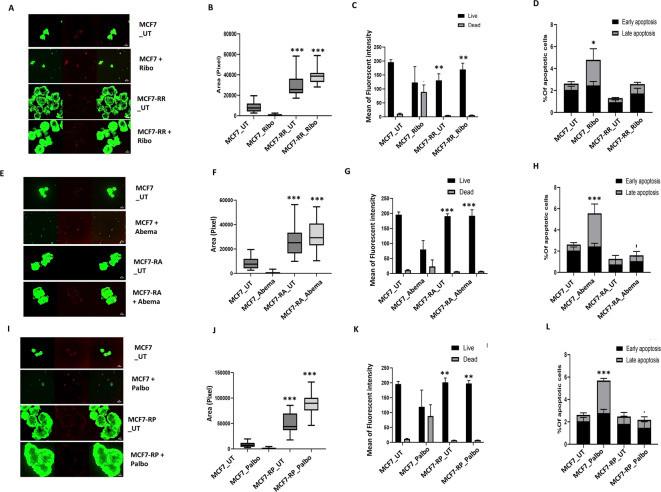
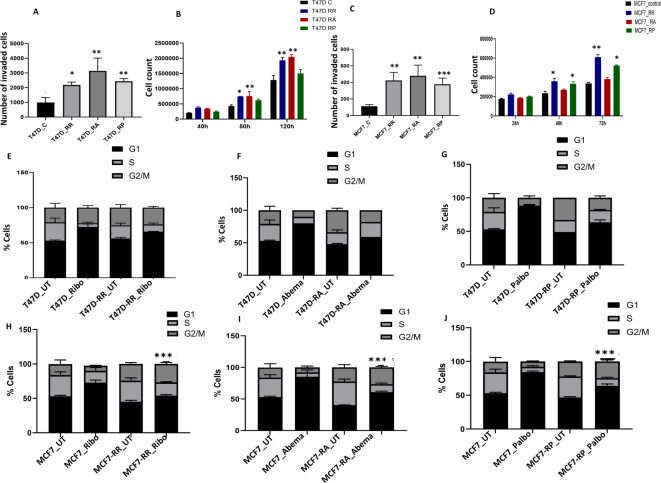
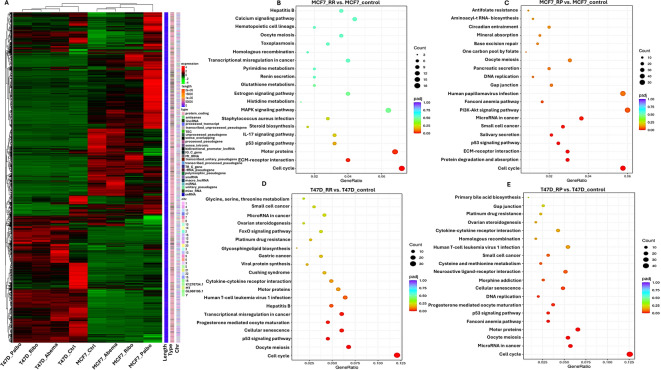
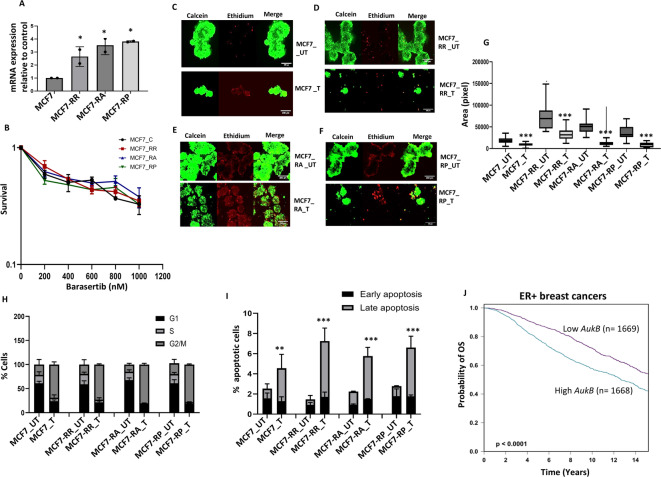
The cyclin-dependent kinase 4/6 inhibitor (CDK4/6i) ribociclib, abemaciclib, and palbociclib have transformed outcomes in patients with ER+ /HER2 - advanced breast cancer (BC). However, most patients eventually progress, and therapeutic options beyond CDK4/6i are an area of ongoing investigation. Here, we generated and evaluated ribociclib, abemaciclib, and palbociclib-resistant BCs. MCF7 and T47D (ER+ /HER2-) cells were chronically treated with increasing doses of ribociclib (R), abemaciclib (A), or palbociclib (P) over 8 months (0-600 nM). CDK4/6i-resistant cell lines (MCF7rR, MCF7rA, MCF7rP, T47DrR, T47DrA, and T47DrP) were isolated and evaluated for their aggressive phenotypes, cross-resistance, transcriptomic changes, and sensitivity to volasertib (PLK1 inhibitor) and barasertib (AukB inhibitor). Immunohistochemical evaluation of CDK4, CDK6, and p53 (n = 1005) and transcriptomic evaluation of AukB and PLK1 were performed in 5031 clinical breast cancers. MCF7rR, MCF7rA, MCF7rP, T47DrR, T47DrA, and T47DrP cells manifested aggressive phenotypes such as increased spheroid formation, invasion, proliferation, and progression through the G1/S phase of the cell cycle despite CDK4/6i treatment, increased resistance to apoptosis, and cross-resistance to other CDK4/6i. Transcriptomic analysis revealed the enrichment of distinct pathways in resistant cells, particularly the upregulation of cell cycle regulatory genes such as PLK1, AukB, CDKN2B and TGFβ. PLK1 or AukB overexpressing resistant cells were sensitive to volasertib (PLK1 inhibitor) and barasertib (AukB inhibitor) therapy, which was associated with G2/M cell cycle arrest and increased apoptosis. We conclude that cell cycle upregulation leading to G2/M progression is a key route for CDK4/6i resistance. AukB or PLK1 inhibitors that block G2/M phase could be a promising strategy.
细胞周期蛋白依赖性激酶4/6抑制剂(CDK4/6i)瑞博西尼、阿贝西利和哌柏西利已经改变了雌激素受体阳性/人表皮生长因子受体2阴性(ER+ /HER2−)晚期乳腺癌(BC)患者的治疗结局。然而,大多数患者最终会病情进展,CDK4/6i之外的治疗选择仍是一个正在研究的领域。在此,我们构建并评估了对瑞博西尼、阿贝西利和哌柏西利耐药的乳腺癌。MCF7和T47D(ER+ /HER2−)细胞在8个月内(0 - 600 nM)接受递增剂量的瑞博西尼(R)、阿贝西利(A)或哌柏西利(P)长期处理。分离出CDK4/6i耐药细胞系(MCF7rR、MCF7rA、MCF7rP、T47DrR、T47DrA和T47DrP),并评估它们的侵袭性表型、交叉耐药性、转录组变化以及对沃拉替尼(PLK1抑制剂)和巴瑞替尼(AukB抑制剂)的敏感性。在5031例临床乳腺癌中进行了CDK4、CDK6和p53的免疫组化评估(n = 1005)以及AukB和PLK1的转录组评估。MCF7rR、MCF7rA、MCF7rP、T47DrR、T47DrA和T47DrP细胞表现出侵袭性表型,如尽管接受了CDK4/6i治疗,但球体形成增加、侵袭性增强、增殖加快以及细胞周期G1/S期进程加快,对凋亡的抗性增加,并且对其他CDK4/6i产生交叉耐药。转录组分析揭示了耐药细胞中不同通路的富集,特别是细胞周期调节基因如PLK1、AukB、CDKN2B和TGFβ的上调。过表达PLK1或AukB的耐药细胞对沃拉替尼(PLK1抑制剂)和巴瑞替尼(AukB抑制剂)治疗敏感,这与G2/M细胞周期阻滞和凋亡增加相关。我们得出结论,导致G2/M期进程的细胞周期上调是CDK4/6i耐药的关键途径。阻断G2/M期的AukB或PLK1抑制剂可能是一种有前景的策略。