Diego Piantedosi, Giada Morelli, Nadia Musco, Carlo Schievano, Della Valle Maria Federica, Francesco Pizzo, Saad Nasir, Giulia Abate, Maria Ferrara, Pietro Lombardi, Laura Cortese
Department of Veterinary Medicine and Animal Production, University of Naples Federico II, Naples, Italy.
Innovet Italia srl, Saccolongo, Padua, Italy.
BMC Vet Res. 2025 Aug 6;21(1):505. doi: 10.1186/s12917-025-04946-y.
Canine obesity is a common disorder accompanied by a low-grade chronic inflammation and is considered a risk factor for liver and heart diseases. The present study aimed to investigate whether an olive oil-derivative enriched in N-acylethanolamines (Olaliamid, OLA) may protect dogs against obesity-induced comorbidities.
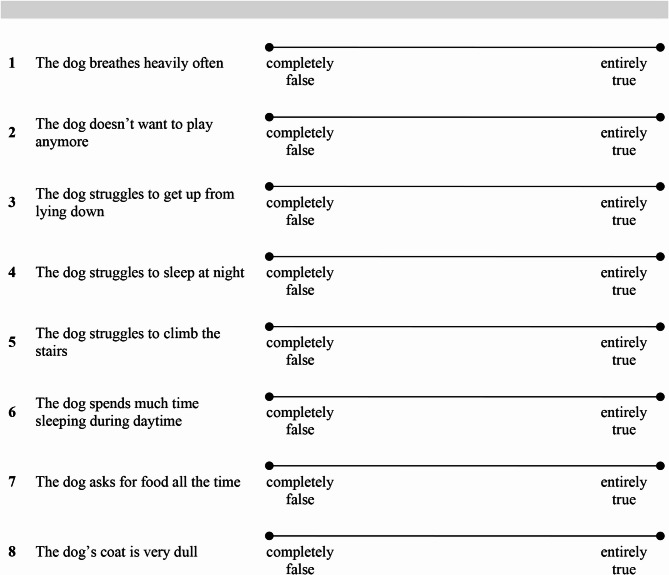
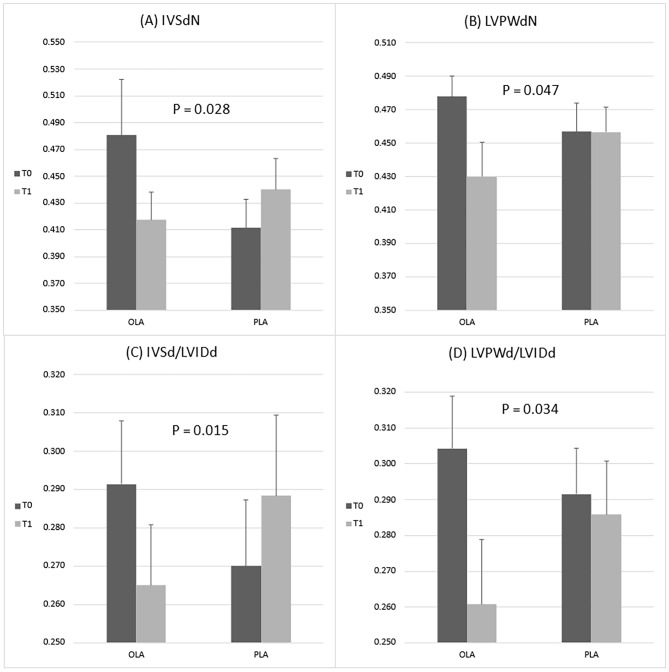
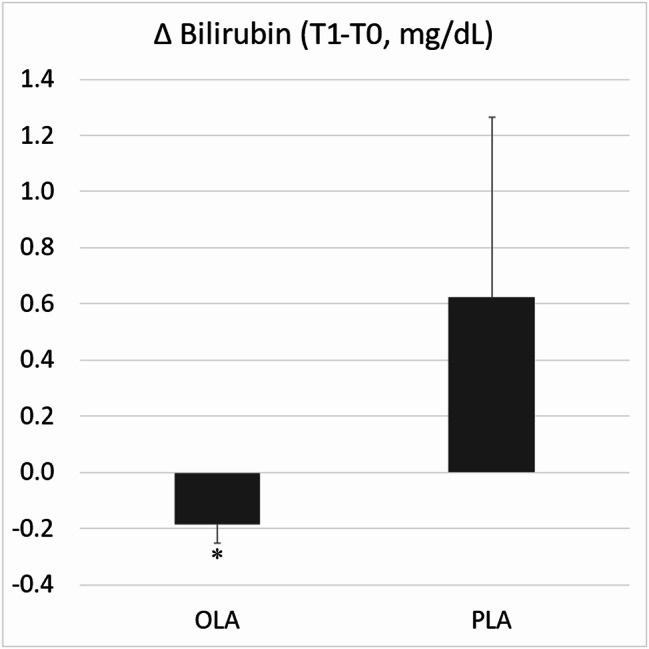
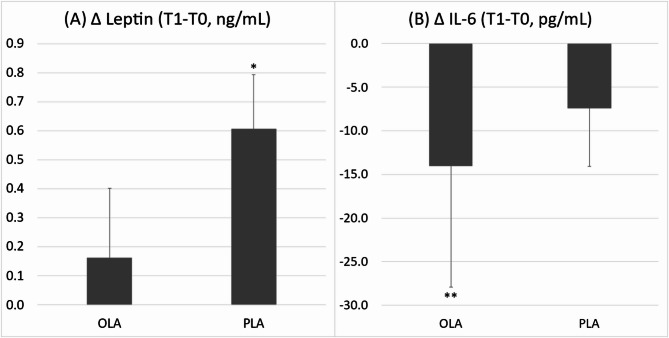
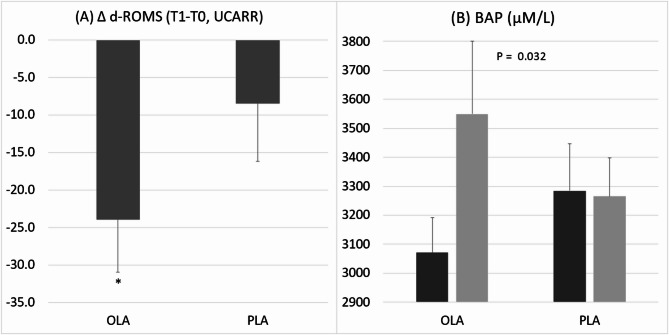
Twenty-seven dogs of mixed breed and size with a body condition score ≥ 7/9 were included in the trial, once provided they were otherwise healthy. Dogs were fed a commercial maintenance diet for two weeks before enrolment, and randomized in two groups, i.e., OLA (n = 14) and placebo (OLA vehicle; n = 13). Both treatments were administered orally by the owners in a liquid form at 0.7 ml/5kg body weight, once a day for three months. At baseline and three months later dogs underwent physical examination, blood draw, and echocardiography. At the same timepoints, owners were given a questionnaire about their dog's general condition. OLA prevented the increase in leptin observed in the placebo group (P = 0.011), decreased IL-6 (P = 0.043) and derivatives-reactive oxygen metabolites (d-ROMs, P = 0.008), and increased biological antioxidant potential (BAP) compared to the placebo group (P = 0.032). Moreover, OLA protected the liver, with ALT levels being decreased in the OLA group compared to the placebo one (P = 0.005) and bilirubin levels being decreased in the OLA group (P = 0.030) but not in the placebo one. OLA showed a cardioprotective effect, with a significant decrease of IVSdN (P = 0.028), LVPWdN (P = 0.047), IVSd/LVIDd (P = 0.015) and LVPWd/LVIDd (P = 0.034) compared to the placebo group. According to dog owners, the difficulty rising from lying down significantly increased in the placebo group (P = 0.039) but not in the OLA one.
Overall, OLA improved obesity-induced meta-inflammation and oxidative status and helped to ameliorate liver and heart health as well.
犬类肥胖是一种常见疾病,伴有低度慢性炎症,被认为是肝脏和心脏疾病的危险因素。本研究旨在调查一种富含N-酰基乙醇胺的橄榄油衍生物(奥拉酰胺,OLA)是否可以保护犬类免受肥胖引起的合并症影响。
27只混种、体型各异且身体状况评分≥7/9的犬只被纳入试验,前提是它们在其他方面健康。犬只在入组前两周喂食商业维持性饮食,然后随机分为两组,即OLA组(n = 14)和安慰剂组(OLA赋形剂;n = 13)。两种处理均由主人以液体形式按0.7 ml/5kg体重口服,每天一次,持续三个月。在基线和三个月后,对犬只进行体格检查、采血和超声心动图检查。在相同时间点,向主人发放关于其犬只总体状况的问卷。与安慰剂组相比,OLA可防止安慰剂组中观察到的瘦素增加(P = 0.011),降低IL-6(P = 0.043)和衍生物-活性氧代谢产物(d-ROMs,P = 0.008),并增加生物抗氧化潜力(BAP,P = 0.032)。此外,OLA对肝脏有保护作用,与安慰剂组相比,OLA组的ALT水平降低(P = 0.005),OLA组的胆红素水平降低(P = 0.030),而安慰剂组则未降低。与安慰剂组相比,OLA显示出心脏保护作用,IVSdN(P = 0.028)、LVPWdN(P = 0.047)、IVSd/LVIDd(P = 0.015)和LVPWd/LVIDd(P = 0.034)显著降低。根据犬主的说法,安慰剂组中从躺下起身的困难程度显著增加(P = 0.039),而OLA组则没有。
总体而言,OLA改善了肥胖引起的亚炎症和氧化状态,并有助于改善肝脏和心脏健康。