Han Fengfeng, He Chen, Qian Chen, Wang Yujie, Zhou Mingge, Yang Ruirui, Zhang Zhou
Department of Nuclear Medicine, The Third Affiliated Hospital of Soochow University, Changzhou 213003, Jiangsu, China.
Department of Clinical Laboratory, Xishan People's Hospital of Wuxi City, Wuxi 214105, Jiangsu, China.
Int J Med Sci. 2025 Jun 23;22(13):3191-3201. doi: 10.7150/ijms.114411. eCollection 2025.
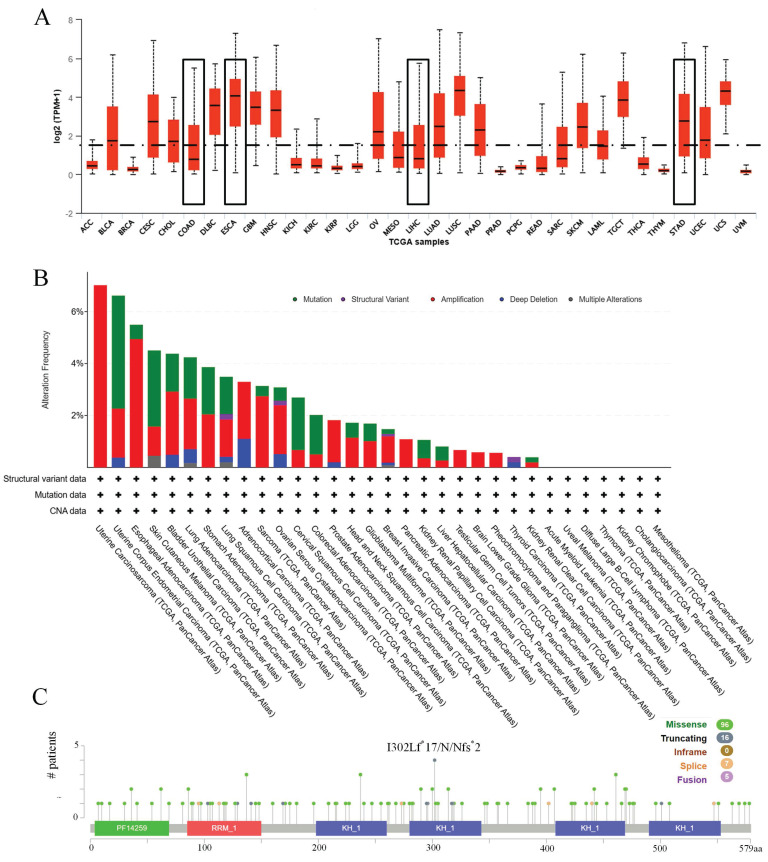
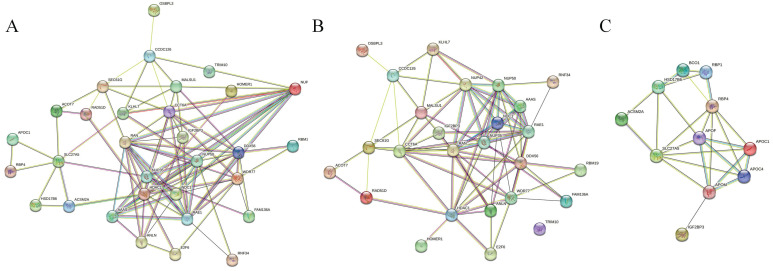
: This study investigates the expression, diagnostic, and prognostic significance of IGF2BP3 in gastrointestinal cancers, providing new insights for clinical management and patient care. : An integrated approach was used to analyze the expression and mutation of IGF2BP3 across various cancers, utilizing multiple online analytical tools. Data from the TCGA database were examined to identify differentially expressed genes (DEGs) in four types of gastrointestinal cancers and to assess the specific expression of IGF2BP3. Further validation was carried out through western blotting (WB), quantitative real-time PCR (qRT-PCR), and immunohistochemistry (IHC). Protein-protein interaction (PPI) network was also employed to investigate the relationships between IGF2BP3 and its associated genes. Additionally, bioinformatics databases were used to investigate the impact of IGF2BP3 on the diagnosis and prognosis of these cancers. : High expression of IGF2BP3 is a notable feature across these four gastrointestinal cancers, as demonstrated in public databases. Confirmation in cancer cells and tissues support this observation. Clinicopathological analysis reveals significant associations between IGF2BP3 expression and cancer stages in gastric cancer, and with cancer grades in liver cancer. The diagnostic accuracy of IGF2BP3 is found to be highest for esophageal cancer. Moreover, elevated IGF2BP3 levels correlate with poorer overall survival (OS) and progression-free survival (PFS) in liver cancer patients. : This study underscores the significant expression of IGF2BP3 in gastrointestinal cancers and its potential value in both diagnostic and prognostic assessments. These findings could enhance diagnostic accuracy and support the development of targeted therapeutic strategies.
本研究调查了IGF2BP3在胃肠道癌症中的表达、诊断及预后意义,为临床管理和患者护理提供了新的见解。采用综合方法,利用多种在线分析工具分析IGF2BP3在各种癌症中的表达和突变情况。检查来自TCGA数据库的数据,以识别四种胃肠道癌症中的差异表达基因(DEG),并评估IGF2BP3的特异性表达。通过蛋白质印迹法(WB)、定量实时聚合酶链反应(qRT-PCR)和免疫组织化学(IHC)进行进一步验证。还利用蛋白质-蛋白质相互作用(PPI)网络研究IGF2BP3与其相关基因之间的关系。此外,使用生物信息学数据库研究IGF2BP3对这些癌症诊断和预后的影响。公共数据库显示,IGF2BP3高表达是这四种胃肠道癌症的一个显著特征。癌细胞和组织中的验证支持了这一观察结果。临床病理分析显示,IGF2BP3表达与胃癌的癌症分期以及肝癌的癌症分级之间存在显著关联。发现IGF2BP3对食管癌的诊断准确性最高。此外,IGF2BP3水平升高与肝癌患者较差的总生存期(OS)和无进展生存期(PFS)相关。本研究强调了IGF2BP3在胃肠道癌症中的显著表达及其在诊断和预后评估中的潜在价值。这些发现可提高诊断准确性,并支持靶向治疗策略的开发。