
大麻二酚通过抑制MALAT1长链非编码RNA和PI3K/Akt/mTOR信号通路抑制胰腺癌中的上皮-间质转化
Cannabidiol Suppresses EMT in Pancreatic Cancer via Inhibition of MALAT1 lncRNA and PI3K/Akt/mTOR Signaling Pathway.
作者信息
Kim Na Young, Jung Young Yun, Um Jae-Young, Ahn Kwang Seok
机构信息
Department of Science in Korean Medicine, Kyung Hee University, Seoul, Republic of Korea.
Kyung Hee Institute of Convergence Korean Medicine, Kyung Hee University, Seoul, Republic of Korea.
出版信息
IUBMB Life. 2025 Aug;77(8):e70042. doi: 10.1002/iub.70042.
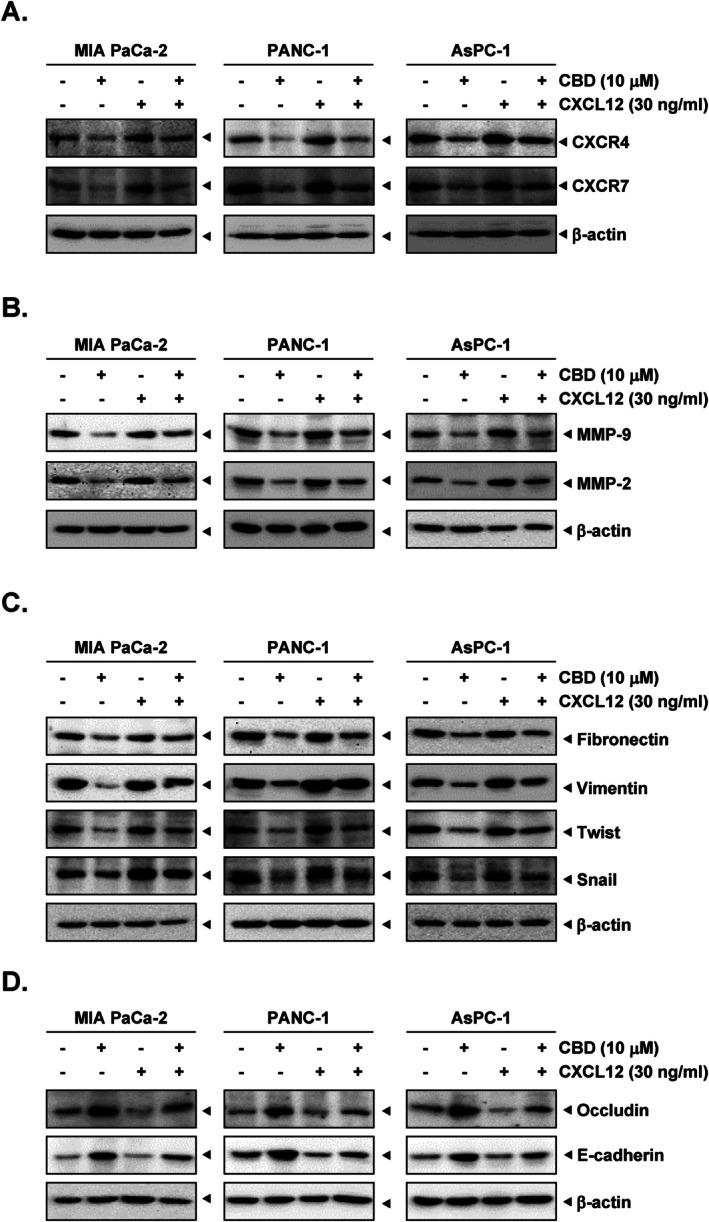
Pancreatic ductal adenocarcinoma (PDAC) is characterized by aggressive metastasis and poor response to chemotherapy, largely driven by epithelial-mesenchymal transition (EMT) and chemokine signaling. Cannabidiol (CBD), a non-psychoactive phytocannabinoid, has shown anticancer potential, yet its mechanisms in EMT regulation remain underexplored in PDAC. In this study, we demonstrate that CBD significantly suppresses the expression of CXCR4/CXCR7 and matrix metalloproteinases (MMP-2/9), leading to reduced migration and invasion of MIA PaCa-2, PANC-1, and AsPC-1 cells. Moreover, CBD reversed CXCL12-induced EMT by downregulating mesenchymal markers and restoring epithelial markers. Mechanistically, CBD inhibited the expression of the long non-coding RNA MALAT1, a known EMT regulator, and antagonized its pro-invasive effects. Overexpression of MALAT1 activated the PI3K/Akt/mTOR pathway and enhanced EMT-related protein expression, all of which were effectively reversed by CBD. Furthermore, the combination of CBD and gemcitabine exhibited synergistic inhibition of MALAT1, EMT markers, and PI3K/Akt/mTOR signaling without inducing cytotoxicity, suggesting a therapeutic advantage. Collectively, these findings reveal a novel mechanism through which CBD impedes PDAC metastasis and underscore its promise as a complementary agent in chemotherapy regimens.
胰腺导管腺癌(PDAC)的特点是侵袭性转移和对化疗反应不佳,这在很大程度上是由上皮-间质转化(EMT)和趋化因子信号传导驱动的。大麻二酚(CBD)是一种无精神活性的植物大麻素,已显示出抗癌潜力,但其在PDAC中调节EMT的机制仍未得到充分研究。在本研究中,我们证明CBD显著抑制CXCR4/CXCR7和基质金属蛋白酶(MMP-2/9)的表达,导致MIA PaCa-2、PANC-1和AsPC-1细胞的迁移和侵袭减少。此外,CBD通过下调间质标志物并恢复上皮标志物来逆转CXCL12诱导的EMT。从机制上讲,CBD抑制了长链非编码RNA MALAT1的表达,MALAT1是一种已知的EMT调节因子,并拮抗其促侵袭作用。MALAT1的过表达激活了PI3K/Akt/mTOR通路并增强了EMT相关蛋白的表达,所有这些都被CBD有效逆转。此外,CBD和吉西他滨的联合使用对MALAT1、EMT标志物和PI3K/Akt/mTOR信号传导具有协同抑制作用,且不诱导细胞毒性,显示出治疗优势。总的来说,这些发现揭示了CBD阻碍PDAC转移的新机制,并强调了其作为化疗方案中辅助药物的前景。



 Zotero 插件