Sivagurunathan Kajananan, Perera Nishadi, Senanayake Anuranga, Thangarajah Jeyakanth
Internal Medicine, District General Hospital, Kilinochchi, LKA.
Cardiology, District General Hospital, Kilinochchi, LKA.
Cureus. 2025 Jul 7;17(7):e87433. doi: 10.7759/cureus.87433. eCollection 2025 Jul.
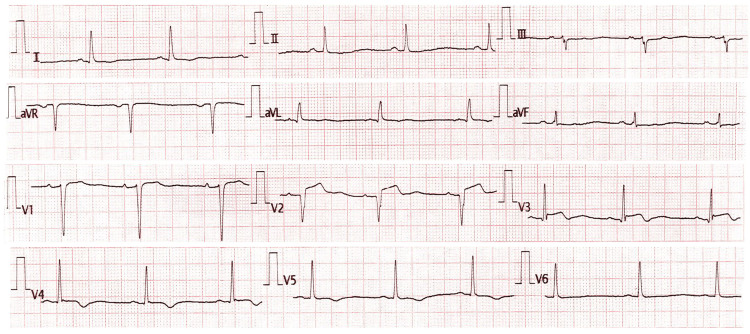
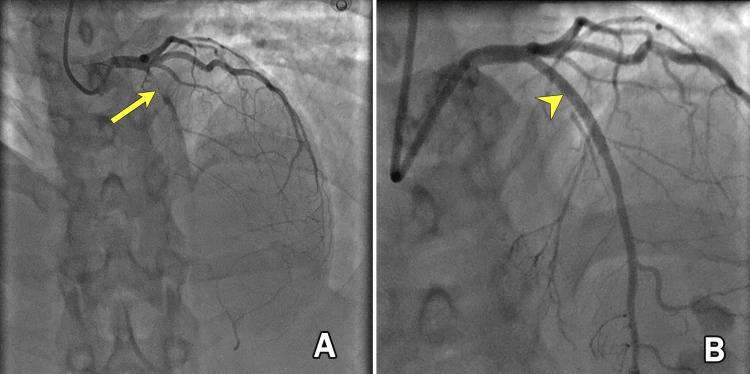
Antiphospholipid syndrome is a prothrombotic autoimmune disorder that can lead to arterial thrombotic events such as acute myocardial infarction. We report a case of a 40-year-old female with triple-positive antiphospholipid syndrome on therapeutic warfarin who presented with anterior ST-elevation myocardial infarction. With an international normalized ratio of 2.3, thrombolysis was contraindicated, and primary percutaneous coronary intervention was unavailable due to resource limitations. She was managed conservatively with enoxaparin, dual antiplatelet therapy, and supportive care. Elective angiography revealed complete occlusion of the left anterior descending artery, and viability testing guided subsequent percutaneous coronary intervention, resulting in good functional recovery. An individualized antithrombotic regimen with a clear timeline was offered after a multidisciplinary team discussion. This case highlights the therapeutic challenges of ST-elevation myocardial infarction in patients with anticoagulated antiphospholipid syndrome, particularly in settings without primary percutaneous coronary intervention.
抗磷脂综合征是一种促血栓形成的自身免疫性疾病,可导致动脉血栓形成事件,如急性心肌梗死。我们报告一例40岁患有三联阳性抗磷脂综合征且正在接受华法林治疗的女性,她出现了前壁ST段抬高型心肌梗死。国际标准化比值为2.3,溶栓治疗存在禁忌,且由于资源限制无法进行直接经皮冠状动脉介入治疗。她接受了依诺肝素、双联抗血小板治疗及支持性治疗的保守治疗。选择性血管造影显示左前降支完全闭塞,存活心肌检测指导了后续的经皮冠状动脉介入治疗,使功能恢复良好。经过多学科团队讨论后,制定了一个有明确时间安排的个体化抗栓方案。该病例突出了抗凝治疗的抗磷脂综合征患者发生ST段抬高型心肌梗死的治疗挑战,尤其是在没有直接经皮冠状动脉介入治疗的情况下。