Deblier Ivo, De Bock Dina, Rodrigus Inez, Mistiaen Wilhelm
Department of Cardiovascular Surgery, ZAS Middelheim Hospital, 2020 Antwerp, Belgium.
Department of Cardiovascular Surgery, UZA - University Hospital Antwerp, 2650 Edegem, Belgium.
Rev Cardiovasc Med. 2025 Jul 28;26(7):39463. doi: 10.31083/RCM39463. eCollection 2025 Jul.
The Perceval device is a sutureless, rapid-deployment valve designed to shorten aortic cross-clamp (ACC) and cardiopulmonary bypass (CPB) times, with the aim of improving postoperative outcomes in older, high-risk patients.
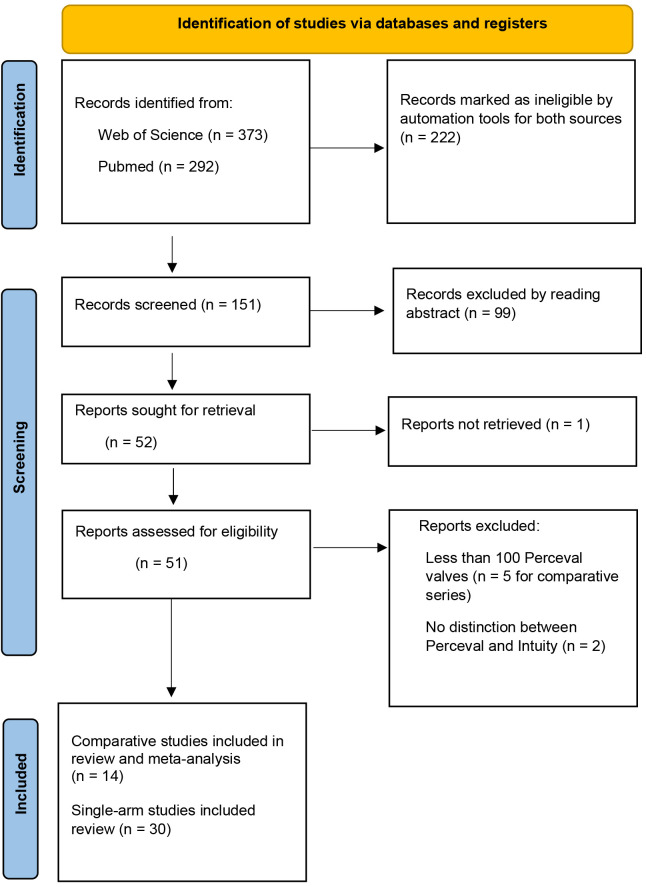
A systematic review was conducted for full articles published between 2020 and 2024, comparing the Perceval valve with conventionally sutured valves, with a focus on preoperative and operative data, as well as postoperative outcomes. Single-arm series were retained for the same purpose. Articles with at least 100 valves were included.
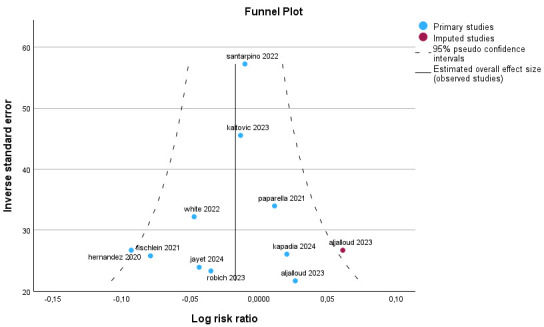
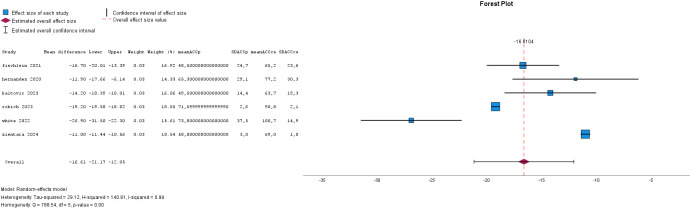
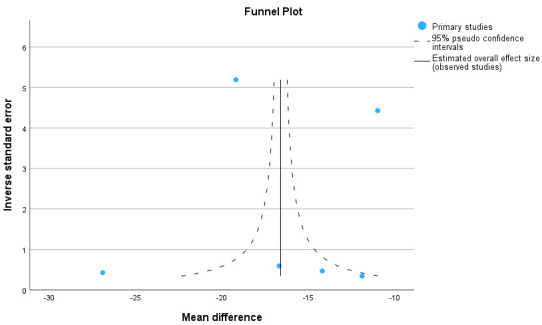
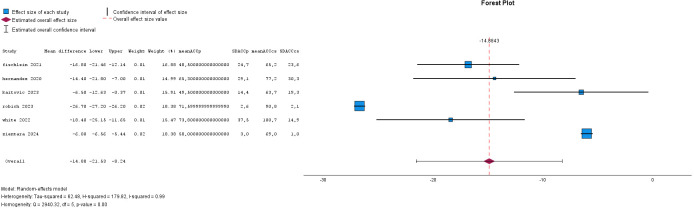
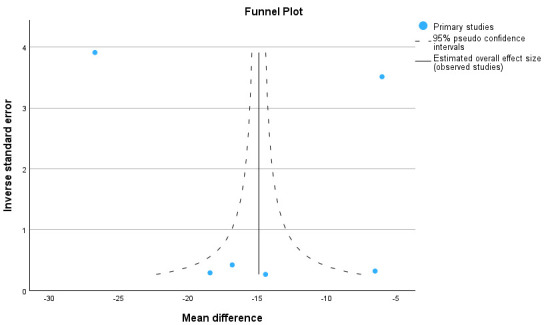
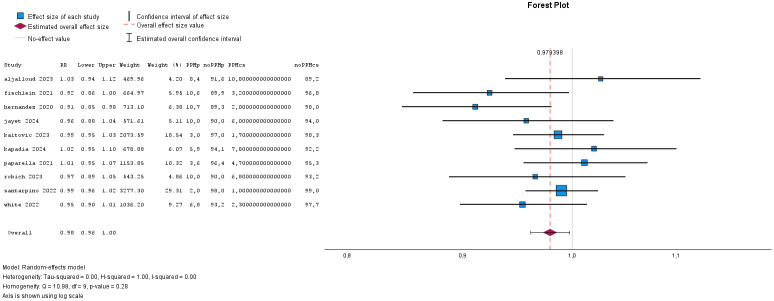
A total of six propensity score-matched series and four randomized controlled trials were identified after removing articles with data from the same patient population. Consequently, age and risk scores were comparable. The use of a minimally invasive approach and the association of other procedures, such as coronary artery bypass grafting (CABG), varied depending on the research design. Adverse postoperative events were comparable for both valve types, except for the development of conduction defects, which required the implantation of a permanent pacemaker (PPM). The initial PPM implantation rate was higher for the Perceval valve, as shown in 5 of the 14 comparative series; however, this rate decreased after the adaptation of surgical techniques. A meta-analysis showed that the CPB and ACC times were significantly shorter using the Perceval valve, at 14.9 (8.2-21.5) minutes and 16.6 (12.1-21.2) minutes, respectively. Platelet counts after implantation were lower with no clinical consequences, and the hemodynamic performance of the Perceval device was acceptable and stable over time. The survival and durability of the Perceval valve were also acceptable, with a reoperation rate of 1% at the 5-year follow-up.
The Perceval valve appears to be a suitable alternative for older, high-risk patients undergoing aortic valve replacement. Notably, the Perceval valve is associated with shorter surgical times and could facilitate the advantage of minimally invasive surgery. The need for postoperative PPM implantation remains an issue.
Perceval瓣膜是一种无缝合、快速植入的瓣膜,旨在缩短主动脉阻断(ACC)和体外循环(CPB)时间,目的是改善老年高危患者的术后结局。
对2020年至2024年发表的全文进行系统综述,比较Perceval瓣膜与传统缝合瓣膜,重点关注术前和手术数据以及术后结局。为同一目的保留单臂系列研究。纳入至少有100个瓣膜的文章。
在剔除来自同一患者群体数据的文章后,共确定了6个倾向评分匹配系列研究和4项随机对照试验。因此,年龄和风险评分具有可比性。微创方法的使用以及其他手术(如冠状动脉旁路移植术(CABG))的联合应用因研究设计而异。除了发生传导缺陷需要植入永久起搏器(PPM)外,两种瓣膜类型的术后不良事件相当。如14个比较系列中的5个所示,Perceval瓣膜的初始PPM植入率较高;然而,在手术技术改进后,这一比率有所下降。一项荟萃分析表明,使用Perceval瓣膜时,CPB和ACC时间显著缩短,分别为14.9(8.2 - 21.5)分钟和16.6(12.1 - 21.2)分钟。植入后血小板计数较低,但无临床后果,且Perceval装置的血流动力学性能可接受且随时间稳定。Perceval瓣膜的生存率和耐用性也可接受,5年随访时再次手术率为1%。
Perceval瓣膜似乎是老年高危患者行主动脉瓣置换术的合适替代方案。值得注意的是,Perceval瓣膜与较短的手术时间相关,并且可以促进微创手术的优势。术后PPM植入的需求仍然是一个问题。