E Yimin, Yao Zhichao, Ge Maolin, Huo Guijun, Huang Jian, Tang Yao, Liu Zhanao, Tan Ziyi, Zeng Yuqi, Cao Junjie, Zhou Dayong
Department of Vascular Surgery, Suzhou Municipal Hospital, The Affiliated Suzhou Hospital of Nanjing Medical University, Gusu School, Nanjing Medical University, No. 26 Daoqian Street, Jiangsu, Suzhou, China.
Department of Endocrinology, Nanjing Luhe People's Hospital, Yangzhou University, Nanjing, Jiangsu, China.
Cardiovasc Diabetol. 2025 Aug 10;24(1):326. doi: 10.1186/s12933-025-02867-6.
Early detection of vulnerable carotid plaques is critical for stroke prevention. This study aimed to develop a machine learning model based on routine blood tests and derived indices to predict plaque vulnerability and assess sex-specific risk patterns across biomarker value ranges.
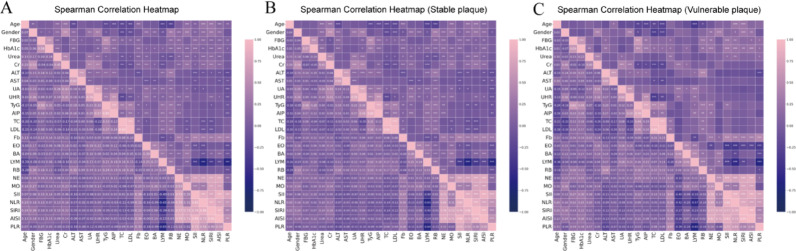
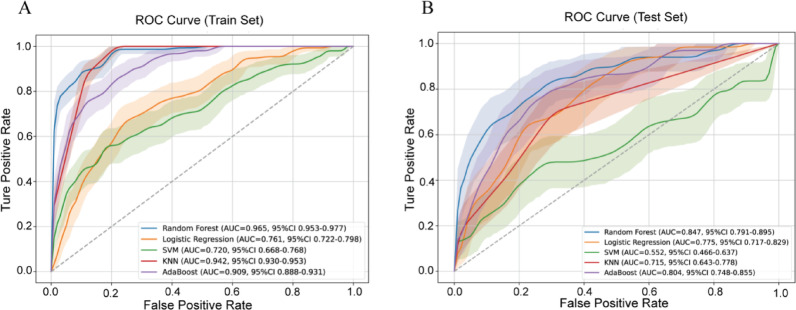
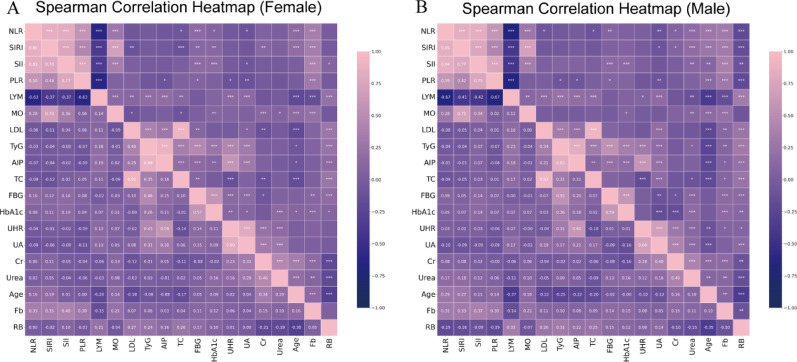
We retrospectively included 1701 hospitalized patients from Suzhou Municipal Hospital (2019-2020), selected from an initial cohort of 10,028 individuals. All patients underwent carotid ultrasound, with vulnerable plaques identified using predefined imaging criteria. A total of 30 laboratory variables-including blood count, coagulation, and biochemistry-were extracted, alongside derived indices such as triglyceride-glucose index (TyG), atherogenic index of plasma (AIP), neutrophil-to-lymphocyte ratio (NLR) and others. Features were standardized and selected based on statistical and clinical relevance. Five machine learning models were trained using a 7:3 train-test split and evaluated by cross-validation. Model performance was assessed using AUC, sensitivity, and specificity. The best model was interpreted using SHapley Additive exPlanations (SHAP) analysis. Sex differences were explored using Mann-Whitney U tests and restricted cubic spline (RCS) modeling across value intervals.
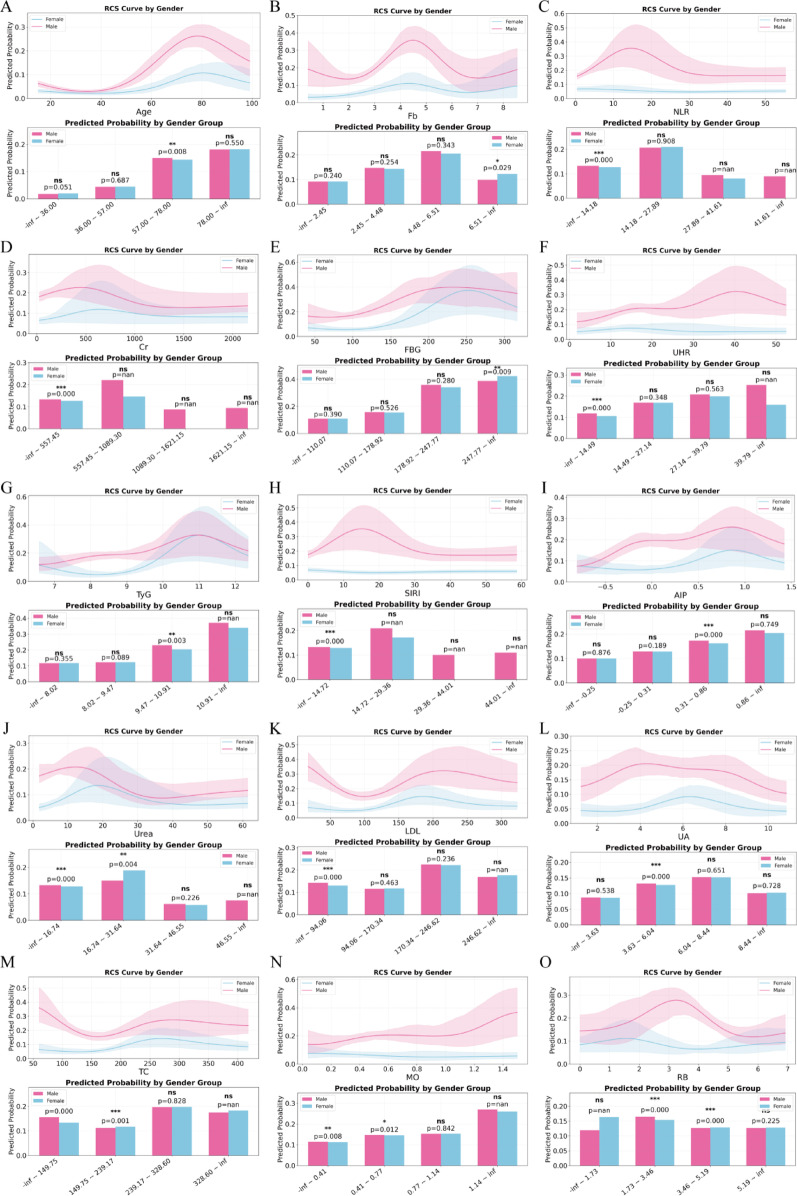
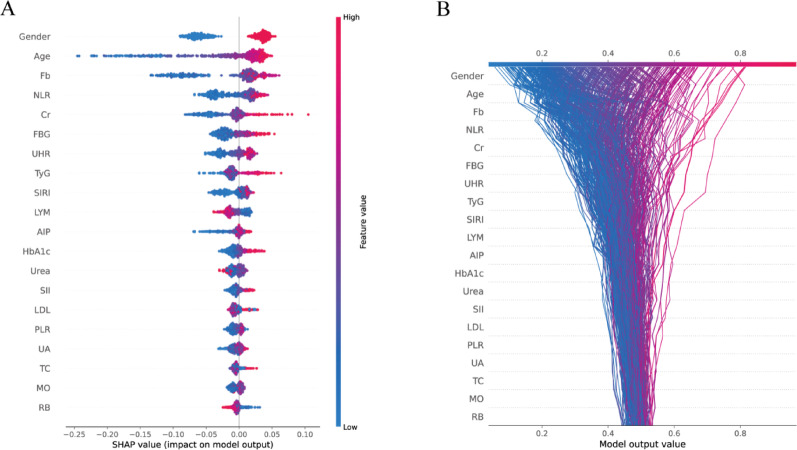
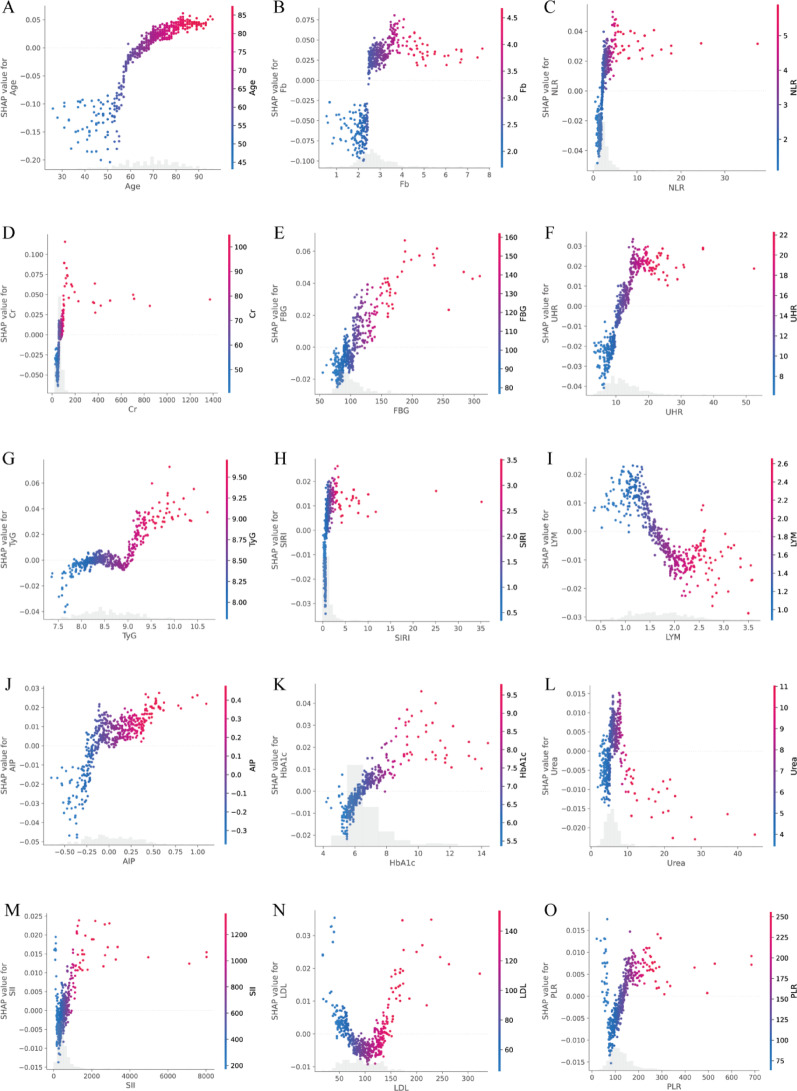
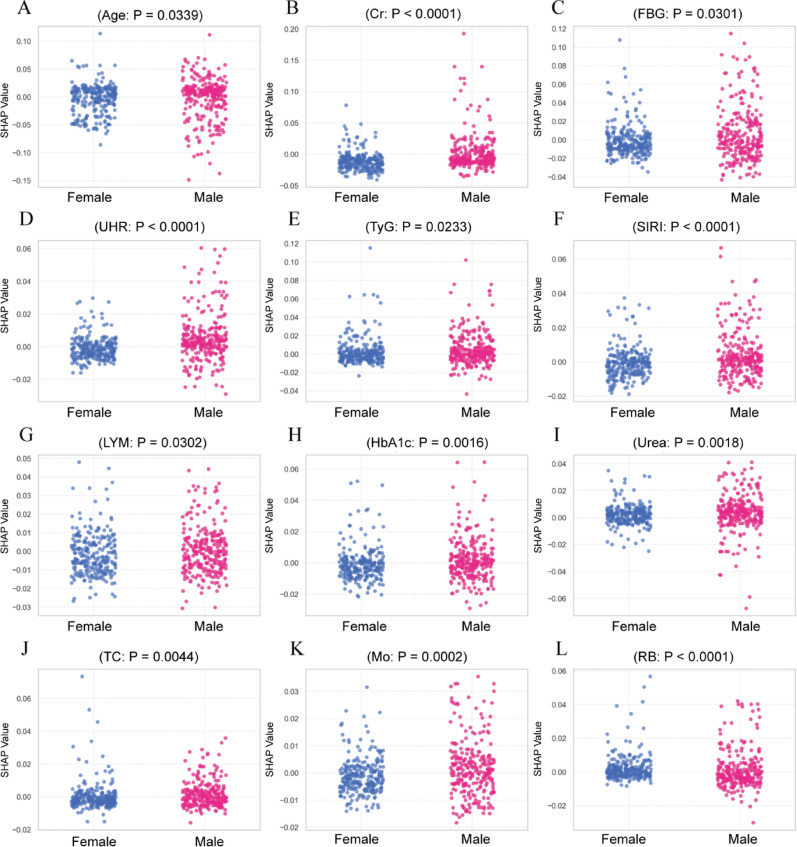
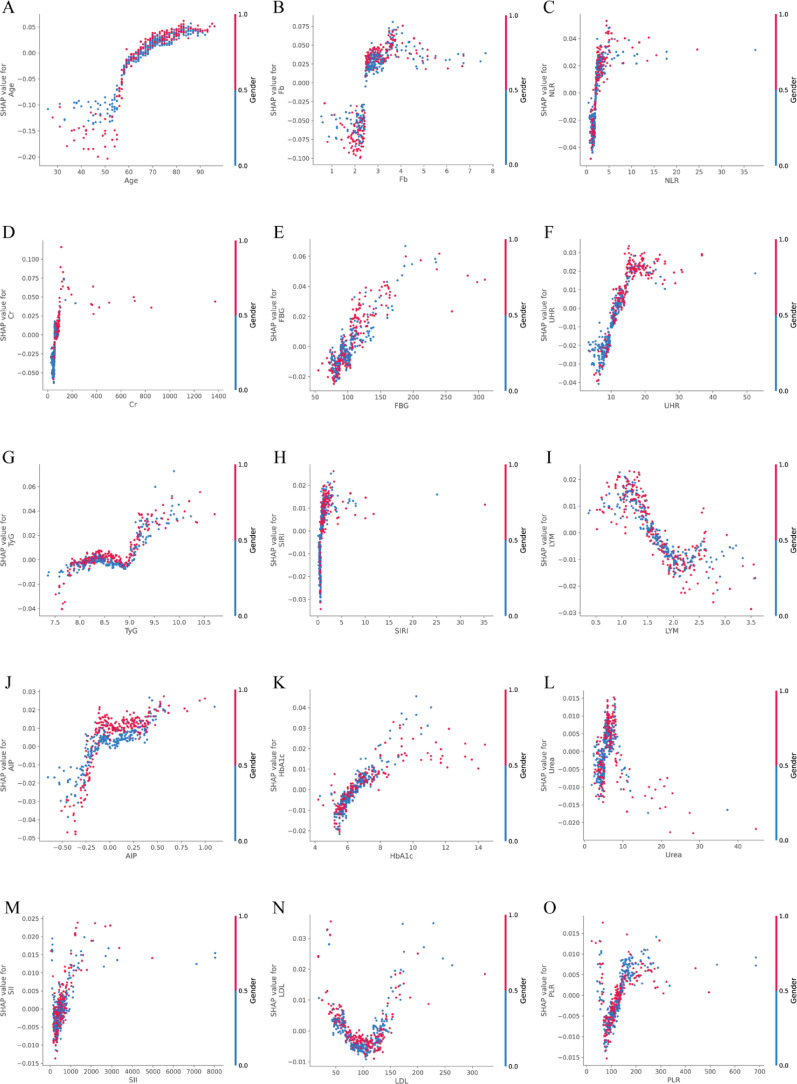
The Random Forest model showed the highest predictive performance (AUC = 0.847; 95% CI 0.791-0.895; specificity = 89.4%; sensitivity = 64.2%). SHAP analysis identified gender, age, fibrinogen, NLR, creatinine, fasting blood glucose, uric acid to high-density lipoprotein ratio (UHR), TyG, systemic inflammation response index (SIRI), and lymphocyte count as top predictors. Significant sex-specific differences in SHAP values were observed for key biomarkers, including age, UHR, TyG, SIRI, and others. RCS modeling further revealed distinct sex-related patterns in plaque vulnerability across biomarker value ranges.
A Random Forest model integrating routine blood markers and derived indices accurately predicted vulnerable carotid plaques. The results underscore the importance of sex-specific risk assessment, highlighting differential effects of key biomarkers across genders and value intervals.
早期发现易损性颈动脉斑块对于预防中风至关重要。本研究旨在开发一种基于常规血液检查和衍生指标的机器学习模型,以预测斑块易损性,并评估生物标志物值范围内的性别特异性风险模式。
我们回顾性纳入了苏州市立医院(2019 - 2020年)的1701例住院患者,这些患者选自最初的10028人的队列。所有患者均接受了颈动脉超声检查,使用预定义的影像学标准识别易损斑块。共提取了30项实验室变量,包括血细胞计数、凝血和生化指标,以及衍生指标,如甘油三酯 - 葡萄糖指数(TyG)、血浆致动脉粥样硬化指数(AIP)、中性粒细胞与淋巴细胞比值(NLR)等。根据统计和临床相关性对特征进行标准化和选择。使用7:3的训练 - 测试分割训练了五个机器学习模型,并通过交叉验证进行评估。使用AUC、敏感性和特异性评估模型性能。使用SHapley加性解释(SHAP)分析解释最佳模型。使用Mann - Whitney U检验和跨值区间的受限立方样条(RCS)建模探索性别差异。
随机森林模型显示出最高的预测性能(AUC = 0.847;95% CI 0.791 - 0.895;特异性 = 89.4%;敏感性 = 64.2%)。SHAP分析确定性别、年龄、纤维蛋白原、NLR、肌酐、空腹血糖、尿酸与高密度脂蛋白比值(UHR)、TyG、全身炎症反应指数(SIRI)和淋巴细胞计数为主要预测因素。在关键生物标志物的SHAP值中观察到显著的性别特异性差异,包括年龄、UHR、TyG、SIRI等。RCS建模进一步揭示了生物标志物值范围内斑块易损性的不同性别相关模式。
整合常规血液标志物和衍生指标的随机森林模型准确预测了易损性颈动脉斑块。结果强调了性别特异性风险评估的重要性,突出了关键生物标志物在不同性别和值区间的差异效应。