Zhang Nanjun, Shao Shuran, Li Bowen, Zhang Linling, Liu Xiaoliang, Hua Yimin, Duan Hongyu, Zhou Kaiyu, Wang Chuan
Department of Pediatric Cardiology, West China Second University Hospital, Sichuan University, Chengdu, China.
West China Medical School of Sichuan University, Chengdu, China.
Quant Imaging Med Surg. 2025 Aug 1;15(8):7352-7372. doi: 10.21037/qims-24-2352. Epub 2025 Jul 16.
Kawasaki disease (KD) is a pediatric acute vasculitis affecting the coronary arteries and cardiac tissues. Research has been conducted on the assessment of acute cardiac function in KD; however, chronic cardiac dysfunction remains understudied, particularly in terms of coronary artery lesion (CAL) grading and acute-phase inflammatory markers. This study aimed to assess the effect of CAL grading on chronic cardiac function in KD patients, and explore the association between CAL grading and acute-phase inflammatory markers.
A prospective study was conducted on 25 children with giant coronary aneurysms (GCAs) and gender-, height-, and weight-matched subgroups. Chronic cardiac function and inflammatory markers were assessed using echocardiography and laboratory tests.
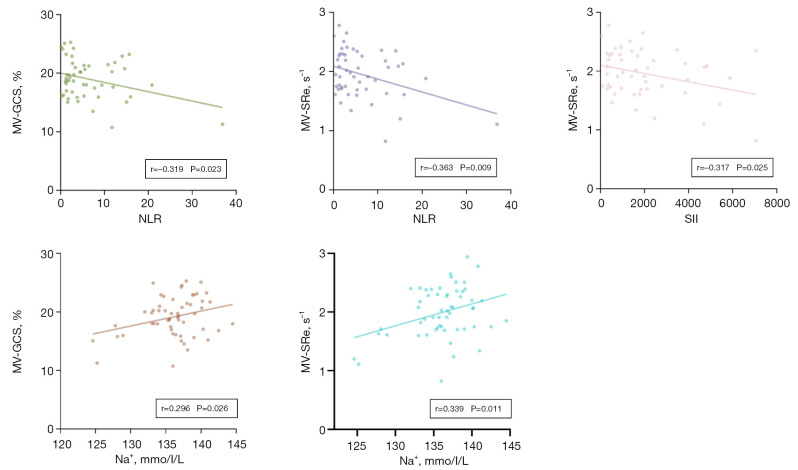
The KD group showed significantly impaired left ventricular function compared to the healthy control group, including reduced global longitudinal strain (19.94%±3.42% 21.27%±1.69%, P=0.001) and circumferential strain (20.85%±4.01% 23.14%±5.37%, P=0.002). Most systolic/diastolic parameters demonstrated similar statistical significance (KD healthy control group, all P<0.05). Notably, no association was found between CAL severity gradation and cardiac dysfunction (P>0.05 across CAL subgroups). Surprisingly, a considerable proportion of patients with GCAs (61.11%) and medium-sized coronary artery aneurysms (69.57%) had normalized cardiac function. Acute-phase C-reactive protein levels emerged as a predictor for chronic cardiac dysfunction (cut-off value: 127.79 mg/L).
Chronic cardiac dysfunction in KD patients is affected by CAL grading and acute-phase inflammatory markers. Integrating inflammatory indicators into CAL risk stratification could enhance clinical management strategies. Further research with larger cohorts needs to be conducted to validate these findings and establish longitudinal monitoring protocols.
川崎病(KD)是一种影响冠状动脉和心脏组织的儿童急性血管炎。关于KD急性心功能评估的研究已有开展;然而,慢性心功能障碍仍研究不足,尤其是在冠状动脉病变(CAL)分级和急性期炎症标志物方面。本研究旨在评估CAL分级对KD患者慢性心功能的影响,并探讨CAL分级与急性期炎症标志物之间的关联。
对25例巨大冠状动脉瘤(GCA)患儿及性别、身高、体重匹配的亚组进行前瞻性研究。采用超声心动图和实验室检查评估慢性心功能和炎症标志物。
与健康对照组相比,KD组左心室功能明显受损,包括整体纵向应变降低(19.94%±3.42%对21.27%±1.69%,P=0.001)和圆周应变降低(20.85%±4.01%对23.14%±5.37%,P=0.002)。大多数收缩期/舒张期参数显示出相似的统计学意义(KD组对健康对照组,所有P<0.05)。值得注意的是,未发现CAL严重程度分级与心功能障碍之间存在关联(各CAL亚组P>0.05)。令人惊讶的是,相当比例的GCA患者(61.11%)和中等大小冠状动脉瘤患者(69.57%)的心功能已恢复正常。急性期C反应蛋白水平成为慢性心功能障碍的预测指标(临界值:127.79 mg/L)。
KD患者的慢性心功能障碍受CAL分级和急性期炎症标志物影响。将炎症指标纳入CAL风险分层可加强临床管理策略。需要进行更大样本队列的进一步研究以验证这些发现并建立纵向监测方案。