Yuan Sijie, Zhai Ziyu, Wang Yixu, Peng Jilin, Ding Yinghui, Zhao Kun, Zhu Xiaodan, Zhang Yuan, Li Ling, Ye Fanglei, Wang Le
Division of Otology, Department of Otolaryngology Head and Neck Surgery, The First Affiliated Hospital of Zhengzhou University, Zhengzhou, China.
Department of Otolaryngology Head and Neck Surgery, People's Hospital, Peking University, Beijing, China.
Transl Cancer Res. 2025 Jul 30;14(7):4160-4178. doi: 10.21037/tcr-2024-2520. Epub 2025 Jul 25.
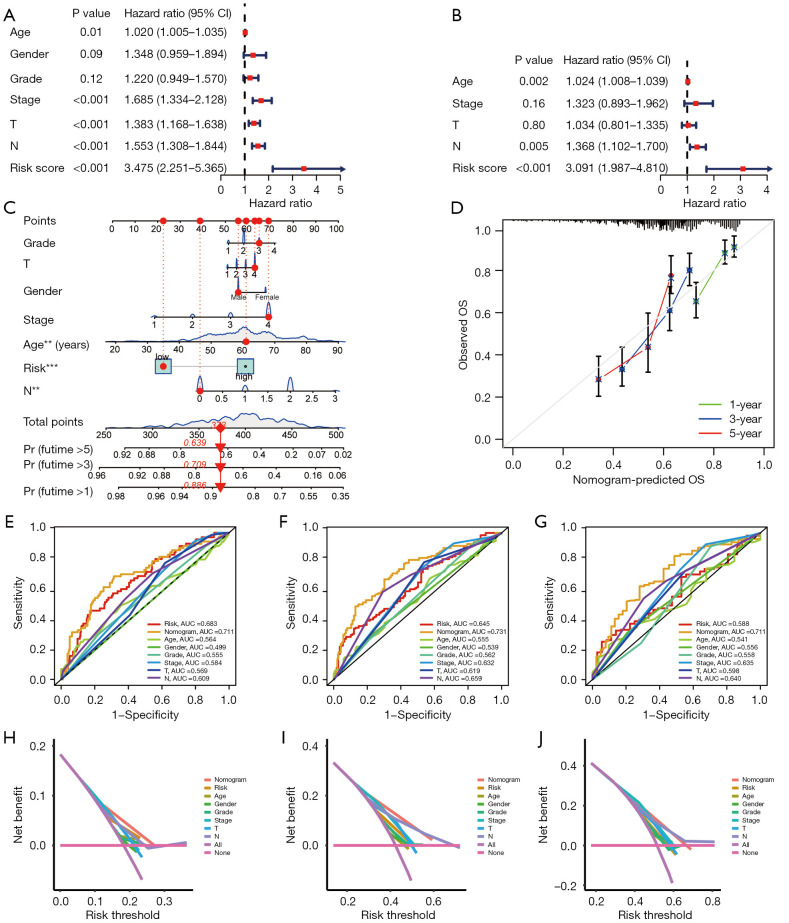
As a unique form of apoptosis, anoikis significantly influences tumor biology. Studies have revealed the diverse roles of long non-coding RNAs (lncRNAs) in cancer signaling pathways; however, the prognostic significance of anoikis-related long non-coding RNAs (ARLncs) in head and neck squamous cell carcinoma (HNSCC) remains unexplored. Therefore, this research was undertaken to establish a risk model and assess its predictive ability for prognosis and immune landscape in individuals with HNSCC.
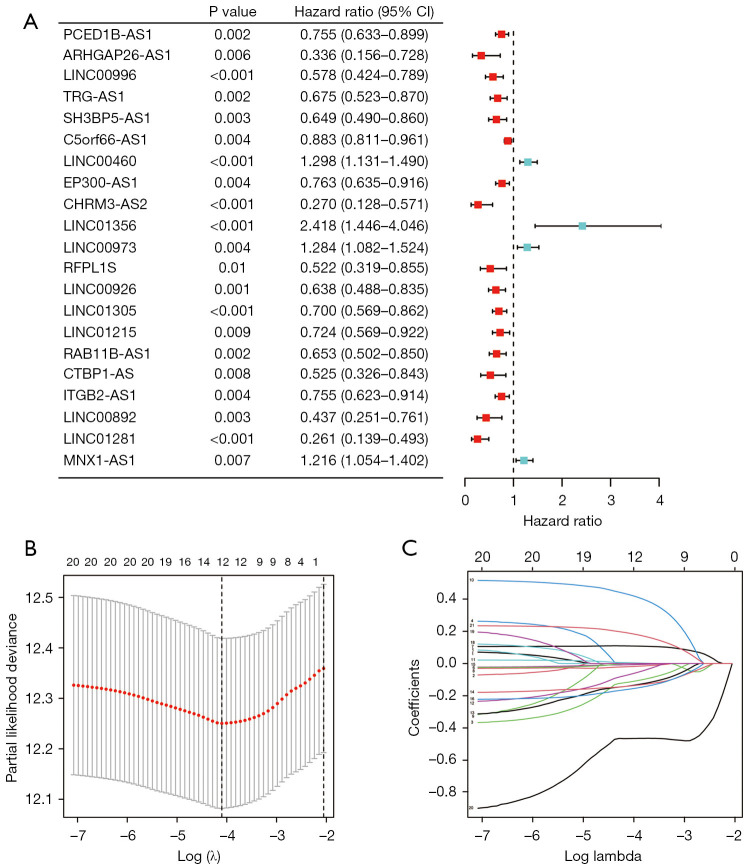
Data on HNSCC were retrieved from The Cancer Genome Atlas (TCGA). Anoikis-associated genes were acquired from GeneCards, followed by identification of ARLxncs using Pearson correlation analysis. A total of 268 ARLncs from HNSCC samples were extracted from TCGA, and highly relevant ARLncs were identified using Pearson analysis. These ARLncs were subjected to comprehensive bioinformatics analyses, including univariate Cox regression and least absolute shrinkage and selection operator analyses, and an overall survival (OS)-score and OS-signature were generated.
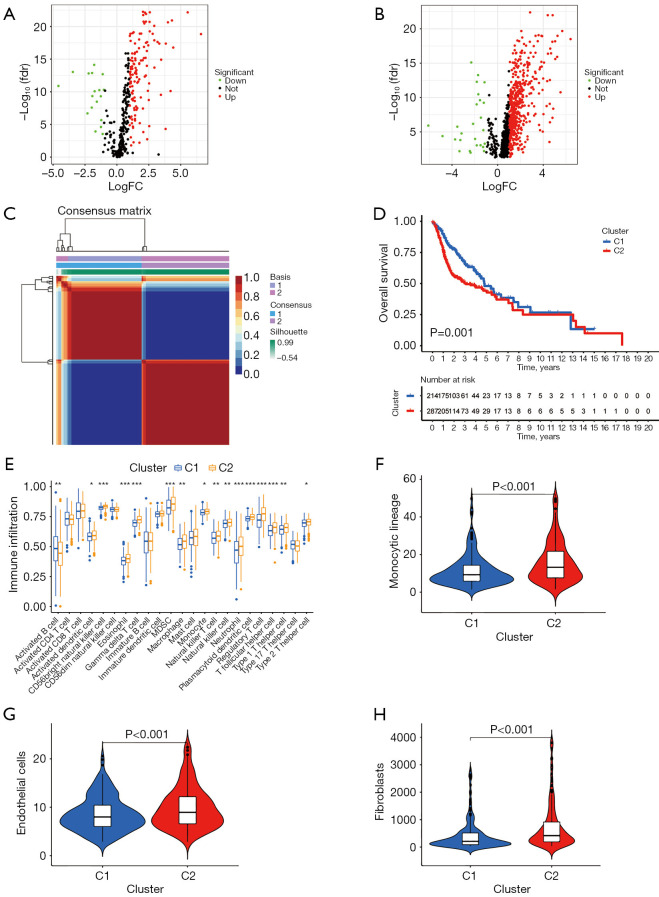
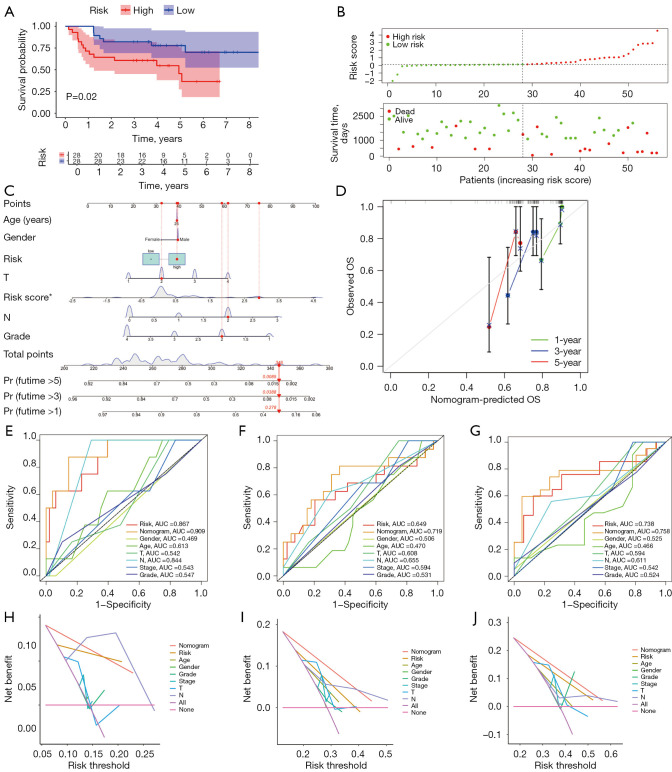
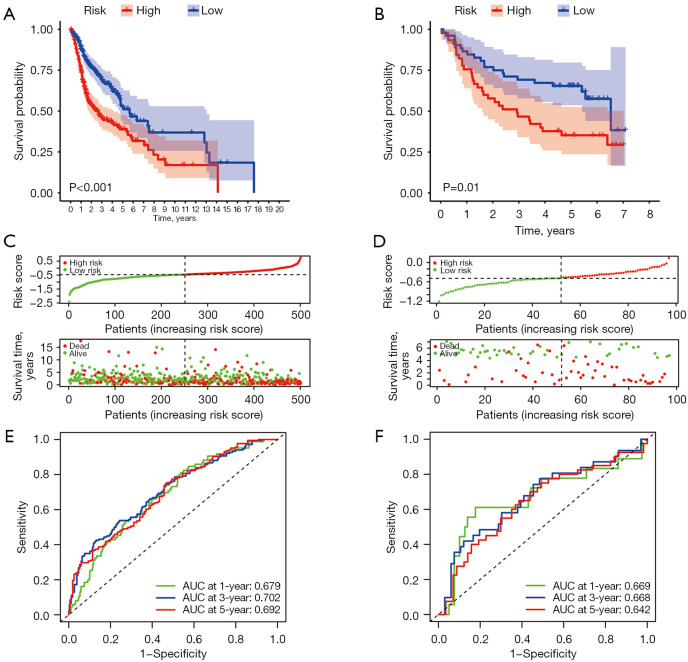
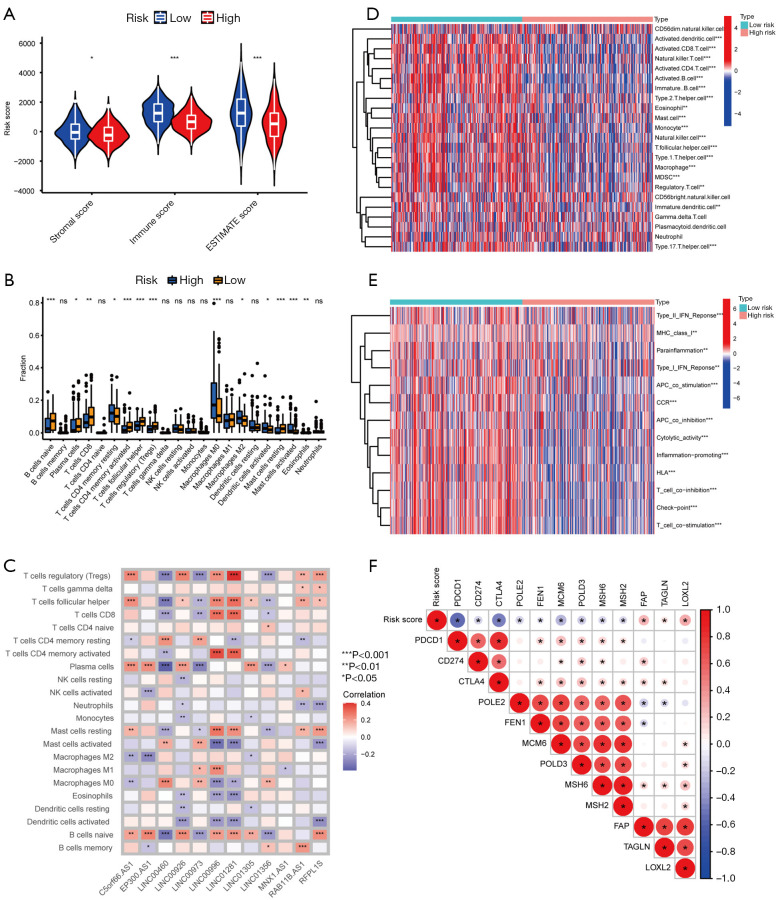
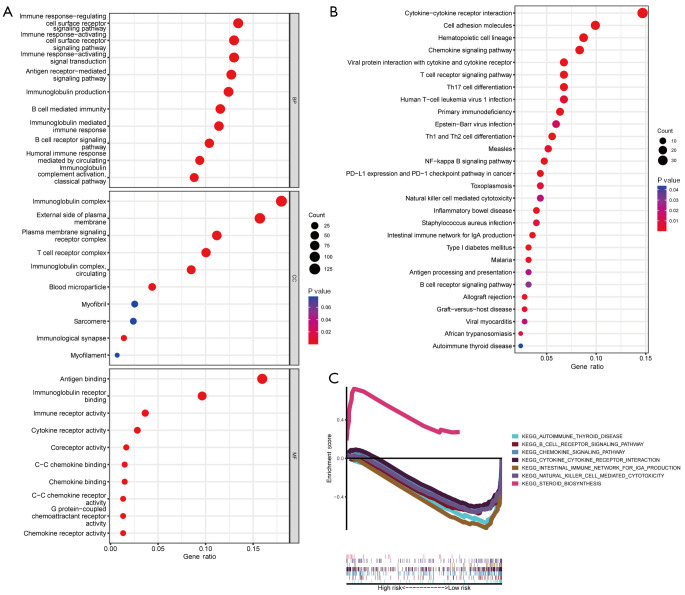
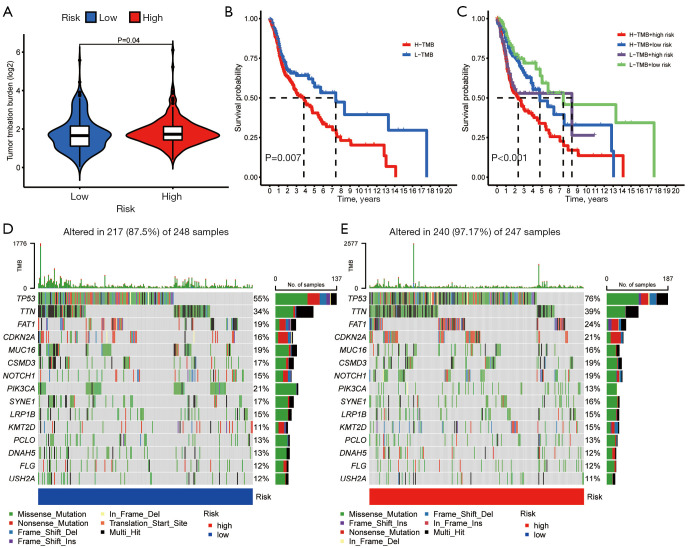
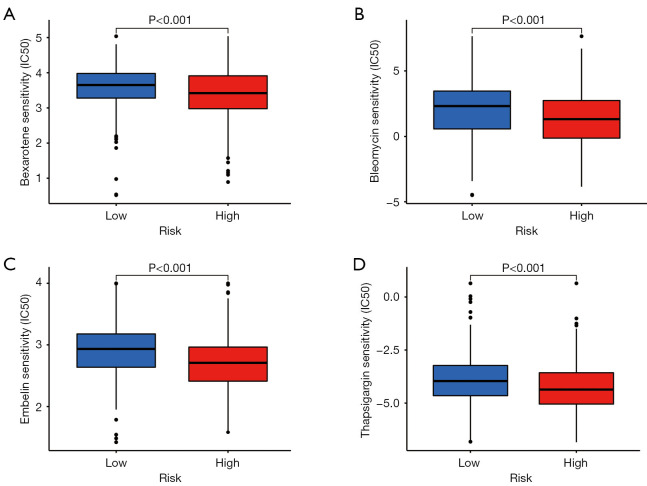
Based on the risk score, patients with HNSCC were stratified into high- and low-risk subgroups to assess the differences in pathway enrichment, prognosis, immune infiltration level, tumor mutation burden, and drug susceptibility. TCGA-HNSCC samples were divided into two subtypes (clusters 1 and 2), with patients in cluster 2 exhibiting worse prognosis and higher levels of tumor-infiltrating lymphocytes (TILs) than patients in cluster 1. Subsequently, we constructed a valid prognostic risk model comprising 12 ARLncs in HNSCC that demonstrated efficacy in predicting prognosis. Patients with high-risk scores exhibited significantly worse OS, lower numbers of TILs, and lower sensitivity to chemotherapy drugs than patients with low-risk scores.
Overall, we successfully established a novel prognostic model based on ARLncs, which holds significant promise for predicting prognosis and personalized therapy for patients with HNSCC.
失巢凋亡作为一种独特的细胞凋亡形式,对肿瘤生物学有显著影响。研究揭示了长链非编码RNA(lncRNA)在癌症信号通路中的多种作用;然而,失巢凋亡相关长链非编码RNA(ARLnc)在头颈部鳞状细胞癌(HNSCC)中的预后意义仍未得到探索。因此,本研究旨在建立一个风险模型,并评估其对HNSCC患者预后和免疫格局的预测能力。
从癌症基因组图谱(TCGA)中检索HNSCC数据。从GeneCards获取失巢凋亡相关基因,随后使用Pearson相关分析鉴定ARLnc。从TCGA中提取HNSCC样本中的268个ARLnc,并使用Pearson分析鉴定高度相关的ARLnc。对这些ARLnc进行全面的生物信息学分析,包括单因素Cox回归和最小绝对收缩和选择算子分析,并生成总生存(OS)评分和OS特征。
根据风险评分,将HNSCC患者分为高风险和低风险亚组,以评估通路富集、预后、免疫浸润水平、肿瘤突变负担和药物敏感性的差异。TCGA-HNSCC样本分为两个亚型(簇1和簇2),簇2中的患者比簇1中的患者预后更差,肿瘤浸润淋巴细胞(TIL)水平更高。随后,我们构建了一个有效的预后风险模型,该模型包含HNSCC中的12个ARLnc,在预测预后方面显示出有效性。高风险评分的患者比低风险评分的患者表现出明显更差的OS、更少的TIL数量和对化疗药物的更低敏感性。
总体而言,我们成功建立了一种基于ARLnc的新型预后模型,该模型在预测HNSCC患者的预后和个性化治疗方面具有重要前景。