Wang Ming, Gao Feng
Department of Urology, The Second Affiliated Hospital, Zhejiang University School of Medicine, Hangzhou, Zhejiang, China.
Department of Urology, Hangzhou Hospital of Traditional Chinese Medicine, Hangzhou, Zhejiang, China.
Ren Fail. 2025 Dec;47(1):2545983. doi: 10.1080/0886022X.2025.2545983. Epub 2025 Aug 12.
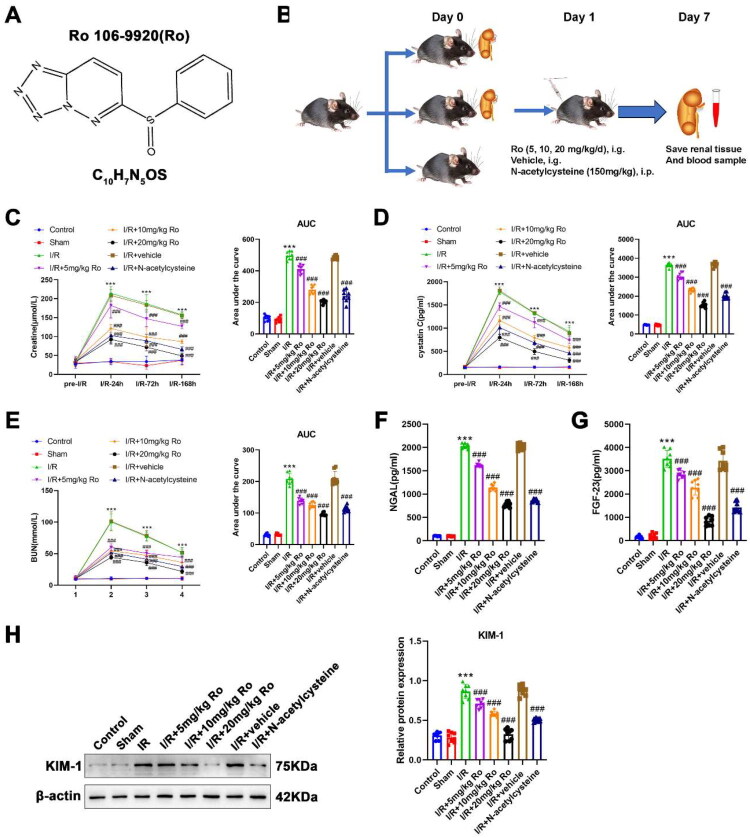
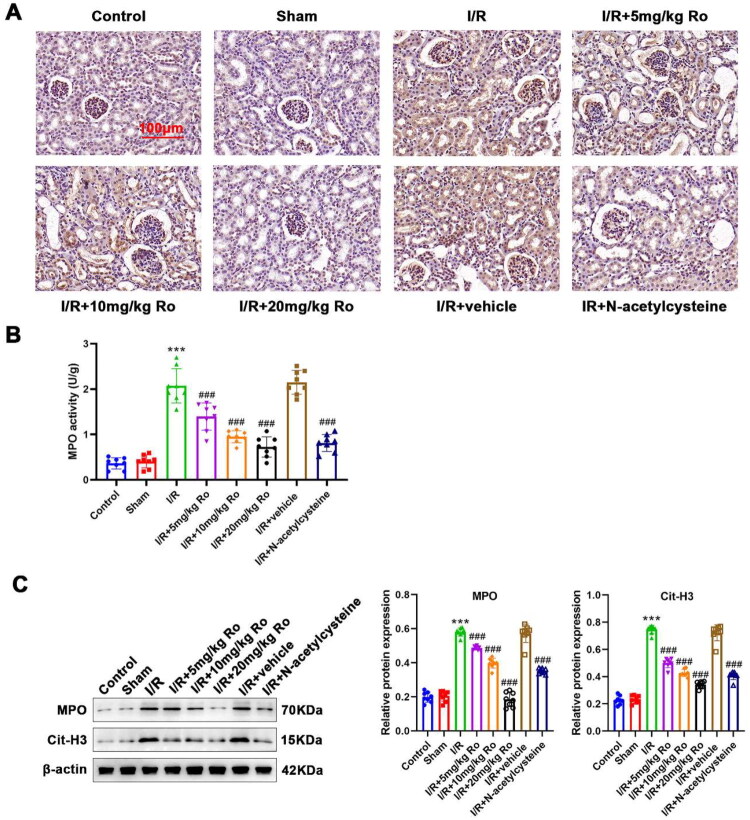
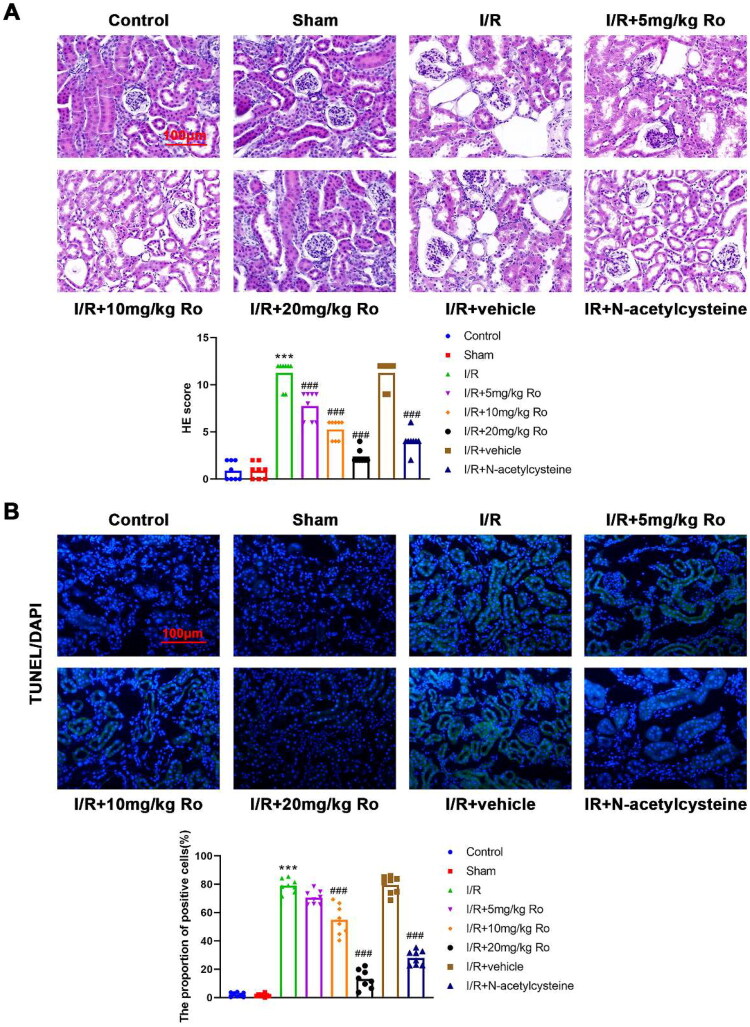
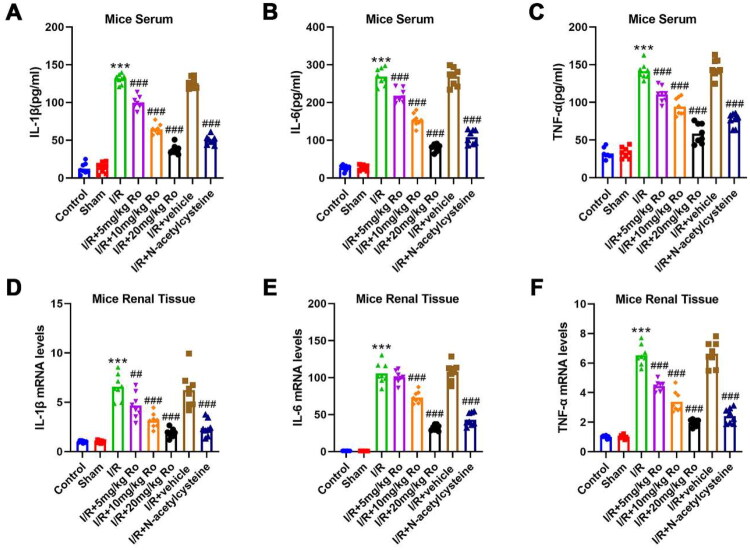
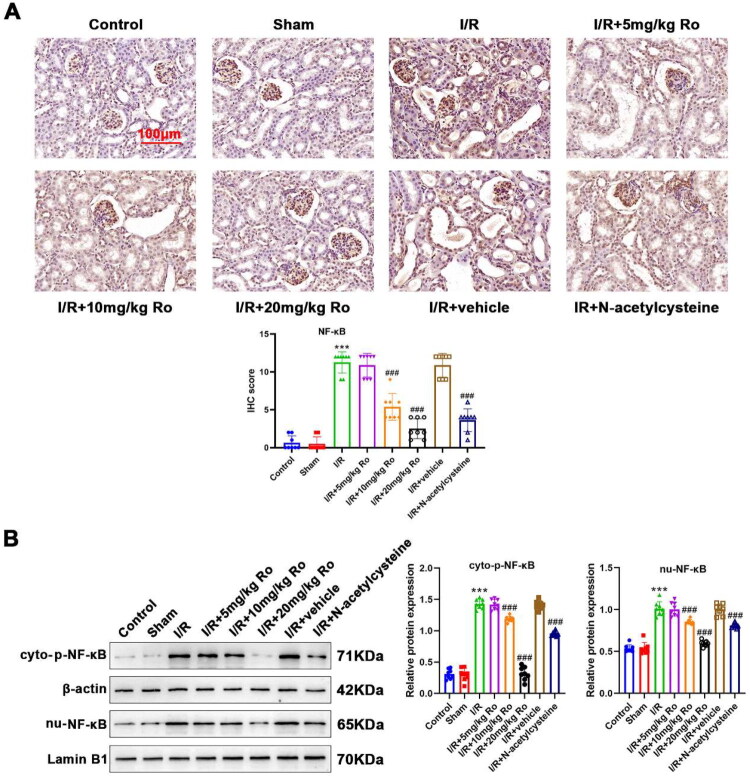
Neutrophil extracellular trap (NET) formation has been proven to take part in the exacerbation of acute kidney injury (AKI). Ro 106-9920, an effective inhibitor of nuclear factor kappa B (NF-κB) signal, could abrogate the formation of NETs. Herein, we explored whether Ro 106-9920 (Ro) exerts a protective role in AKI by repressing NET formation. The AKI model was induced with 30 min-bilateral renal ischemia followed by reperfusion. After finishing the 7-day treatment of Ro or vehicle, blood and the kidney were collected from each mouse for further analysis. Enzyme-linked immunosorbent assay, H&E, and TUNEL staining, immunohistochemistry, as well as Western blot were carried out to observe the kidney function, renal damage, apoptosis, and inflammation, and to preliminarily uncover the underlying mechanism. Administration with Ro effectively protected against AKI in a dose-dependent manner, as proven by the reduction of serum creatinine, serum neutrophil gelatinase-associated lipocalin, blood urea nitrogen, and serum inflammatory cytokine in AKI models after its administration. Moreover, Ro significantly alleviated morphological damage, kidney cells apoptosis, as well as inflammatory cytokine secretion in renal tissues. Mechanically, phosphorylation of NF-κB and myeloperoxidase activity were observed in renal tissues of AKI models, which suggested NF-κB activation and NETosis occurred in AKI. Notably, Ro treatment could significantly repress the nuclear translocation of NF-κB and the increased myeloperoxidase activity. Ro has a protective potential on ischemia/reperfusion-induced AKI by attenuating apoptosis and inflammation, perhaps by suppressing NF-κB activation and is associated with reduced NETosis.
中性粒细胞胞外陷阱(NET)形成已被证明参与急性肾损伤(AKI)的加重过程。Ro 106-9920是一种有效的核因子κB(NF-κB)信号抑制剂,可消除NETs的形成。在此,我们探讨Ro 106-9920(Ro)是否通过抑制NET形成在AKI中发挥保护作用。通过30分钟双侧肾缺血再灌注诱导AKI模型。在完成Ro或赋形剂的7天治疗后,从每只小鼠采集血液和肾脏进行进一步分析。进行酶联免疫吸附测定、苏木精和伊红染色、TUNEL染色、免疫组织化学以及蛋白质免疫印迹,以观察肾功能、肾损伤、细胞凋亡和炎症,并初步揭示潜在机制。给予Ro可有效剂量依赖性地预防AKI,这在给予Ro后AKI模型中血清肌酐、血清中性粒细胞明胶酶相关脂质运载蛋白、血尿素氮和血清炎性细胞因子的降低中得到证实。此外,Ro显著减轻了形态学损伤、肾细胞凋亡以及肾组织中炎性细胞因子的分泌。机制上,在AKI模型的肾组织中观察到NF-κB的磷酸化和髓过氧化物酶活性,这表明AKI中发生了NF-κB激活和NETosis。值得注意的是,Ro治疗可显著抑制NF-κB的核转位和髓过氧化物酶活性的增加。Ro可能通过抑制NF-κB激活减轻细胞凋亡和炎症,对缺血/再灌注诱导的AKI具有保护潜力,并且与NETosis减少有关。