Elmorsy Ekramy M, Al Doghaither Huda A, Al-Ghafari Ayat B, Hifni Badriah Abdullah, Jawad Najlaa M M, Hakim Noor A, Fawzy Manal S, Aly Nagwa M
Center for Health Research, Northern Border University, Arar, 73213, Saudi Arabia.
Department of Biochemistry, Faculty of Science, King Abdulaziz University, Jeddah, 21589, Saudi Arabia.
BMC Pharmacol Toxicol. 2025 Aug 12;26(1):149. doi: 10.1186/s40360-025-00985-1.
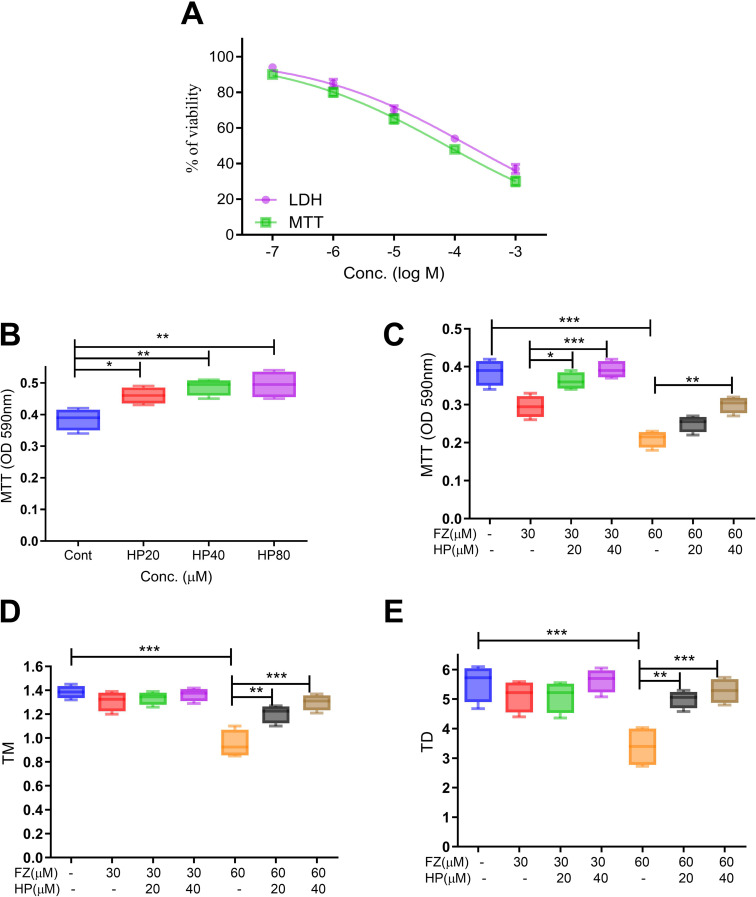
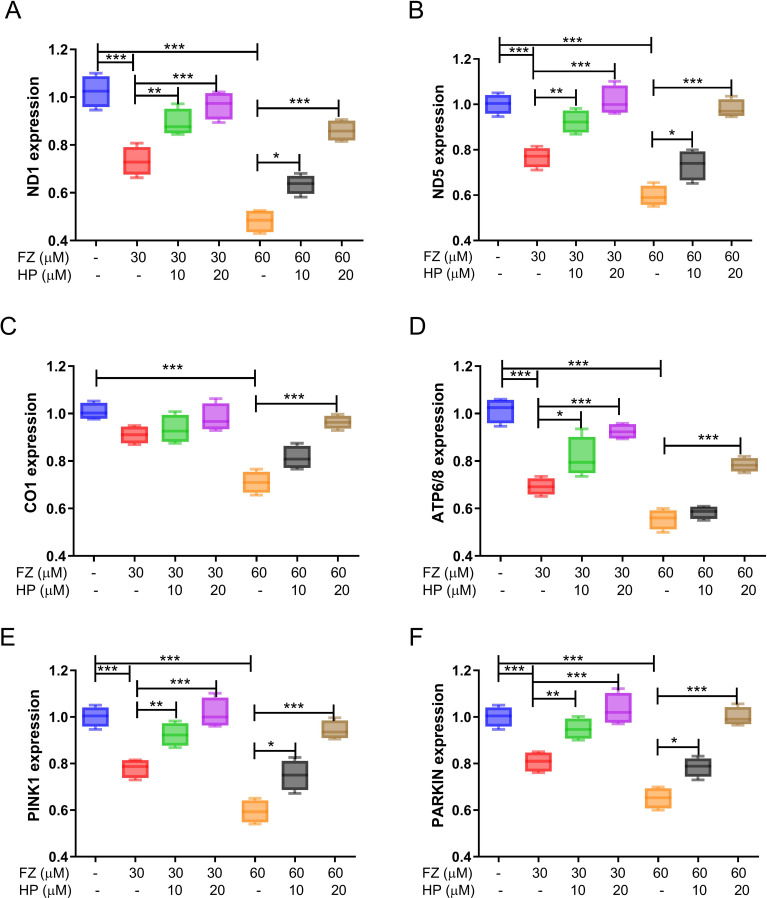
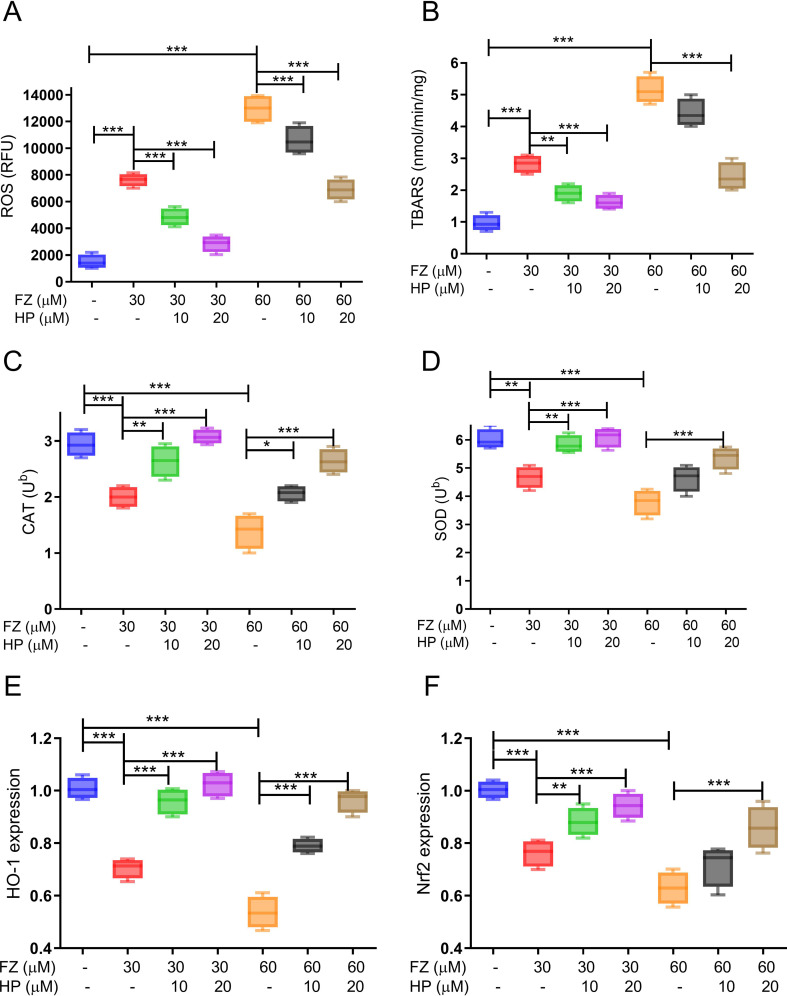
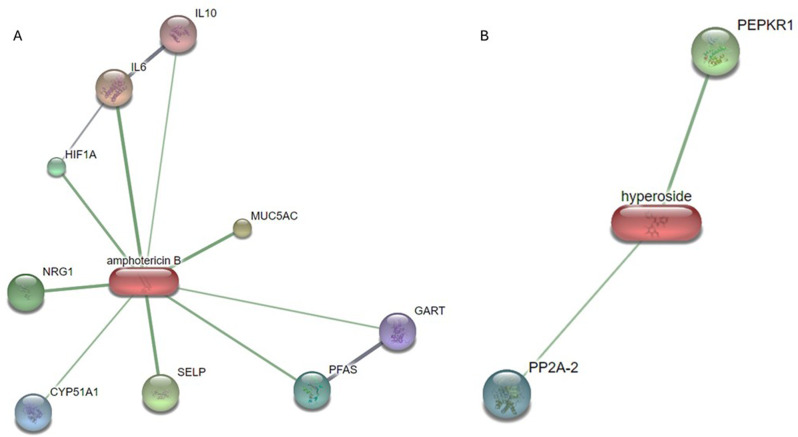
Amphotericin B (Amp-B/FZ), a first-line antifungal, is limited by dose-dependent nephrotoxicity. This study investigated the protective effects of hyperoside (HP), a dietary flavonoid, against FZ-induced renal toxicity in human proximal tubular (HK-2) cells. Molecular docking revealed strong binding affinities of HP with mitophagy (PINK1/PARKIN) and antioxidant (Nrf2/HO-1) regulators, contrasting with FZ's preferential binding to mitochondrial complex I. FZ (30-60 µM) induced cytotoxicity (MTT/LDH), genotoxicity (comet assay), and bioenergetic disruption: ATP depletion (58%), mitochondrial complex I/III inhibition (42-67%), and PINK1/PARKIN dysregulation. FZ elevated reactive species (3.2-fold) and lipid peroxidation (2.8-fold) while suppressing catalase (64%) and superoxide dismutase (51%) activities. qPCR confirmed FZ-induced downregulation of NDUFS1, CYC1, CAT, and SOD2, alongside impaired Nrf2/HO-1 antioxidant signaling. Co-treatment with HP (20-40 µM) attenuated FZ toxicity, restoring ATP (1.8-fold), mitochondrial complex activities (35-49%), and antioxidant defenses (CAT:2.1-fold, SOD:1.7-fold). HP also normalized Nrf2/HO-1 expression and mitigated oxidative/genotoxic damage. These findings highlight HP's dual role in countering FZ-induced mitochondrial dysfunction and oxidative stress, positioning it as a promising nephroprotective adjuvant. Further in vivo validation could advance HP's clinical application in reducing antifungal-associated renal injury.
两性霉素B(Amp - B/FZ)作为一线抗真菌药物,受剂量依赖性肾毒性的限制。本研究调查了一种膳食类黄酮金丝桃苷(HP)对FZ诱导的人近端肾小管(HK - 2)细胞肾毒性的保护作用。分子对接显示HP与线粒体自噬(PINK1/PARKIN)和抗氧化(Nrf2/HO - 1)调节因子具有很强的结合亲和力,而FZ则优先与线粒体复合体I结合。FZ(30 - 60 μM)诱导细胞毒性(MTT/LDH)、遗传毒性(彗星试验)和生物能量紊乱:ATP耗竭(58%)、线粒体复合体I/III抑制(42 - 67%)以及PINK1/PARKIN失调。FZ使活性物质升高(3.2倍)和脂质过氧化增加(2.8倍),同时抑制过氧化氢酶(64%)和超氧化物歧化酶(51%)的活性。qPCR证实FZ诱导NDUFS1、CYC1、CAT和SOD2下调,同时Nrf2/HO - 1抗氧化信号受损。与HP(20 - 40 μM)联合处理可减轻FZ毒性,恢复ATP(1.8倍)、线粒体复合体活性(35 - 49%)和抗氧化防御(CAT:2.1倍,SOD:1.7倍)。HP还使Nrf2/HO - 1表达正常化并减轻氧化/遗传毒性损伤。这些发现突出了HP在对抗FZ诱导的线粒体功能障碍和氧化应激方面的双重作用,使其成为一种有前景的肾保护佐剂。进一步的体内验证可能会推动HP在减少抗真菌相关肾损伤方面的临床应用。