Uenaka Takeshi, Jung Sascha, Kumar Ishan, Vodehnal Kit, Rastogi Mohit, Yoo Yongjin, Koontz Mark, Thome Christian, Li Wanhua, Chan Tamara, Green Erin M, Chesnov Kirill, Sun Zijun, Zhang Shuyuan, Wang Jinzhao, Venida Anthony, Mellier Anne-Laure Mahul, Atkins Micaiah, Jackrel Meredith, Skotheim Jan M, Wyss-Coray Tony, Abu-Remaileh Monther, Lashuel Hilal A, Bassik Michael C, Südhof Thomas C, Del Sol Antonio, Ullian Erik, Wernig Marius
Institute for Stem Cell Biology & Regenerative Medicine, Stanford University School of Medicine, Stanford, CA, 94305, USA.
Department of Pathology, Stanford University School of Medicine, Stanford, CA 94305, USA.
bioRxiv. 2025 Aug 7:2025.08.05.668605. doi: 10.1101/2025.08.05.668605.
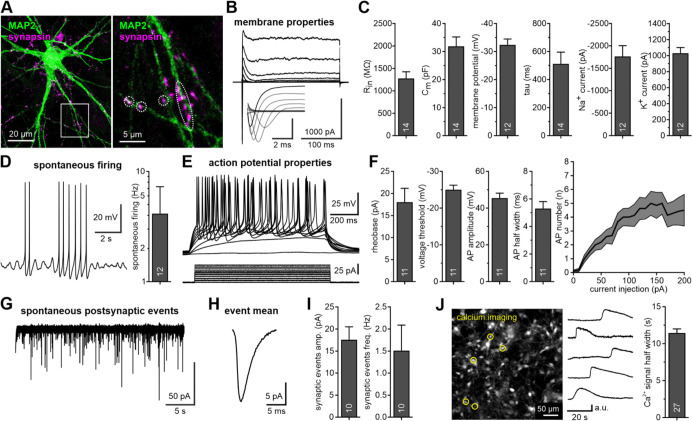
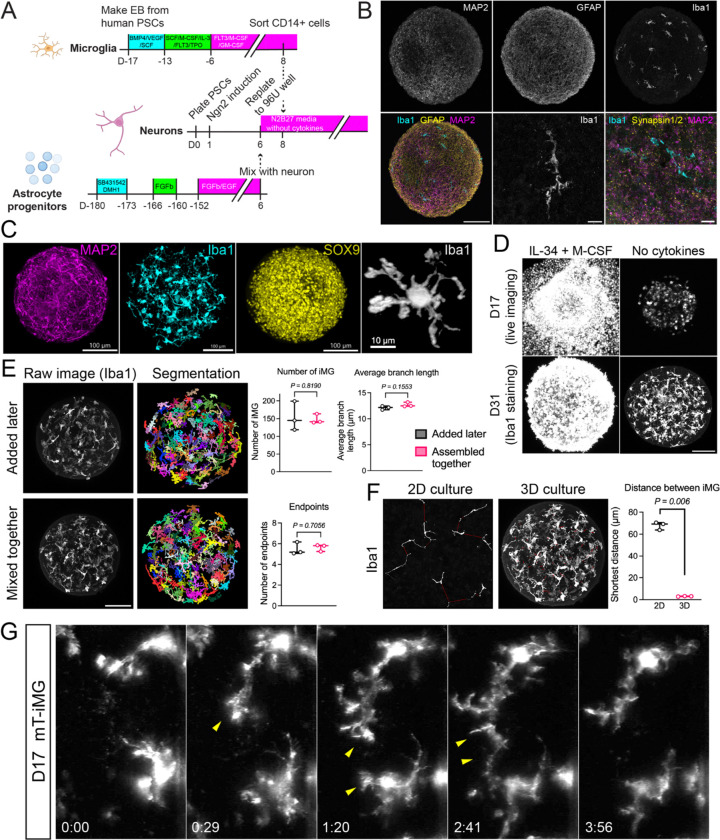
Microglia are the immune cells of the central nervous system and are thought to be key players in both physiological and disease conditions. Several microglial features are poorly conserved between mice and human, such as the function of the neurodegeneration-associated immune receptor Trem2. Induced pluripotent stem cell (iPSC)-derived microglia offer a powerful opportunity to generate and study human microglia. However, human iPSC-derived microglia often exhibit activated phenotypes , and assessing their impact on other brain cell types remains challenging due to limitations in current co-culture systems. Here, we developed fully defined brain microtissues, composed of human iPSC-derived neurons, astrocytes, and microglia, co-cultured in 2D or 3D formats. Our microtissues are stable and self-sufficient over time, requiring no exogenous cytokines or growth factors. All three cell types exhibit morphologies characteristic of their environment and show functional properties. Co-cultured microglia develop more homeostatic phenotypes compared to microglia exposed to exogenous cytokines. Hence, these tri-cultures provide a unique approach to investigate cell-cell interactions between brain cell types. We found that astrocytes and not neurons are sufficient for microglial survival and maturation, and that astrocyte-derived M-CSF is essential for microglial survival. Single-cell and single-nucleus RNA sequencing analyses nominated a network of reciprocal communication between cell types. Brain microtissues faithfully recapitulated pathogenic α-synuclein seeding and aggregation, suggesting their usefulness as human cell models to study not only normal but also pathological cell biological processes.
小胶质细胞是中枢神经系统的免疫细胞,被认为在生理和疾病状态中都是关键参与者。小鼠和人类之间的几种小胶质细胞特征保守性较差,例如与神经退行性变相关的免疫受体Trem2的功能。诱导多能干细胞(iPSC)衍生的小胶质细胞为生成和研究人类小胶质细胞提供了一个有力的机会。然而,人类iPSC衍生的小胶质细胞通常表现出激活的表型,并且由于当前共培养系统的局限性,评估它们对其他脑细胞类型的影响仍然具有挑战性。在这里,我们开发了完全确定的脑微组织,由人类iPSC衍生的神经元、星形胶质细胞和小胶质细胞组成,以二维或三维形式共培养。我们的微组织随着时间的推移是稳定且自给自足的,不需要外源性细胞因子或生长因子。所有三种细胞类型都表现出其所处环境特有的形态,并显示出功能特性。与暴露于外源性细胞因子的小胶质细胞相比,共培养的小胶质细胞发展出更多的稳态表型。因此,这些三细胞共培养物提供了一种独特的方法来研究脑细胞类型之间的细胞间相互作用。我们发现星形胶质细胞而非神经元对于小胶质细胞的存活和成熟是足够的,并且星形胶质细胞衍生的M-CSF对于小胶质细胞的存活至关重要。单细胞和单核RNA测序分析确定了细胞类型之间相互交流的网络。脑微组织忠实地再现了致病性α-突触核蛋白的播种和聚集,表明它们作为人类细胞模型不仅可用于研究正常的,还可用于研究病理细胞生物学过程。