Ilic Jovan, Tausanovic Katarina, Zoric Goran, Jovanovic Milan, Buzejic Matija, Ivanis Sara, Parezanovic Milan, Marinkovic Milan, Karamarkovic Nemanja, Petakov Ana, Zivaljevic Vladan
Clinic for Endocrine Surgery, University Clinical Center of Serbia, 11000 Belgrade, Serbia.
School of Medicine, University of Belgrade, 11000 Belgrade, Serbia.
Diagnostics (Basel). 2025 Jul 23;15(15):1850. doi: 10.3390/diagnostics15151850.
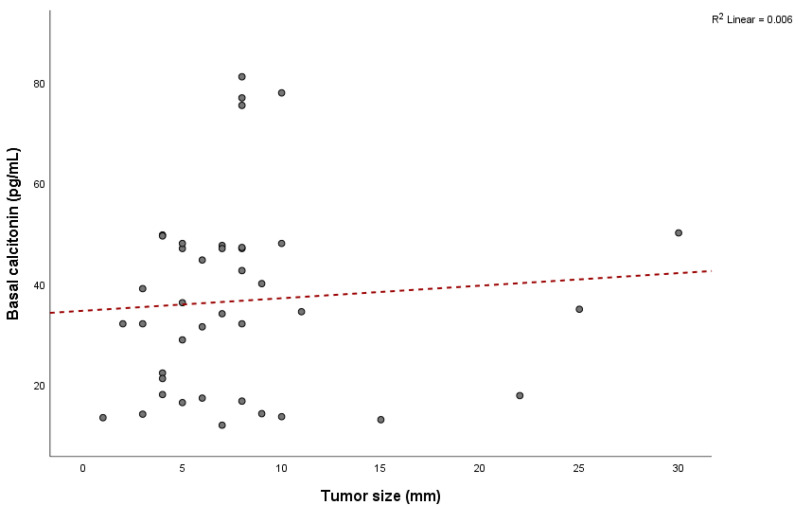
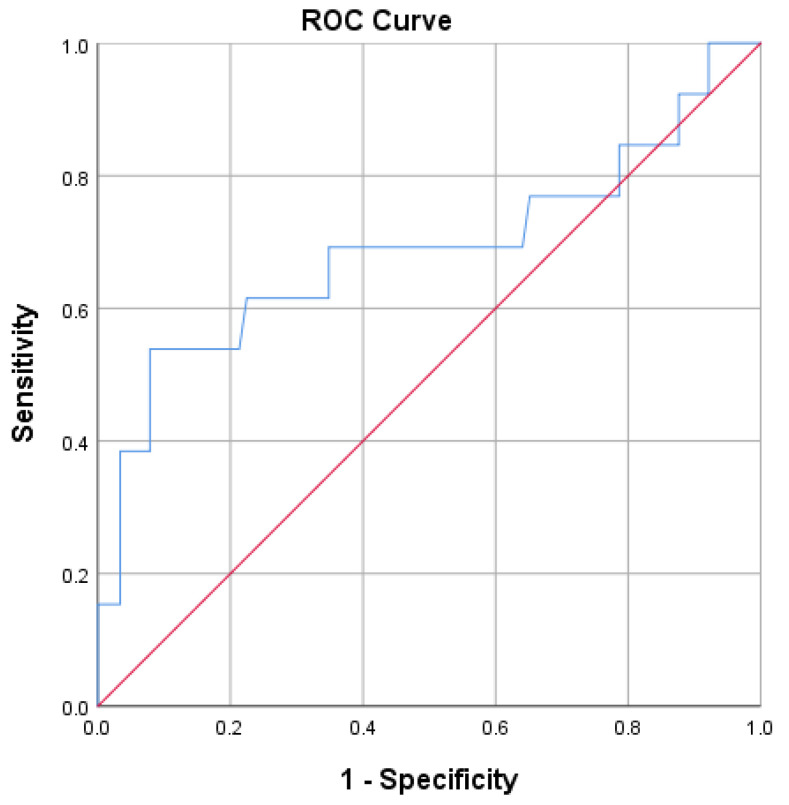
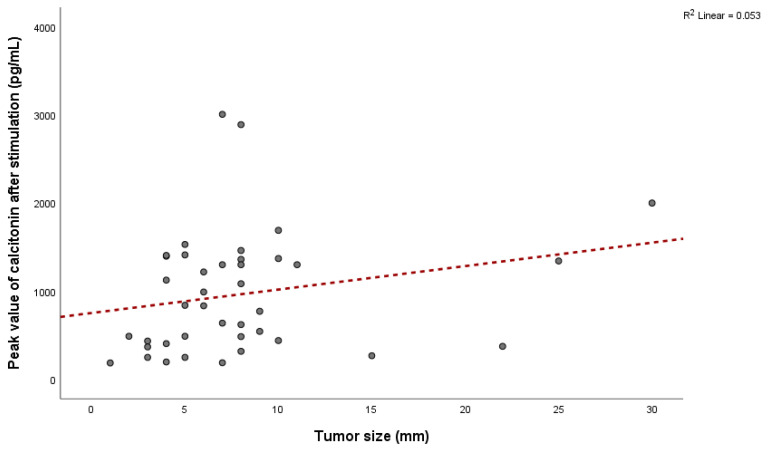
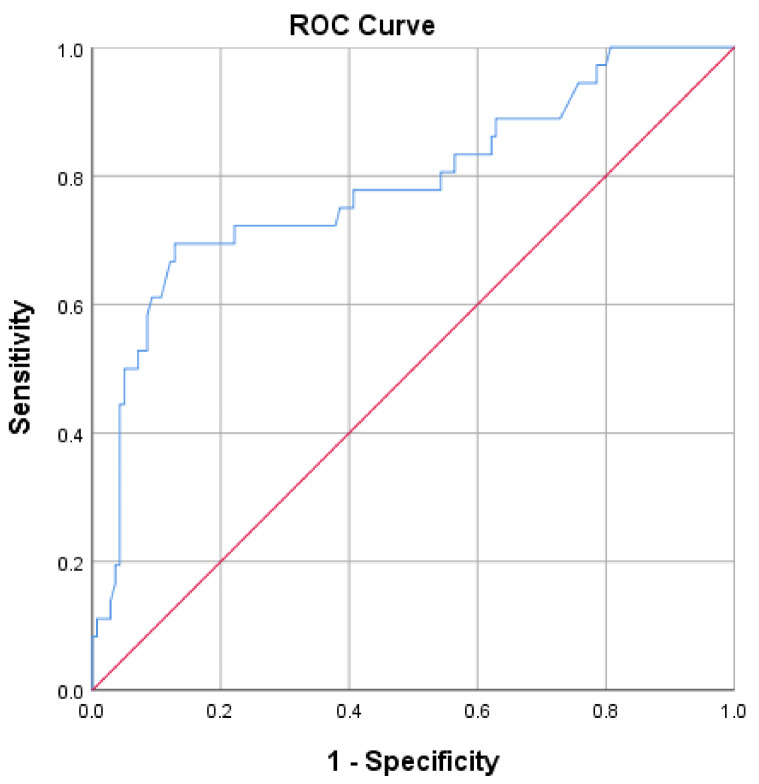
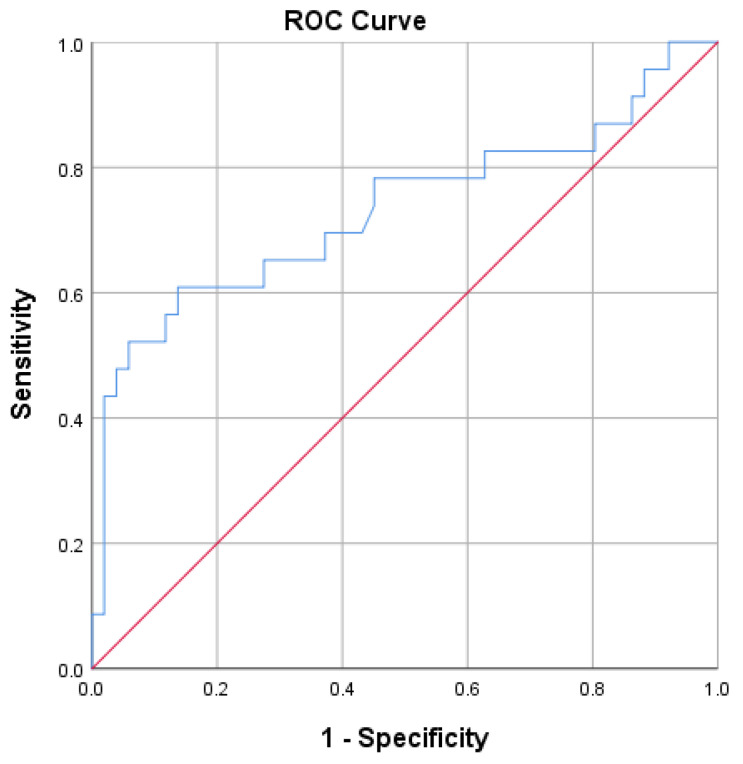
Medullary thyroid carcinoma (MTC) is a rare malignancy derived from parafollicular C-cells, with calcitonin (Ct) as its key biomarker. While basal Ct (bCt) levels above 100 pg/mL strongly suggest MTC, intermediate elevations (10-100 pg/mL) may reflect C-cell hyperplasia (CCH) or other benign conditions, making diagnostics challenging. Although calcium stimulation testing enhances sensitivity, the optimal cut-off values and comparative efficacy of calcium gluconate (CG) versus calcium chloride (CC) remain insufficiently researched. Data on 176 patients who underwent total thyroidectomy between 2009 and 2025 were retrospectively analyzed. BCt values ranged from 10 to 100 pg/mL, and stimulated Ct (sCt) values were above 100 pg/mL. CG was used from 2009 to 2019, and CC was used from 2020 to 2025. Definitive pathohistological findings divided patients into those with MTC, CCH, or no C-cell pathology. Receiver operating characteristic (ROC) analysis identified optimal Ct thresholds for predicting MTC for each stimulatory agent. Of the 176 patients, 36 (20.5%) had confirmed MTC. A bCt threshold of 31.1 pg/mL yielded 69.4% sensitivity and 87.1% specificity. For sCt, optimal cut-offs were 810.8 pg/mL for CG and 1076 pg/mL for CC. Lower thresholds (388.4 pg/mL for CG and 431.5 pg/mL for CC) improved sensitivity (≥76.9%) and negative predictive value (>91%). Calcium stimulation testing improves MTC detection in patients with moderate bCt elevation. Although CG showed marginally better diagnostic performance, CC remains a practical and reliable alternative, especially when higher cut-off values are considered. Early surgical intervention should be considered when sensitivity-driven thresholds are met.
甲状腺髓样癌(MTC)是一种源自滤泡旁C细胞的罕见恶性肿瘤,降钙素(Ct)是其关键生物标志物。虽然基础Ct(bCt)水平高于100 pg/mL强烈提示MTC,但中度升高(10 - 100 pg/mL)可能反映C细胞增生(CCH)或其他良性情况,这使得诊断具有挑战性。尽管钙刺激试验提高了敏感性,但葡萄糖酸钙(CG)与氯化钙(CC)的最佳临界值及比较疗效仍研究不足。对2009年至2025年间接受全甲状腺切除术的176例患者的数据进行了回顾性分析。bCt值范围为10至100 pg/mL,刺激后Ct(sCt)值高于100 pg/mL。2009年至2019年使用CG,2020年至2025年使用CC。明确的病理组织学结果将患者分为患有MTC、CCH或无C细胞病变的患者。受试者操作特征(ROC)分析确定了每种刺激剂预测MTC的最佳Ct阈值。在176例患者中,36例(20.5%)确诊为MTC。bCt阈值为31.1 pg/mL时,敏感性为69.4%,特异性为87.1%。对于sCt,CG的最佳临界值为810.8 pg/mL,CC为1076 pg/mL。较低的临界值(CG为388.4 pg/mL,CC为431.5 pg/mL)提高了敏感性(≥76.9%)和阴性预测值(>91%)。钙刺激试验可改善中度bCt升高患者的MTC检测。虽然CG的诊断性能略好,但CC仍然是一种实用且可靠的替代方法,尤其是在考虑较高临界值时。当达到敏感性驱动的阈值时,应考虑早期手术干预。