Lee SoHee, Kim Young Lae, Son Gi Hwal, Lee Eui Kyung, Kim Nam Oh, Choi Chang Sik, Lee Kyung Hoon, Cha Hyeon Ji, Shin Jong-Suh, Kim Min Ji, Park Byung Ki
Department of Animal Science, Kangwon National University, Chuncheon 24341, Republic of Korea.
Nonghyup Livestock Research Center, Anseong 17558, Republic of Korea.
Animals (Basel). 2025 Jul 23;15(15):2169. doi: 10.3390/ani15152169.
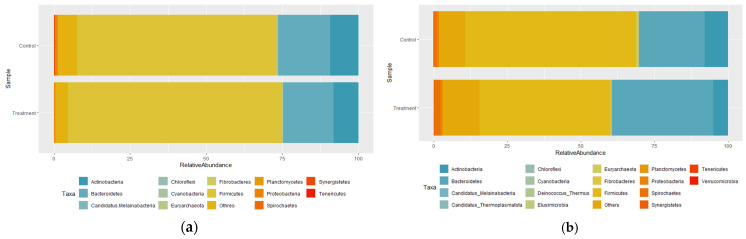
This study evaluated the effects of early-life creep feeding with a high-protein, high-energy diet on growth performance, ruminal fermentation, and gut microbiota in Hanwoo calves (n = 10). Calves were assigned to control or treatment groups from birth to 6 months of age. No significant differences were observed in body weight, average daily gain (ADG), or feed conversion ratio (FCR), but ADG and dry matter intake (DMI) tended to be higher in the treatment group. Ruminal pH, NH-N, and volatile fatty acid (VFA) concentrations showed no significant differences. Fecal VFA profiles exhibited numerical trends suggesting higher propionate at 3 months and lower acetate, butyrate, and total VFA at 6 months in the treatment group, potentially reflecting altered substrate availability or absorption capacity, though these mechanisms were not directly measured. Microbiota analysis indicated stable ruminal alpha diversity, with numerical increases in fecal and genera such as and in the treatment group. These results suggest that early creep feeding with high-nutrition diets can support intake and promote potential shifts in hindgut microbiota composition without compromising overall microbial stability. Further research with larger sample sizes is needed to confirm these trends and assess long-term impacts on calf health and productivity.
本研究评估了早期用高蛋白、高能量日粮进行犊牛早期补饲对韩牛犊牛(n = 10)生长性能、瘤胃发酵和肠道微生物群的影响。犊牛从出生到6月龄被分为对照组或处理组。在体重、平均日增重(ADG)或饲料转化率(FCR)方面未观察到显著差异,但处理组的ADG和干物质采食量(DMI)有升高趋势。瘤胃pH值、氨氮(NH-N)和挥发性脂肪酸(VFA)浓度无显著差异。粪便VFA谱呈现出数值趋势,表明处理组在3月龄时丙酸含量较高,在6月龄时乙酸、丁酸和总VFA含量较低,这可能反映了底物可用性或吸收能力的改变,尽管这些机制未直接测定。微生物群分析表明瘤胃α多样性稳定,处理组粪便中的 以及诸如 和 等属的数量有所增加。这些结果表明,早期用高营养日粮进行补饲可以支持采食量,并促进后肠微生物群组成的潜在变化,而不会损害整体微生物稳定性。需要进一步进行更大样本量的研究来证实这些趋势,并评估对犊牛健康和生产性能的长期影响。