An Yating, Zheng Ying, Jiang Ziwei, Meng Meng, Yin Jintuo, An Yahui
Department of Pharmacy, Beijing Health Vocational College, Beijing, China.
Department of Pharmacy, Fourth Hospital of Hebei Medical University, Shijiazhuang, Hebei, China.
Front Pharmacol. 2025 Jul 30;16:1645114. doi: 10.3389/fphar.2025.1645114. eCollection 2025.
Drug-induced neuralgia is a common and significant adverse reaction. This study analyzed the United States food and drug administration adverse event reporting system (FAERS) database (2004-2024) to identify relevant drugs and potential mechanisms.
We conducted an association analysis between drugs and neuralgia using the FAERS database. Disproportionality analysis methods, including the reporting odds ratio (ROR), proportional reporting ratio (PRR), Bayesian confidence propagation neural network (BCPNN), and empirical Bayesian geometric mean (EBGM), were applied. Data from 2004 to 2024 were analyzed to identify drugs potentially associated with neuralgia.
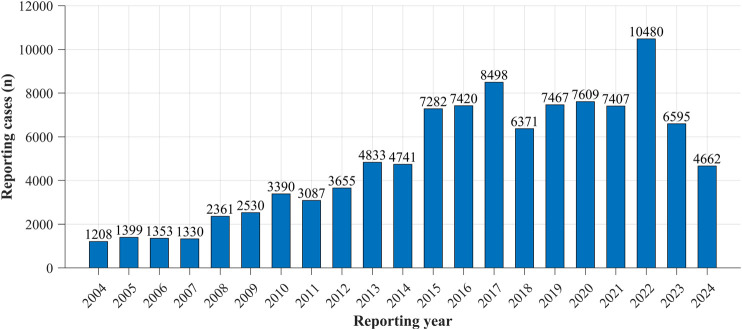
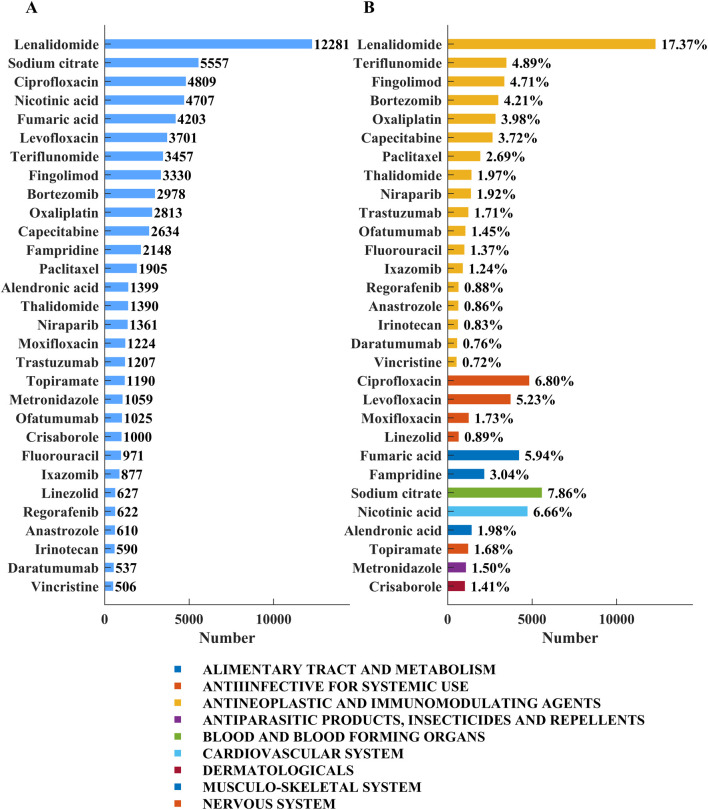
Among the 103,678 reports of neuralgia-related adverse events, 60.29% involved female patients, and 30.40% were aged between 41 and 64 years. The most common underlying medical conditions were plasma cell myeloma (14.28%) and multiple sclerosis (10.65%). The analysis revealed significant associations between neuralgia and several classes of drugs, including chemotherapeutic agents, certain antibiotics, and immunosuppressants, potentially attributable to neurotoxicity, immune-mediated mechanisms, or metabolic disruptions. Notably, lenalidomide exhibited the strongest association with neuralgia, followed by sodium citrate. These findings underscore the importance of early recognition, safer prescribing strategies, and further investigation to mitigate neurotoxic risks.
This study identifies key drugs, including chemotherapeutics, antibiotics, and immunosuppressants, associated with drug-induced neuralgia through FAERS data analysis, highlighting the need for early detection, safer prescribing practices, and further research into mitigating neurotoxicity.
药物性神经痛是一种常见且严重的不良反应。本研究分析了美国食品药品监督管理局不良事件报告系统(FAERS)数据库(2004 - 2024年),以确定相关药物和潜在机制。
我们使用FAERS数据库对药物与神经痛之间进行关联分析。应用了不成比例分析方法,包括报告比值比(ROR)、比例报告比值(PRR)、贝叶斯置信传播神经网络(BCPNN)和经验贝叶斯几何均值(EBGM)。分析2004年至2024年的数据,以确定可能与神经痛相关的药物。
在103,678例与神经痛相关的不良事件报告中,60.29%涉及女性患者,30.40%的患者年龄在41至64岁之间。最常见的基础疾病是浆细胞骨髓瘤(14.28%)和多发性硬化症(10.65%)。分析显示神经痛与几类药物之间存在显著关联,包括化疗药物、某些抗生素和免疫抑制剂,这可能归因于神经毒性、免疫介导机制或代谢紊乱。值得注意的是,来那度胺与神经痛的关联最强,其次是柠檬酸钠。这些发现强调了早期识别、更安全的处方策略以及进一步研究以降低神经毒性风险的重要性。
本研究通过FAERS数据分析确定了与药物性神经痛相关的关键药物,包括化疗药物、抗生素和免疫抑制剂,突出了早期检测、更安全的处方实践以及进一步研究减轻神经毒性的必要性。