Yin Xuechen, Chen Wenwen, Ao Xudong, Xu Luxia, Cao Jiujiu, Huang Tinghui, Liang Junqing, Hu Jianhua, Liu Jiaqi, Wang Xinping, Li Wenying, Zhou Muya, He Lingfeng, Guo Zhigang
Jiangsu Key Laboratory for Molecular and Medical Biotechnology, College of Life Sciences, Nanjing Normal University, Nanjing, China.
Peking University Cancer Hospital (Inner Mongolia Campus)/Affiliated Cancer Hospital of Inner Mongolia Medical University, Hohhot, China.
Front Immunol. 2025 Mar 17;16:1540754. doi: 10.3389/fimmu.2025.1540754. eCollection 2025.
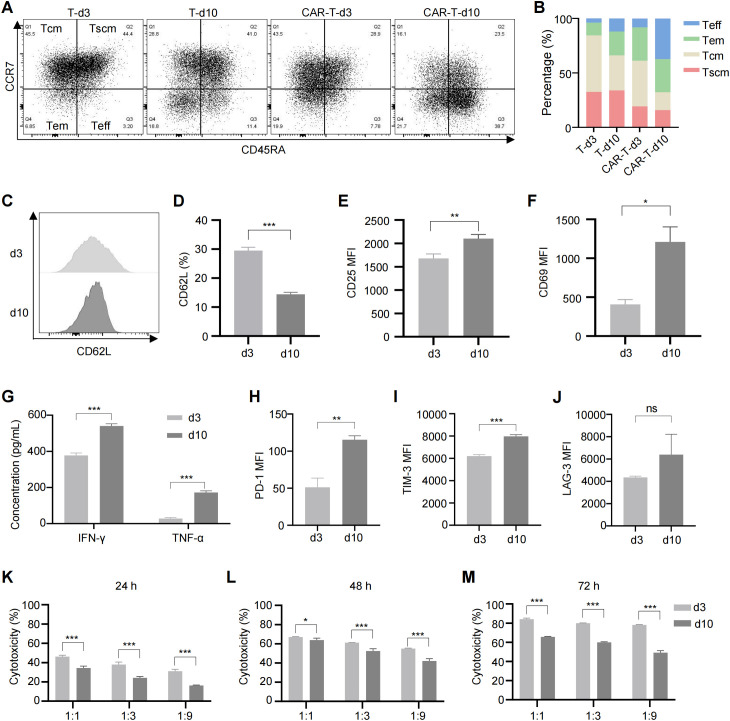
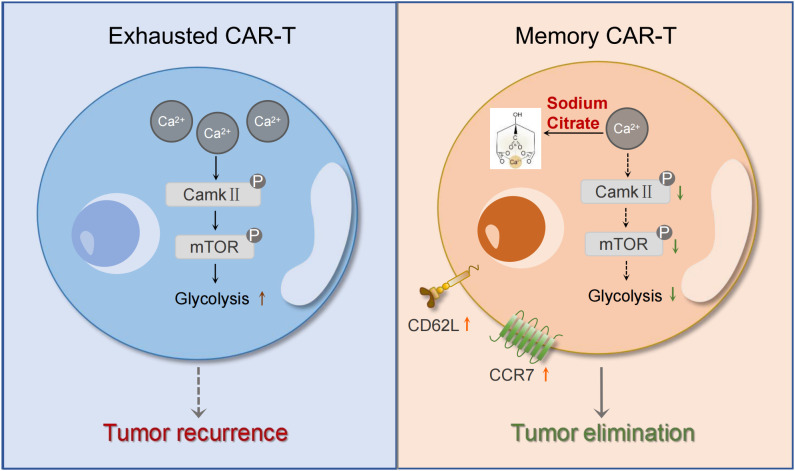
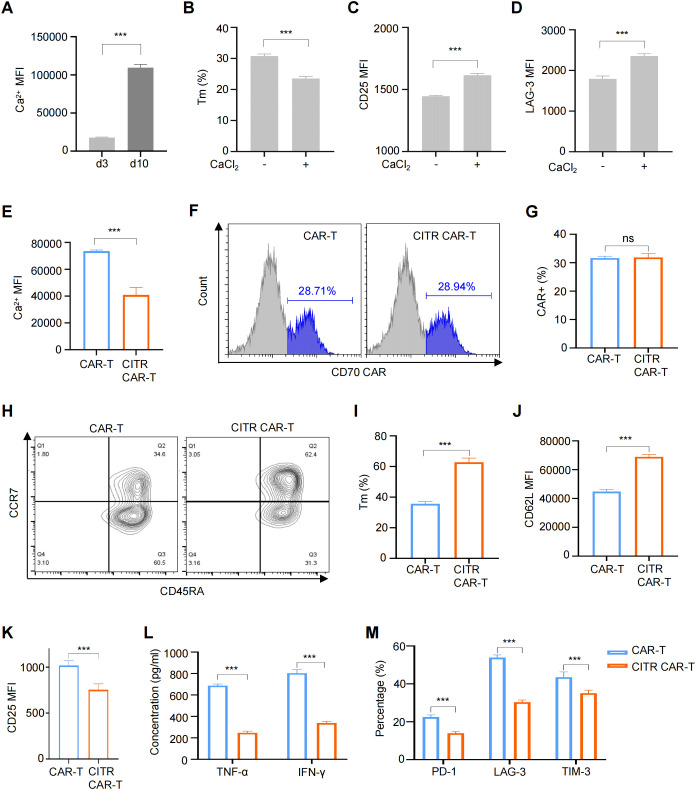
Chimeric antigen receptor T cell (CAR-T) therapy has shown success in treating hematological malignancies, but its effectiveness against solid tumors is hindered by T cell exhaustion. During expansion, tonic signaling induced by CAR expression contributes to CAR-T cell exhaustion, which can be mitigated by inhibiting calcium signaling. Given that sodium citrate can chelate calcium ions and inhibit calcium signaling, in this study, we investigated whether sodium citrate could reduce exhaustion and enhance CAR-T cell function.
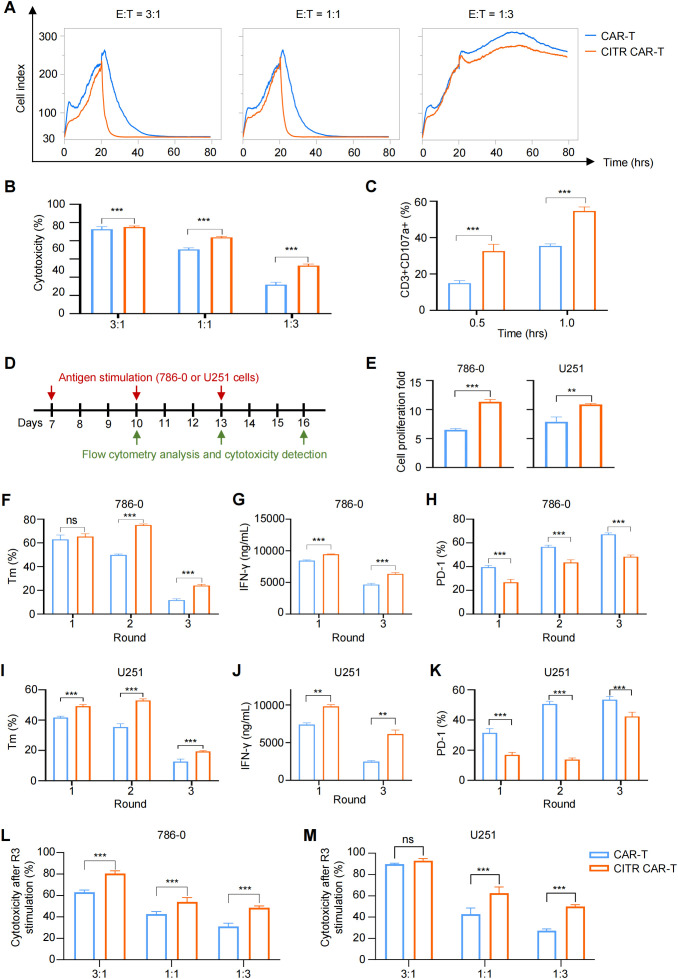
We constructed anti-CD70 CAR-T cells and cultured them in the presence of sodium citrate. The characteristics and functionality of sodium citrate-pretreated CAR-T cells were assessed through and experiments. To further validate our observation, we also treated anti-mesothelin (MSLN) CAR-T cells with sodium citrate and detected the phenotypes and anti-tumor function of CAR-T cells.
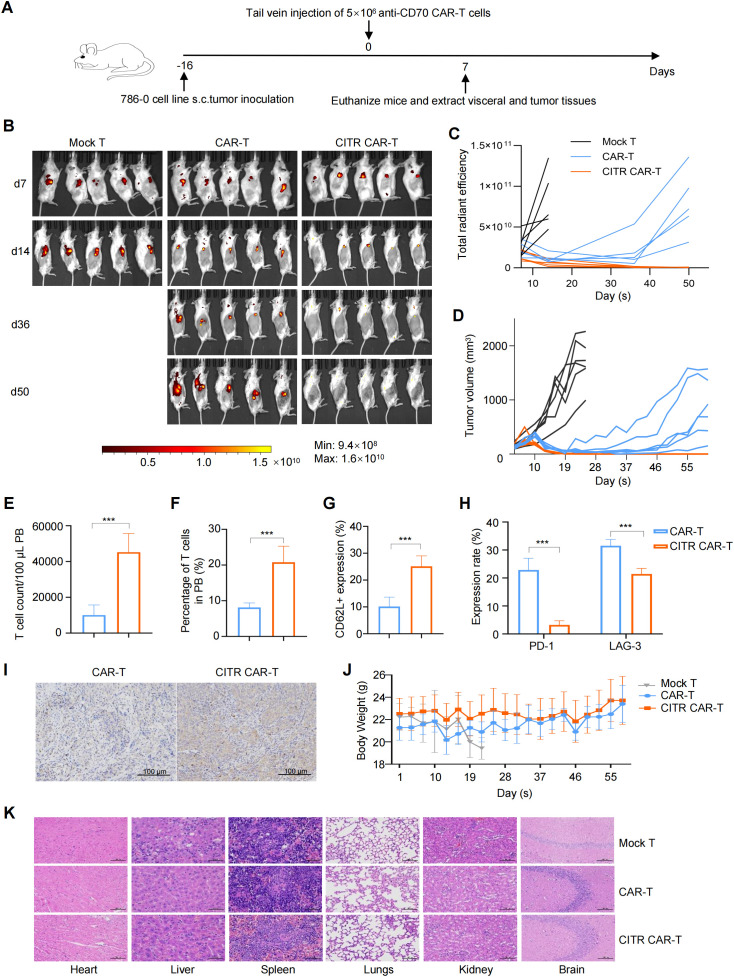
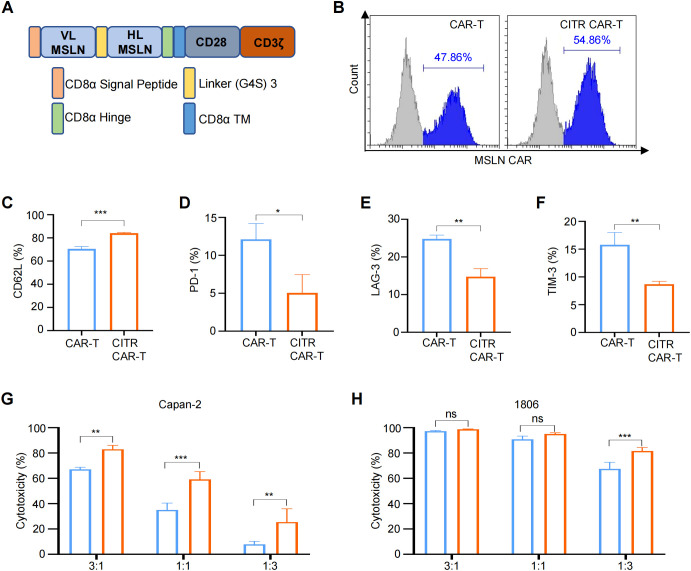
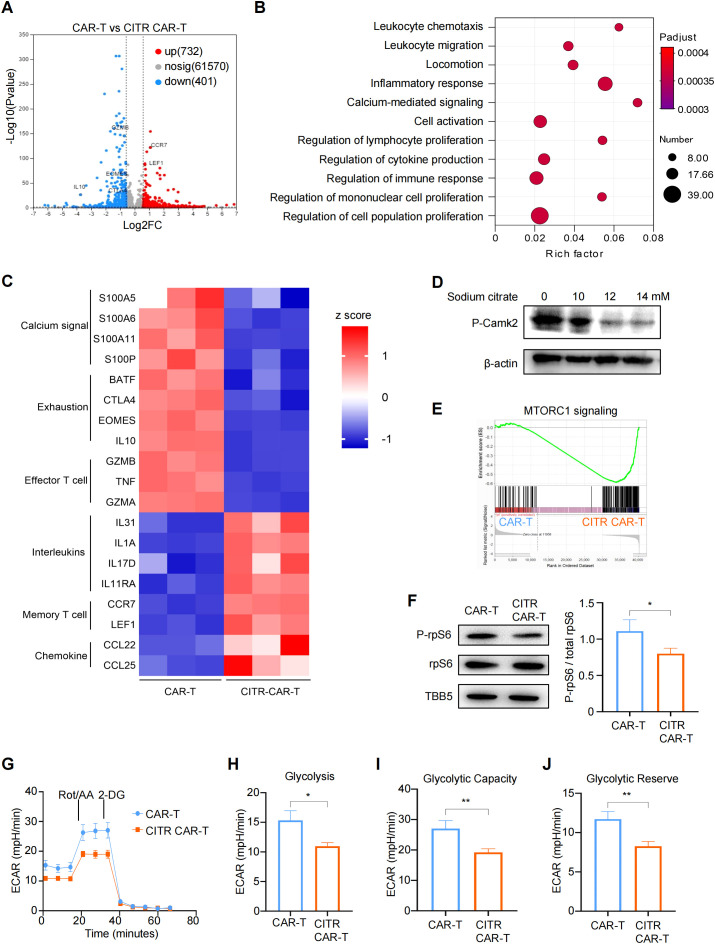
We found that sodium citrate-pretreated anti-CD70 CAR-T cells exhibited reduced exhaustion, increased memory T cell proportions, and enhanced anti-tumor efficacy both and . Notably, sodium citrate treatment improved the persistence of CAR-T cells and prevented tumor recurrence. These beneficial effects were also observed in anti-MSLN CAR-T cells. Transcriptomic and metabolite analyses revealed that sodium citrate inhibited calcium signaling, mTORC1 activity, and glycolysis pathways, thus modulating T cell exhaustion and differentiation.
Our findings suggest that sodium citrate supplementation during CAR-T cell expansion could be a promising strategy to improve CAR-T therapy for solid tumors by preventing exhaustion and promoting memory T cell formation.
嵌合抗原受体T细胞(CAR-T)疗法在治疗血液系统恶性肿瘤方面已取得成功,但其对实体瘤的有效性受到T细胞耗竭的阻碍。在扩增过程中,CAR表达诱导的强直信号促成CAR-T细胞耗竭,而抑制钙信号可减轻这种耗竭。鉴于柠檬酸钠可螯合钙离子并抑制钙信号,在本研究中,我们调查了柠檬酸钠是否能减少耗竭并增强CAR-T细胞功能。
我们构建了抗CD70 CAR-T细胞,并在柠檬酸钠存在的情况下进行培养。通过[具体实验1]和[具体实验2]实验评估柠檬酸钠预处理的CAR-T细胞的特性和功能。为进一步验证我们的观察结果,我们还用柠檬酸钠处理抗间皮素(MSLN)CAR-T细胞,并检测CAR-T细胞的表型和抗肿瘤功能。
我们发现,柠檬酸钠预处理的抗CD70 CAR-T细胞表现出耗竭减少、记忆T细胞比例增加,并且在[具体实验1]和[具体实验2]中抗肿瘤功效均增强。值得注意的是,柠檬酸钠处理提高了CAR-T细胞的[具体指标]持久性并防止肿瘤复发。在抗MSLN CAR-T细胞中也观察到了这些有益效果。转录组学和代谢物分析表明,柠檬酸钠抑制钙信号、mTORC1活性和糖酵解途径,从而调节T细胞耗竭和分化。
我们的研究结果表明,在CAR-T细胞扩增过程中补充柠檬酸钠可能是一种有前景的策略,通过防止耗竭和促进记忆T细胞形成来改善实体瘤的CAR-T治疗。