Dingwall Riki, May Carlos, McDonald Jackson A, Hill Thomas, Brown Robyn, Lawrence Andrew J, Hannan Anthony J, Burrows Emma L
The Florey Institute of Neuroscience and Mental Health, University of Melbourne, Parkville, Melbourne, Australia.
Faculty of Medicine, Dentistry & Health Sciences, University of Melbourne, Parkville, Victoria, Australia.
Genes Brain Behav. 2025 Aug;24(4):e70032. doi: 10.1111/gbb.70032.
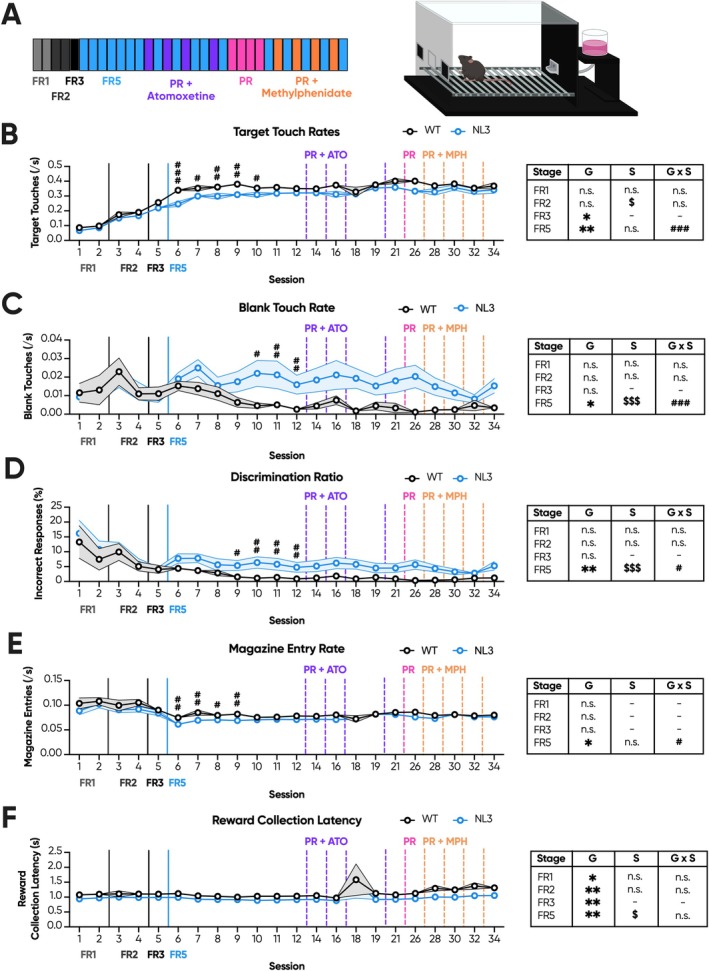
Autism affects ~1 in 100 people and arises from the interplay between rare genetic changes and the environment. Diagnosis is based on social and communication difficulties, as well as the presence of restricted and repetitive behaviours. Autism aetiology is complex. However, the social motivation hypothesis proposes that an imbalance in the salience of social over non-social stimuli contributes over time to the autism phenotype. Accordingly, motivational dysfunction in autism is widespread, and human imaging data has identified broad impairments to reward processing. The R451C mutation of the neuroligin-3 gene is one such rare genetic change. Knock-in mice harbouring this mutation (NL3) exhibit a range of autism-related phenotypes, including impaired sociability and social motivation. However, no prior report has directly probed non-social motivation. Here, we explore conflicting results from the progressive ratio (PR) and conditioned place preference tasks of non-social motivation. Initial PR results were inconsistent, suggesting reduced, unaltered, and elevated non-social motivation, respectively. Utilising several experimental designs, we probed a range of confounders likely to influence task performance. Overall, reduced PR responding by NL3s likely arose from a combination of their superior ability to withhold responding during prior training and a short PR training schedule. Meanwhile, increased PR responding by NL3s was attributable to their heightened degree of habitual responding. The NL3 mouse model therefore likely best represents autistic individuals with intact non-social motivation but altered behavioural updating. Finally, we discuss the benefits and limitations of using heterogenous experimental designs to probe behavioural phenotypes and offer some general recommendations for PR.
自闭症影响着约1%的人群,它由罕见的基因变化与环境之间的相互作用引发。自闭症的诊断基于社交和沟通方面的困难,以及存在受限的重复行为。自闭症的病因很复杂。然而,社会动机假说提出,随着时间的推移,社交刺激与非社交刺激显著性的失衡会导致自闭症表型。因此,自闭症中的动机功能障碍很普遍,人体成像数据已确定奖励处理存在广泛受损。神经连接蛋白3基因的R451C突变就是这样一种罕见的基因变化。携带这种突变的基因敲入小鼠(NL3)表现出一系列与自闭症相关的表型,包括社交能力和社会动机受损。然而,此前没有报告直接探究过非社会动机。在这里,我们探讨了非社会动机的渐进比率(PR)和条件性位置偏好任务中相互矛盾的结果。最初的PR结果不一致,分别表明非社会动机降低、未改变和升高。我们采用了几种实验设计,探究了一系列可能影响任务表现的混杂因素。总体而言,NL3小鼠PR反应降低可能是由于它们在先前训练中更善于抑制反应以及PR训练时间较短。同时,NL3小鼠PR反应增加归因于它们更高程度的习惯性反应。因此,NL3小鼠模型可能最能代表非社会动机完整但行为更新改变的自闭症个体。最后,我们讨论了使用异质实验设计探究行为表型的益处和局限性,并为PR提供了一些一般性建议。