Tuyishime Elysée, Kayitesi Catherine, Remera Eric, Malamba Samuel Sewava, Kabano Ignace Habimana, Chukwu Angela Unna
University of Rwanda-African Center of Excellence in Data Science (ACE-DS), Kigali, Rwanda.
HIV/AIDS and STIs Division, Institute of HIV Disease Prevention and Control, Rwanda Biomedical Centre (RBC), Kigali, Rwanda.
PLoS One. 2025 Aug 21;20(8):e0329772. doi: 10.1371/journal.pone.0329772. eCollection 2025.
Female sex workers (FSW) are at increased risk of HIV and other STI. In addition, the burden of HIV infection among this group is much higher when compared to adult females in the general population. Estimating the number of FSW helps HIV/STI prevention through program design, planning, and implementation. The aims of this study are to provide the most up to date national population size estimates (PSE) and geographical distribution of female sex workers and sexually exploited minors in Rwanda. Having population size estimates of the HIV-mostly affected population, FSW in this case provides the basis for determining the denominators to assess HIV program performance towards national and global targets of controlling the HIV epidemic among the FSW population.
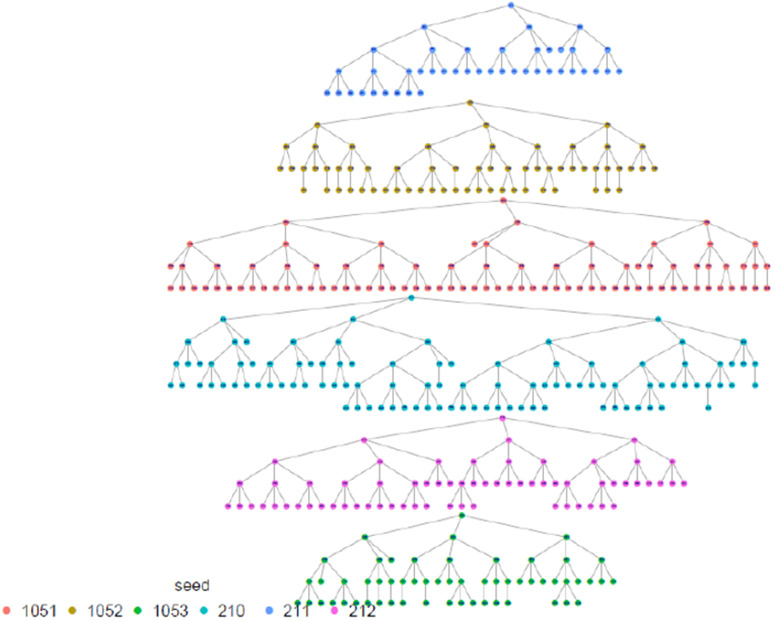
Data were collected from May 8th to June 24th, 2023, across 10 study sites countywide. Privatized network sampling (PNS) was used, which is a population size estimation method that uses the network information collected within a bio-behavioral survey (BBS) that used respondent-driven sampling (RDS). To estimate the FSW and sexually exploited minors' population size, three PNS estimators were used: Cross-Sample, Cross-Alter, and Cross-Network.
The national-level FSW population size was estimated at 98,587 (95% CI: 82,978-114,196), corresponding to 2.3% of the total adult female population aged 15 years and above in Rwanda. We estimated that in the City of Kigali, 5.3%, in the West Province, 2.2%, in the East and South province, 1.7% each, and in the North province 1.6% of adult female population 15 years of age and older who were FSW.
This was the first time that PNS was implemented as a PSE method in Rwanda, adding to the emerging tools that we have in the hard-to-reach PSE field. The PSE provides fundamental information to design, plan, and implement programs for FSW at the provincial level in Rwanda. Furthermore, these estimates will help to generate positive policy changes and to advocate for resources that will help in the effort to achieve a sustained HIV epidemic control in the country.
女性性工作者感染艾滋病毒和其他性传播感染的风险更高。此外,与普通人群中的成年女性相比,该群体中的艾滋病毒感染负担要高得多。估算女性性工作者的数量有助于通过项目设计、规划和实施来预防艾滋病毒/性传播感染。本研究的目的是提供卢旺达女性性工作者和遭受性剥削未成年人的最新全国人口规模估计数(PSE)及其地理分布。掌握艾滋病毒感染最严重人群(即女性性工作者)的人口规模估计数,可为确定分母提供依据,以便评估艾滋病毒项目在实现控制女性性工作者群体中艾滋病毒流行的国家和全球目标方面的绩效。
2023年5月8日至6月24日在全国10个研究地点收集数据。采用了私有网络抽样(PNS),这是一种人口规模估计方法,它利用在一项采用应答驱动抽样(RDS)的生物行为调查(BBS)中收集的网络信息。为了估算女性性工作者和遭受性剥削未成年人的人口规模,使用了三种PNS估计量:交叉样本、交叉变更和交叉网络。
全国层面的女性性工作者人口规模估计为98,587人(95%置信区间:82,978 - 114,196),占卢旺达15岁及以上成年女性总人口的2.3%。我们估计,在基加利市,女性性工作者占15岁及以上成年女性人口的5.3%,在西部省为2.2%,在东部省和南部省各为1.7%,在北部省为1.6%。
这是卢旺达首次将私有网络抽样作为一种人口规模估计方法实施,为我们在难以触及的人口规模估计领域增添了新工具。人口规模估计为卢旺达省级层面设计、规划和实施针对女性性工作者的项目提供了基础信息。此外,这些估计数将有助于推动积极的政策变革,并倡导获取资源,以助力该国实现持续的艾滋病毒流行控制。