Yang Jianhuan, Yu Fangfang, Wang Dexuan, Xu Maosheng, Luo Hongxia
Department of Pediatric Nephrology, The Second Affiliated Hospital and Yuying Children's Hospital of Wenzhou Medical University, Wenzhou, China.
Department of Ultrasonic Diagnosis, The Second Affiliated Hospital and Yuying Children's Hospital of Wenzhou Medical University, Wenzhou, China.
Insights Imaging. 2025 Aug 23;16(1):183. doi: 10.1186/s13244-025-02070-x.
Primary nephrotic syndrome (PNS) is a prevalent kidney disorder in pediatric patients, characterized by significant proteinuria, hypoalbuminemia, and edema, which poses serious health risks and economic burdens due to frequent relapses and hospitalizations. This study aims to explore the utility of shear wave elastography (SWE) as a novel, non-invasive biomarker for assessing renal health in this population.
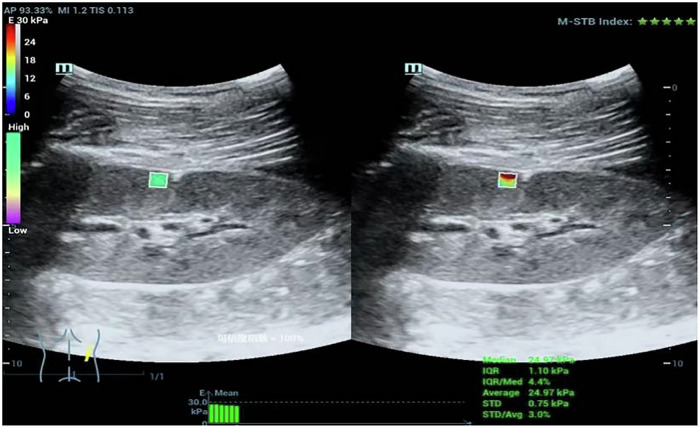
We used a cross-sectional design involving 76 pediatric patients with PNS and a control group, and measured renal stiffness through SWE The clinical characteristics of the nephrotic group were collected, including age, sex, disease duration, clinical type, 24-h urine protein, plasma albumin, and the relationship with 2D-SWE value was analyzed.
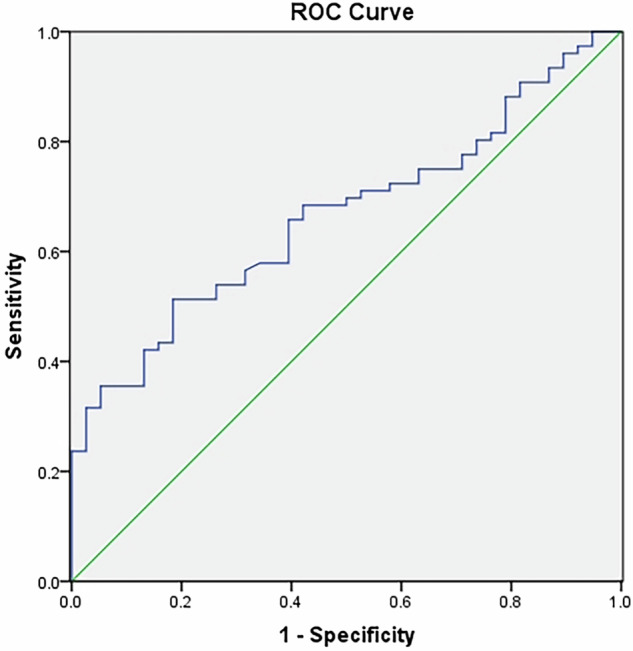
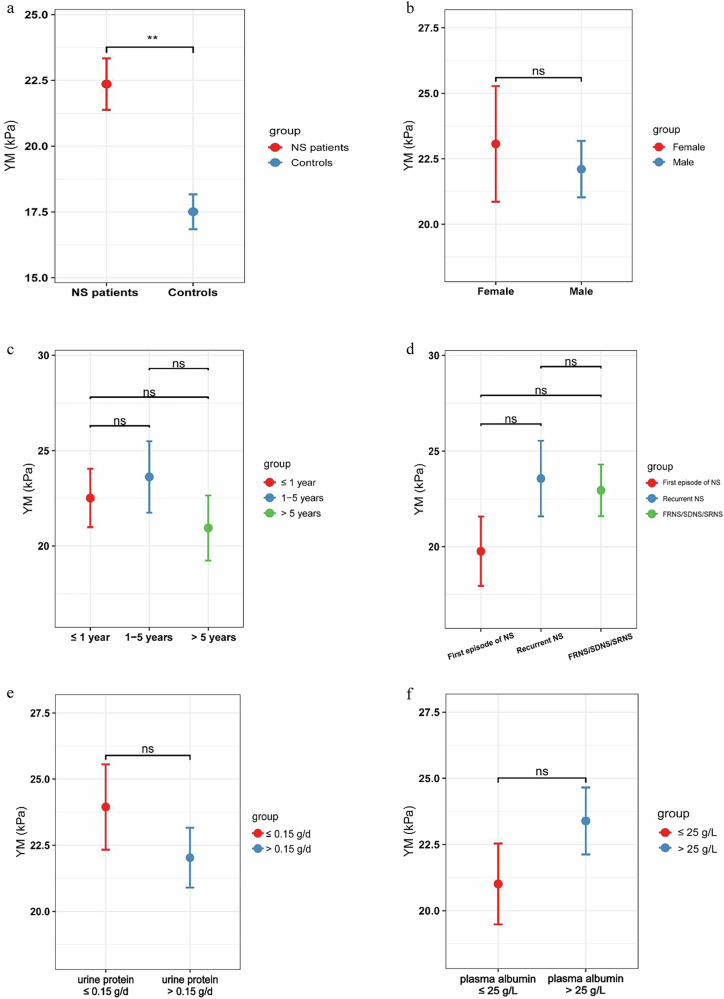
Our results demonstrated a significant difference in renal elasticity, with the nephrotic syndrome group exhibiting a mean shear wave velocity (YM) of 22.36 ± 8.53 kPa compared to 17.51 ± 4.09 kPa in controls (p < 0.05). Furthermore, the area under the ROC curve for SWE was 0.67, indicating moderate predictive capability for renal damage. Notably, there were no significant differences in YM values across various clinical classifications of nephrotic syndrome, suggesting a uniform renal damage assessment irrespective of clinical type. Additionally, renal elasticity did not significantly vary regardless of whether the patient's proteinuria had improved. (p = 0.464), indicating SWE's potential as an independent biomarker.
Our findings highlight the promise of SWE in enhancing diagnostic accuracy and prognostic evaluation in pediatric nephrotic syndrome.
Shear wave elastography is a valuable noninvasive method for assessing renal elasticity in children with primary nephrotic syndrome.
Shear wave elastography (SWE) can be used to evaluate the elasticity of renal tissue. SWE values were higher in children with PNS than in the control group. SWE is a valuable non-invasive method for assessing renal elasticity in children with PNS.
原发性肾病综合征(PNS)是儿科患者中一种常见的肾脏疾病,其特征为大量蛋白尿、低蛋白血症和水肿,由于频繁复发和住院,会带来严重的健康风险和经济负担。本研究旨在探讨剪切波弹性成像(SWE)作为一种新型非侵入性生物标志物,用于评估该人群肾脏健康状况的效用。
我们采用横断面设计,纳入76例患有PNS的儿科患者及一个对照组,并通过SWE测量肾脏硬度。收集肾病组的临床特征,包括年龄、性别、病程、临床类型、24小时尿蛋白、血浆白蛋白,并分析其与二维SWE值的关系。
我们的结果显示肾脏弹性存在显著差异,肾病综合征组的平均剪切波速度(YM)为22.36±8.53kPa,而对照组为17.51±4.09kPa(p<0.05)。此外,SWE的ROC曲线下面积为0.67,表明对肾脏损伤具有中等预测能力。值得注意的是,肾病综合征的各种临床分类中YM值无显著差异,这表明无论临床类型如何,肾脏损伤评估具有一致性。此外,无论患者蛋白尿是否改善,肾脏弹性均无显著变化(p=0.464),这表明SWE作为独立生物标志物的潜力。
我们的研究结果突出了SWE在提高儿科肾病综合征诊断准确性和预后评估方面的前景。
剪切波弹性成像是评估原发性肾病综合征患儿肾脏弹性的一种有价值的非侵入性方法。
剪切波弹性成像(SWE)可用于评估肾组织弹性。患有PNS的儿童的SWE值高于对照组。SWE是评估患有PNS的儿童肾脏弹性的一种有价值的非侵入性方法。