Yu Hao, Yuan Quan, Yu Rui, Ye Rongjie, Yang Shuqi, Niu Ming, Sun Yunyun, Ke Jingpeng, Feng Liuxing, Guo Ping, Liu Yujian, Yang Jingrui, Hong Zaifa, Ye Taozhu, Ni Weixiang, Wang Xin, Xie Zhenhao, Xu Jiahuan, Lin Chuncheng, Lv Lizhi, Wang Shuangjia, Zhan Chao
Department of Hepato-Biliary-Pancreatic and Vascular Surgery, the First Affiliated Hospital of Xiamen University, School of Medicine, Xiamen University, Xiamen, China.
Harbin Medical University Cancer Hospital, Harbin, 150000, China.
Cancer Immunol Immunother. 2025 Aug 6;74(9):283. doi: 10.1007/s00262-025-04136-7.
Neoadjuvant therapy (NAT) is a promising strategy to improve long-term outcomes in hepatocellular carcinoma (HCC), particularly for patients with borderline resectable. Targeted therapy, transarterial chemoembolization (TACE), immunotherapy, and radiotherapy are all effective NAT strategies for HCC; however, the optimal NAT regimen for HCC remains undefined.
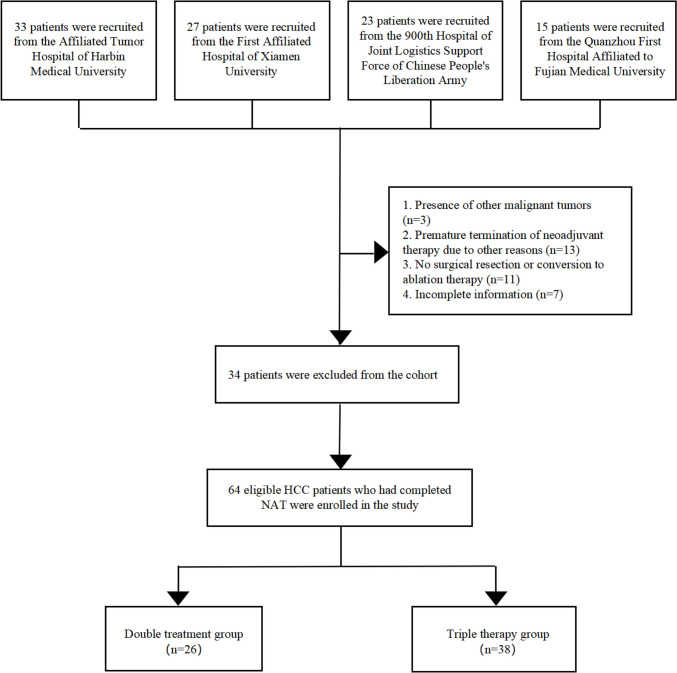
This multicentre retrospective study included 64 HCC patients who underwent NAT followed by surgical resection between 2020 and 2024 at four tertiary hospitals in China. Based on the treatment regimen, patients were divided into two groups: the dual-therapy group, which received TACE combined with either lenvatinib or bevacizumab, and the triple-therapy group, which additionally received anti-PD-1/PD-L1 immunotherapy. Survival outcomes and prognostic factors were evaluated using the Kaplan-Meier method and Cox proportional hazards models.
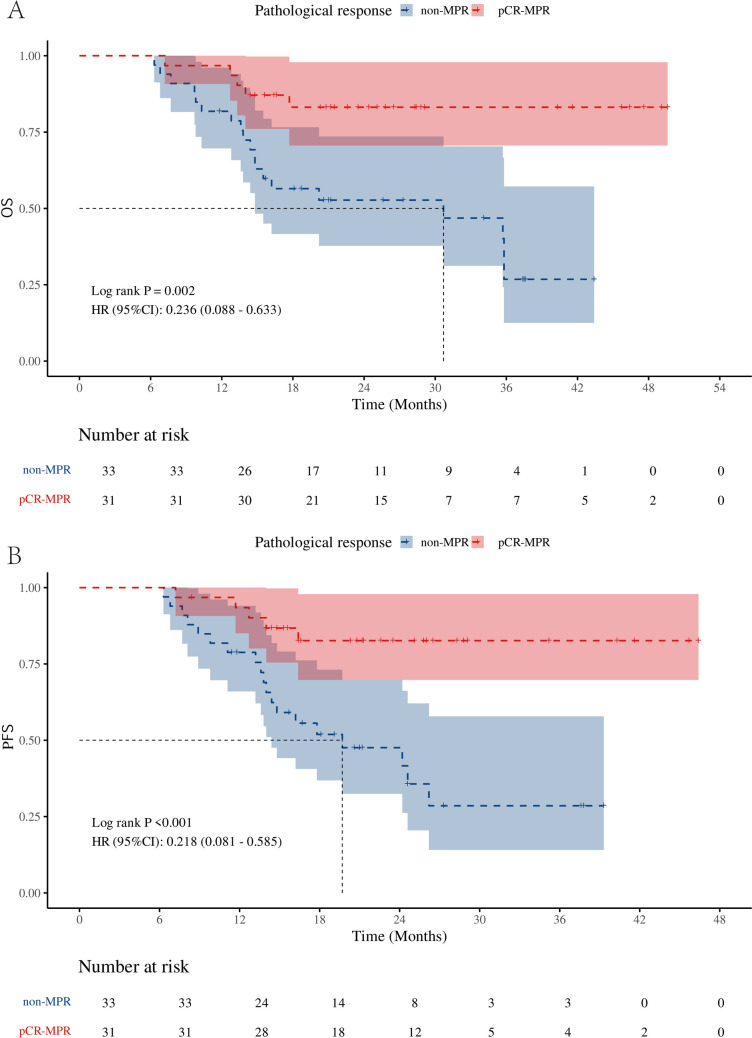
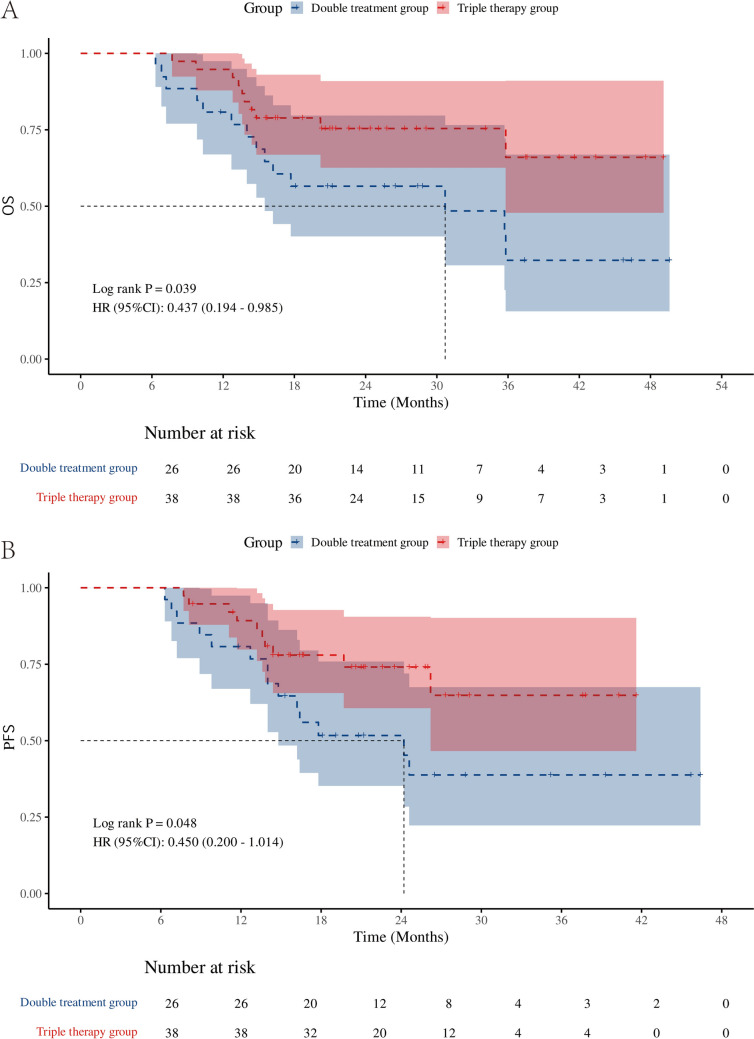
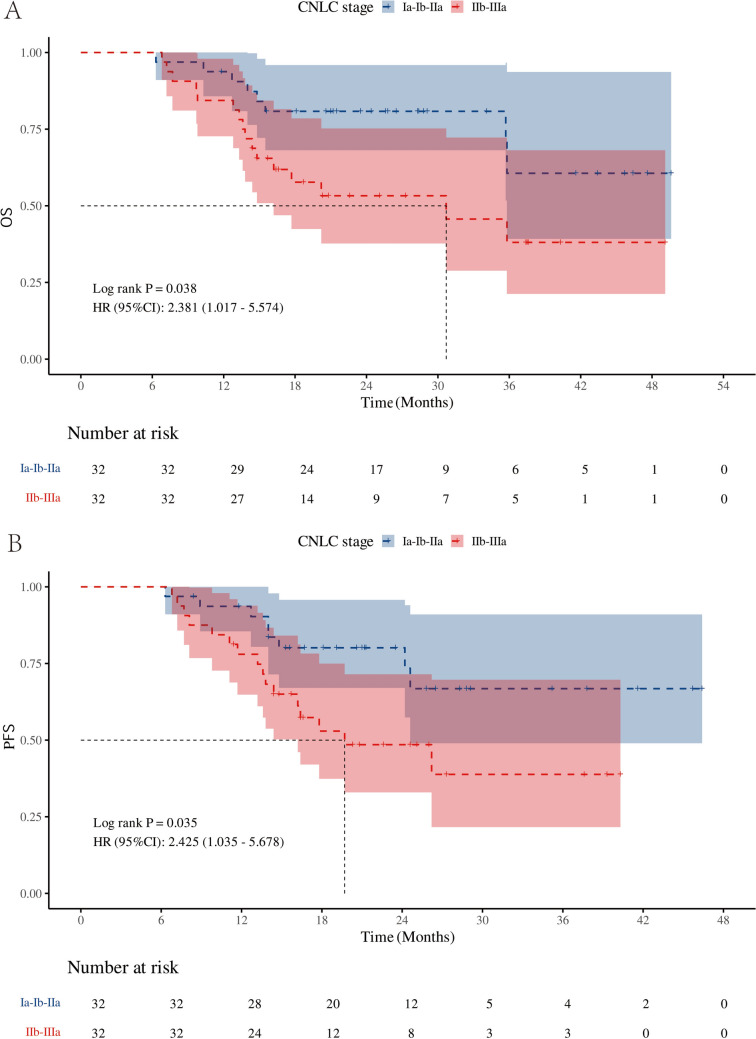
The triple-therapy group demonstrated significantly better progression-free survival (PFS) and overall survival (OS) compared to the dual-therapy group (PFS: HR = 0.450, P = 0.048; OS: HR = 0.437, P = 0.039). Multivariate Cox analysis identified triple therapy, lower tumour burden, and higher pathological response as favourable prognostic factors, whereas vascular invasion and elevated alpha-fetoprotein (AFP) levels were linked to poorer outcomes. Additionally, in this Chinese HCC cohort, the China Liver Cancer (CNLC) staging system appeared to provide superior prognostic stratification compared to the Barcelona Clinic Liver Cancer (BCLC) system.
In the context of NAT for HCC, triple therapy-combining TACE, targeted agents, and immunotherapy-appears to be a more effective treatment option compared to dual therapy.
新辅助治疗(NAT)是改善肝细胞癌(HCC)长期预后的一种有前景的策略,尤其对于临界可切除的患者。靶向治疗、经动脉化疗栓塞(TACE)、免疫治疗和放射治疗都是治疗HCC有效的NAT策略;然而,HCC的最佳NAT方案仍未明确。
这项多中心回顾性研究纳入了2020年至2024年期间在中国四家三级医院接受NAT并随后进行手术切除的64例HCC患者。根据治疗方案,患者被分为两组:双联治疗组,接受TACE联合乐伐替尼或贝伐单抗;三联治疗组,额外接受抗PD-1/PD-L1免疫治疗。使用Kaplan-Meier法和Cox比例风险模型评估生存结局和预后因素。
与双联治疗组相比,三联治疗组的无进展生存期(PFS)和总生存期(OS)显著更好(PFS:HR = 0.450,P = 0.048;OS:HR = 0.437,P = 0.039)。多变量Cox分析确定三联治疗、较低的肿瘤负荷和较高的病理反应为有利的预后因素,而血管侵犯和甲胎蛋白(AFP)水平升高与较差的结局相关。此外,在这个中国HCC队列中,与巴塞罗那临床肝癌(BCLC)系统相比,中国肝癌(CNLC)分期系统似乎提供了更好的预后分层。
在HCC的NAT背景下,与双联治疗相比,三联治疗(联合TACE、靶向药物和免疫治疗)似乎是一种更有效的治疗选择。