Lee Junsang, Jeong Jinheon, Nguyen Van Phuc, Hong Seokkyoon, Paulus Yannis M, Lee Chi Hwan
Weldon School of Biomedical Engineering, Purdue University, West Lafayette, IN 47907 USA.
Department of Ophthalmology, Wilmer Eye Institute, Johns Hopkins University, Baltimore, MD 21287 USA.
NPG Asia Mater. 2025;17(1):33. doi: 10.1038/s41427-025-00614-7. Epub 2025 Aug 22.
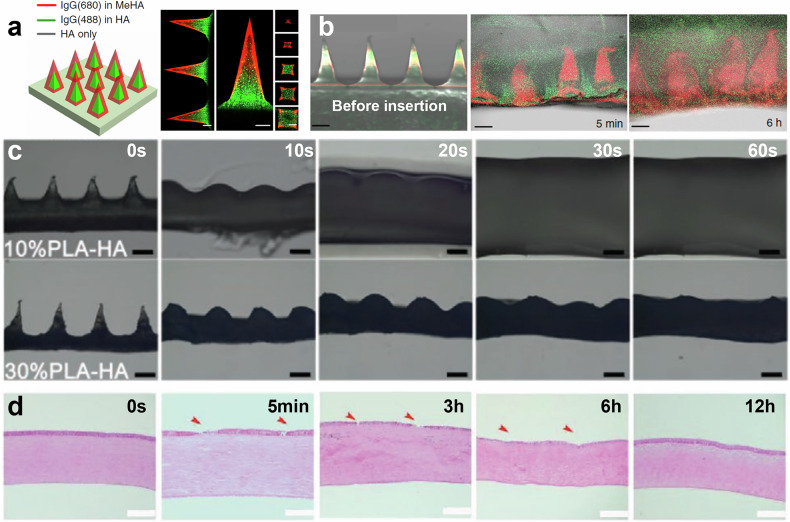
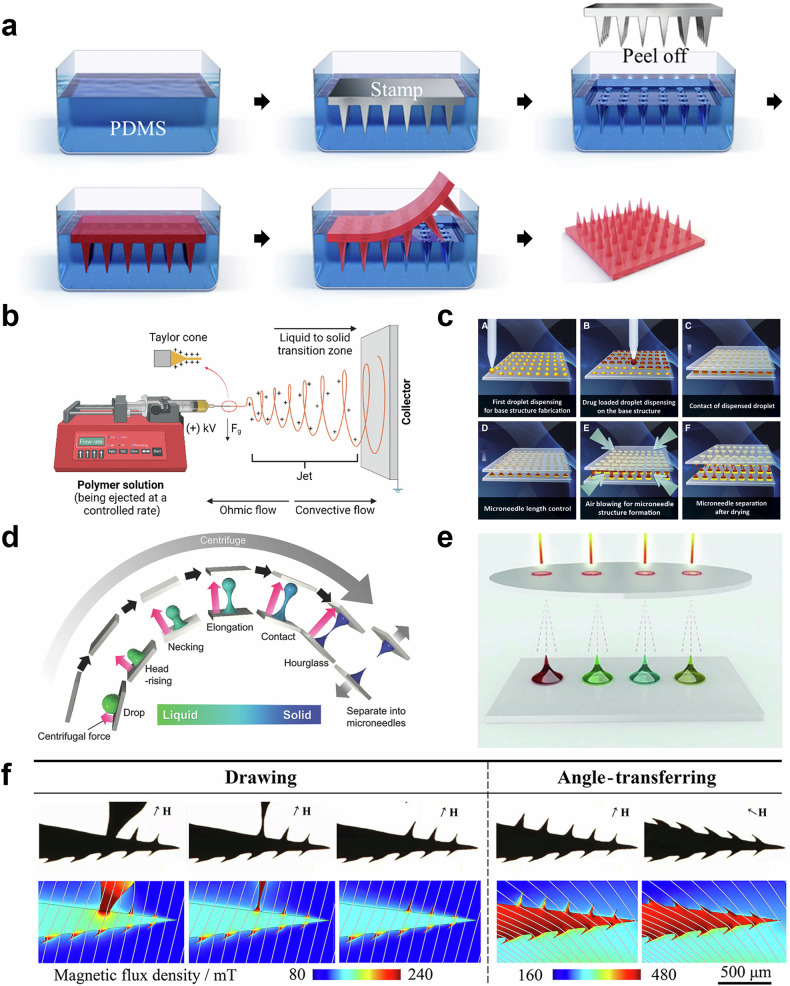
Microneedles (MNs) have emerged as a promising technology for minimally invasive drug delivery, offering significant advantages in the treatment of ocular diseases. These miniaturized needles enable precise, localized drug delivery directly into specific tissues of the eye, such as the cornea, sclera, vitreous, or retina, while minimizing pain and discomfort. MNs can be fabricated from various biocompatible materials, including metals, silicon, and biodegradable polymers, making them highly adaptable to various clinical applications. Recent advancements in MN design include the integration of 3D printing technologies to create highly customized geometries for improved drug delivery precision, the use of smart materials that enable stimuli-responsive and sustained drug release, and the development of hybrid microneedles combining different polymers to enhance both mechanical strength and controlled drug release. These innovations have established MNs as a superior alternative to traditional methods like eye drops or intravitreal injections, which often face issues of limited bioavailability and patient compliance. This review summarizes the current state of research on MN-based ocular drug delivery, focusing on material developments, fabrication methods, drug release mechanisms, and implantation techniques. Future directions for MN technology in ophthalmology are also discussed, highlighting its potential to improve treatment outcomes for complex ocular diseases.
微针已成为一种很有前景的微创给药技术,在眼科疾病治疗中具有显著优势。这些微型针能够将药物精确、局部地直接递送至眼部的特定组织,如角膜、巩膜、玻璃体或视网膜,同时将疼痛和不适降至最低。微针可以由各种生物相容性材料制成,包括金属、硅和可生物降解的聚合物,使其高度适用于各种临床应用。微针设计的最新进展包括集成3D打印技术以创建高度定制的几何形状,从而提高药物递送精度;使用能够实现刺激响应和持续药物释放的智能材料;以及开发结合不同聚合物的混合微针,以增强机械强度和控制药物释放。这些创新使微针成为眼药水或玻璃体内注射等传统方法的优质替代方案,传统方法常常面临生物利用度有限和患者依从性差的问题。本综述总结了基于微针的眼部药物递送的研究现状,重点关注材料开发、制造方法、药物释放机制和植入技术。还讨论了微针技术在眼科领域的未来发展方向,突出了其改善复杂眼科疾病治疗效果的潜力。