Rousan Liqa A, Zaitoun Khaled J, Freihat Sofyan, Albatayneh Mohammad A, Al Serhan Abdel Rahman M, Alsalkhadi Aghyad, Tayyem Saad, Abdel Kareem Ali M
Department of Radiology and Nuclear Medicine, Jordan University of Science and Technology, Irbid, Jordan.
Faculty of Medicine, Jordan University of Science and Technology, Irbid, Jordan.
BMC Med Imaging. 2025 Aug 27;25(1):354. doi: 10.1186/s12880-025-01900-0.
Hydronephrosis is a common finding on renal ultrasound, but its physiological causes-such as hydration-induced distention-remain under-recognized in healthy individuals. Misinterpreting such cases as pathological may lead to unnecessary investigations. This study aimed to determine whether rapid oral hydration induces transient hydronephrosis in healthy adults, and to characterize its timing, laterality, and reversibility.
Fifty-six healthy volunteers (30 males, 26 females; aged 19–45 years) without chronic illnesses underwent baseline renal and bladder ultrasound, followed by rapid oral hydration (20 ml/Kg within 15–30 min). Ultrasound scans were repeated at 60 and 90 min post-hydration, before and after voiding. Hydronephrosis was graded using the Radiology classification system. Statistical significance was defined as < 0.005.
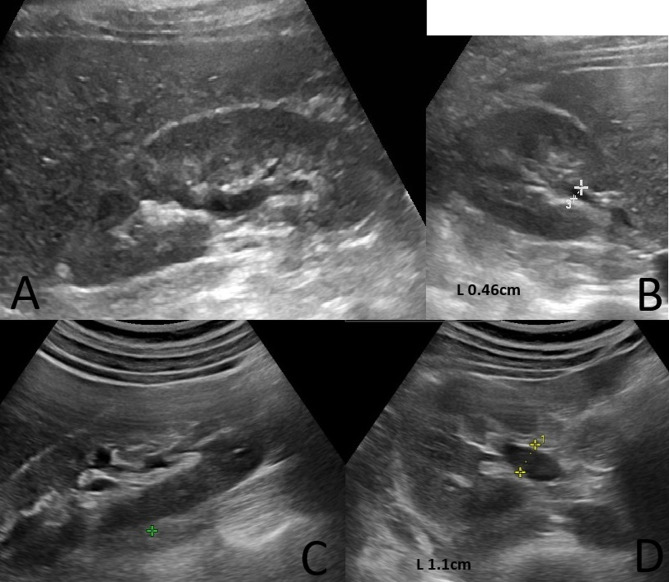
Fifty-six healthy adults (30 males, 26 females; aged 19–45 years) were enrolled in the study. At 60 min, 46.6% of participants developed hydronephrosis, increasing slightly to 48.2% at 90 min. A significant increase in hydronephrosis grade over time was observed ( = 0.0005), predominantly affecting the right kidney ( < 0.001). Post-void imaging showed partial resolution ( = 0.0003), but moderate hydronephrosis persisted in 12.5% at 90 min. Bladder volume did not significantly correlate with hydronephrosis severity. Although males had larger kidneys and bladder volumes, there was no significant gender difference in hydronephrosis incidence.
Rapid hydration can induce transient, non-obstructive hydronephrosis in healthy adults, especially on the right side. Radiologists and clinicians must recognize this physiological variant to avoid misdiagnosis and unnecessary work-up in asymptomatic patients undergoing renal ultrasound.
Not applicable.
肾积水是肾脏超声检查中常见的表现,但其生理原因,如因水化引起的扩张,在健康个体中仍未得到充分认识。将此类情况误诊为病理性可能会导致不必要的检查。本研究旨在确定快速口服水化是否会在健康成年人中诱发短暂性肾积水,并对其发生时间、单侧性和可逆性进行特征描述。
56名无慢性疾病的健康志愿者(30名男性,26名女性;年龄19 - 45岁)接受了基线肾脏和膀胱超声检查,随后进行快速口服水化(15 - 30分钟内每千克体重摄入20毫升)。在水化后60分钟和90分钟、排尿前后重复进行超声扫描。肾积水采用放射学分类系统进行分级。统计学显著性定义为P < 0.005。
56名健康成年人(30名男性,26名女性;年龄19 - 45岁)纳入本研究。60分钟时,46.6%的参与者出现肾积水,90分钟时略有增加至48.2%。观察到肾积水分级随时间显著增加(P = 0.0005),主要影响右肾(P < 0.001)。排尿后成像显示部分缓解(P = 0.0003),但90分钟时仍有12.5%的患者存在中度肾积水。膀胱容量与肾积水严重程度无显著相关性。虽然男性的肾脏和膀胱容量较大,但肾积水发生率在性别上无显著差异。
快速水化可在健康成年人中诱发短暂性、非梗阻性肾积水,尤其是在右侧。放射科医生和临床医生必须认识到这种生理变异,以避免对接受肾脏超声检查的无症状患者进行误诊和不必要的检查。
不适用。