Duguay Brett A, McCormick Craig
Department of Microbiology & Immunology, Dalhousie University, Halifax, NS, Canada.
Bio Protoc. 2025 Aug 20;15(16):e5422. doi: 10.21769/BioProtoc.5422.
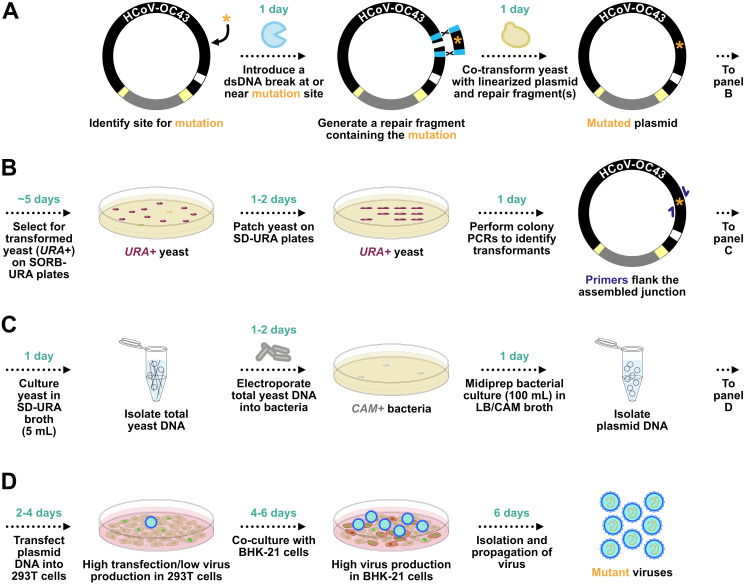
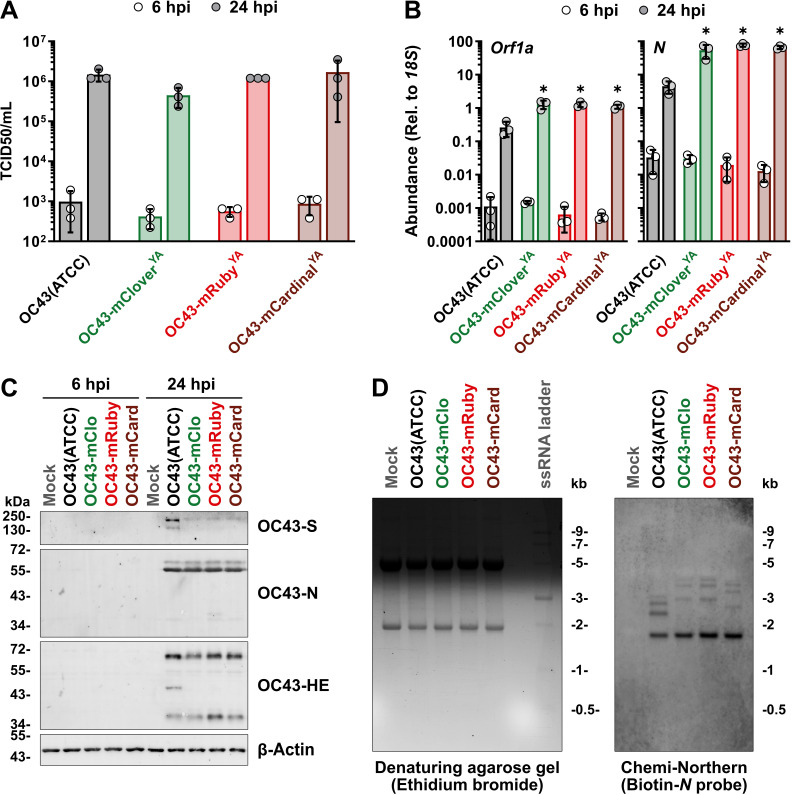
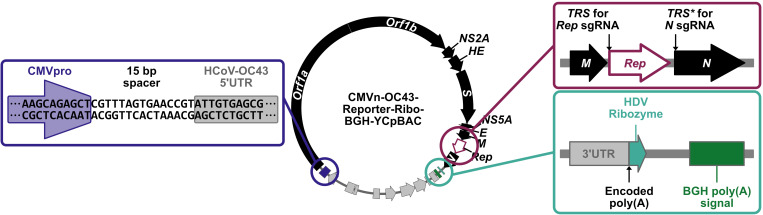
Human coronavirus OC43 (HCoV-OC43) is an endemic "common cold" coronavirus widely used to study fundamental aspects of coronavirus biology and to test therapeutic interventions. Recently, we used a yeast-based reverse genetics strategy to create recombinant HCoV-OC43 and fluorescent reporter viruses. We assembled a DNA copy of the HCoV-OC43 genome from six linear dsDNA fragments and a linearized yeast centromeric plasmid/bacterial artificial chromosome (YCpBAC) vector in using transformation-associated recombination (TAR). Reporter genes encoding mCardinal fluorescent protein or histone H2B fused to mClover3 () or mRuby3 () were inserted into an intergenic region between the HCoV-OC43 and genes. Assembled full-length HCoV-OC43-encoding plasmids were delivered into permissive mammalian cells to initiate viral gene expression, genome replication, and production of infectious progeny. This technique allows for the precise mutagenesis of any area of the HCoV-OC43 genome using homologous recombination, yielding genetically defined reference plasmids for the future generation of HCoV-OC43 virus stocks. Key features • Utilizes the previously developed TAR assembly method [1] to assemble and mutagenize a double-stranded DNA copy of the single-stranded RNA HCoV-OC43 genome [2]. • The availability of multiple sub-genomic and full-length HCoV-OC43-encoding plasmids provides flexibility in how substitution or deletion mutations can be incorporated using PCR or restriction cloning. • Reporter viruses enable rapid visualization and quantification of infection. • Generate and isolate a mutagenized HCoV-OC43 plasmid in approximately 14 days, followed by rescue of infectious virus in an additional 12-16 days.
人冠状病毒 OC43(HCoV-OC43)是一种地方性流行的“普通感冒”冠状病毒,广泛用于研究冠状病毒生物学的基本方面以及测试治疗干预措施。最近,我们使用基于酵母的反向遗传学策略创建了重组 HCoV-OC43 和荧光报告病毒。我们通过转化相关重组(TAR),从六个线性双链 DNA 片段和一个线性化的酵母着丝粒质粒/细菌人工染色体(YCpBAC)载体中组装了 HCoV-OC43 基因组的 DNA 拷贝。将编码 mCardinal 荧光蛋白或与 mClover3()或 mRuby3()融合的组蛋白 H2B 的报告基因插入到 HCoV-OC43 基因和基因之间的基因间隔区。将组装好的全长 HCoV-OC43 编码质粒导入允许的哺乳动物细胞中,以启动病毒基因表达、基因组复制和感染性后代的产生。该技术允许使用同源重组对 HCoV-OC43 基因组的任何区域进行精确诱变,从而产生用于未来一代 HCoV-OC43 病毒株的基因定义参考质粒。关键特性•利用先前开发的 TAR 组装方法[1]来组装和诱变单链 RNA HCoV-OC43 基因组的双链 DNA 拷贝[2]。•多种亚基因组和全长 HCoV-OC43 编码质粒的可用性为使用 PCR 或限制性克隆引入替代或缺失突变提供了灵活性。•报告病毒能够快速可视化和量化感染情况。•在大约 14 天内生成并分离诱变的 HCoV-OC43 质粒,随后在另外 12 - 16 天内拯救感染性病毒。