Qian Kecheng, Jia Zhaoxing, Cai Qian, Jiang Tianxiang, Gan Lin, Yang Jinding, Cen Xiaokai, Zhao Yuhui, Di Zhong, Ma Congcong, Lin Xianming
The Third School of Clinical Medicine, School of Rehabilitation Medicine), Zhejiang Chinese Medical University, Hangzhou, 310053, Zhejiang, China.
The Third Affiliated Hospital of Zhejiang Chinese Medical University, Hangzhou, 310005, Zhejiang, China.
Sci Rep. 2025 Aug 28;15(1):31677. doi: 10.1038/s41598-025-16907-4.
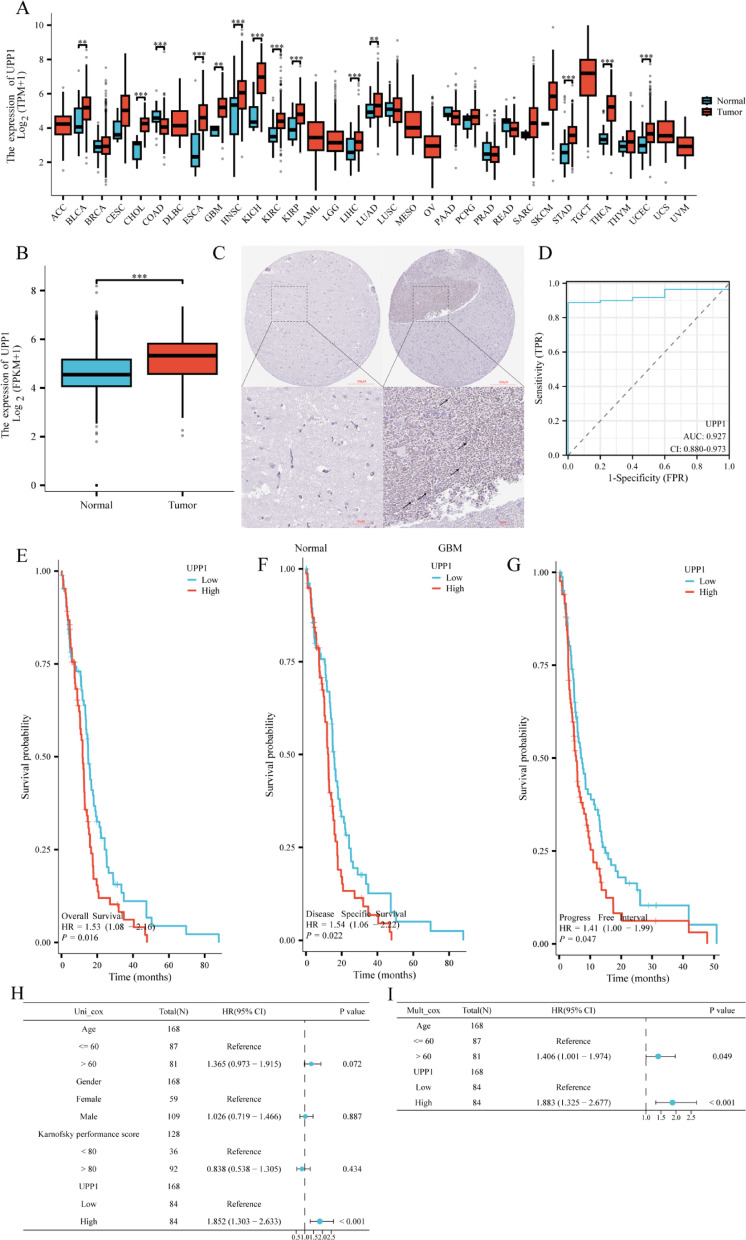
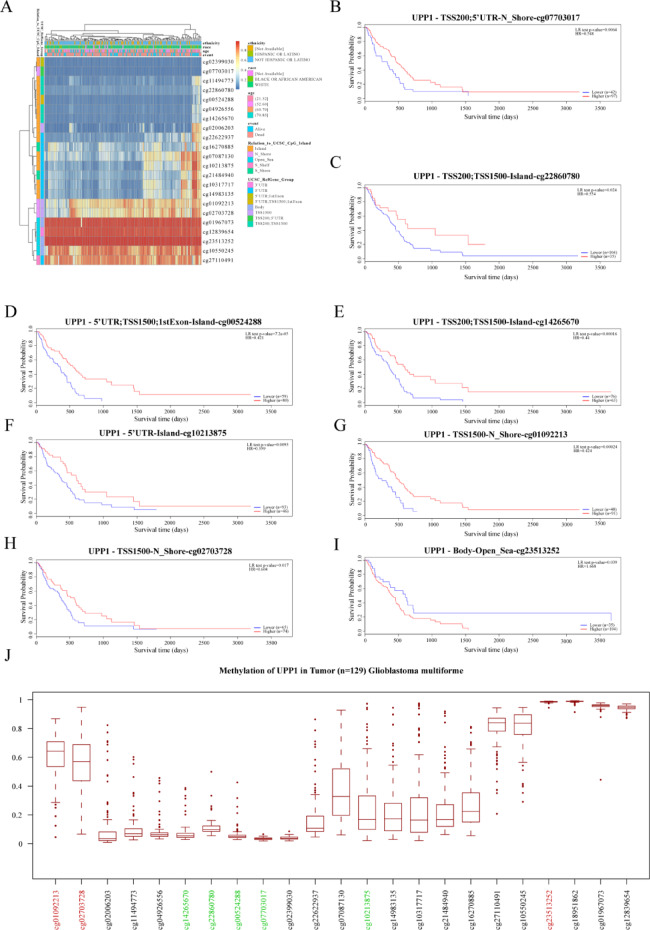
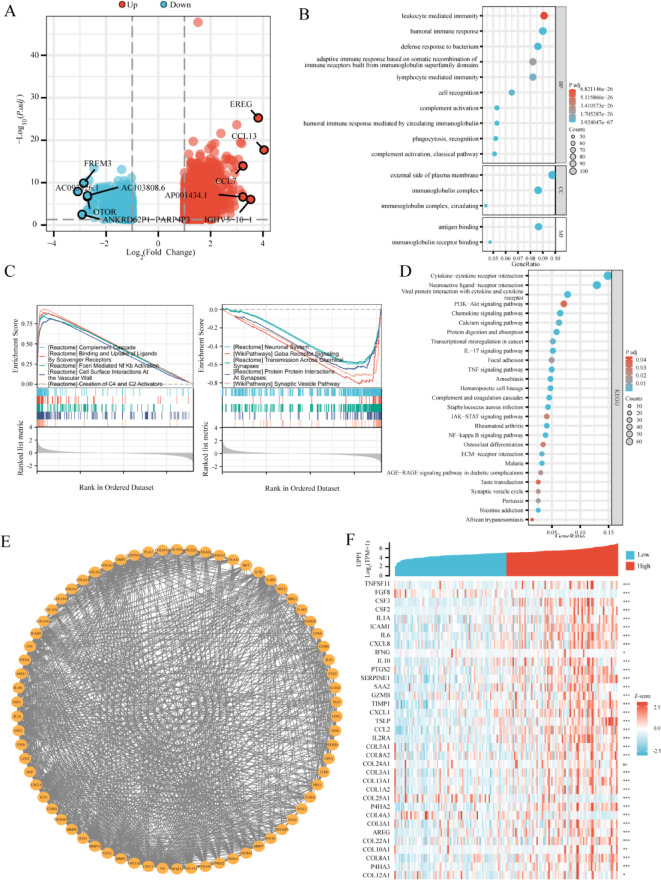
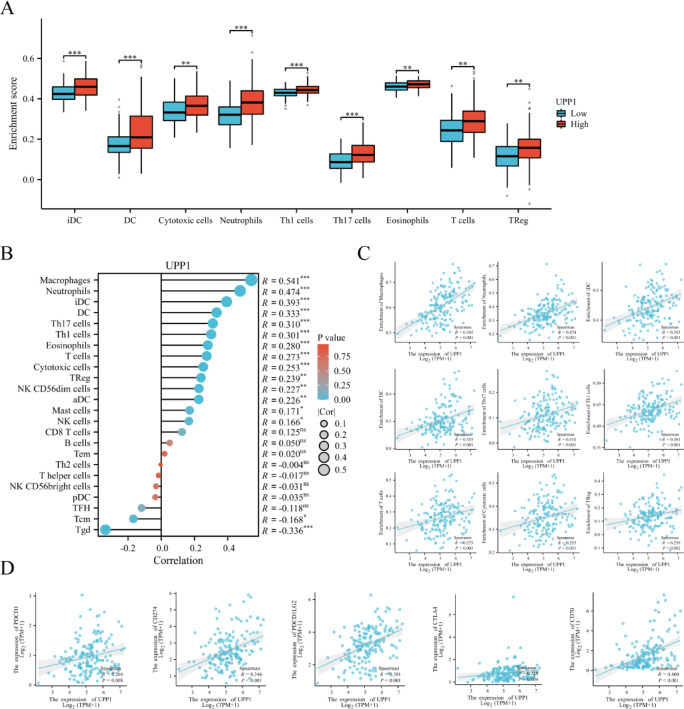
Glioblastoma multiforme (GBM) is the most common and aggressive malignant primary brain tumor. Current therapies (temozolomide/radiotherapy) often encounter resistance, necessitating novel molecular targets. Bioinformatics analysis was performed for the data obtained from TCGA, COSMIC, cbioPortal, and MethSurv databases. Tools such as GO, KEGG, GSEA, ROC, and protein-protein interactions (PPI) were employed to investigate the role that UPP1 has on GBM. The effects of UPP1 were further validated using RT-PCR and Western blotting(WB). UPP1 overexpression correlated with poor survival (P < 0.05) and immunosuppression, showing positive associations with immune infiltrates (Tregs, DCs, Th1/Th17 cells) and inflammation-related pathway activation. Silencing UPP1 suppressed proliferation (P < 0.001) in glioma cells. Several DNA methylation patterns of UPP1(8 CpG sites, e.g., cg07703017) were identified as having significant prognostic value. UPP1 drives immunosuppression and serves as a dual biomarker: expression levels stratify prognosis, while methylation profiles offer therapeutic insights. Its immunometabolic regulation positions UPP1 as a promising target for GBM precision therapy.
多形性胶质母细胞瘤(GBM)是最常见且侵袭性最强的原发性恶性脑肿瘤。目前的治疗方法(替莫唑胺/放疗)常常遭遇耐药问题,因此需要新的分子靶点。对从TCGA、COSMIC、cbioportal和MethSurv数据库获得的数据进行了生物信息学分析。采用基因本体论(GO)、京都基因与基因组百科全书(KEGG)、基因集富集分析(GSEA)、受试者工作特征曲线(ROC)以及蛋白质-蛋白质相互作用(PPI)等工具来研究泛素磷酸酶1(UPP1)在GBM中的作用。通过逆转录聚合酶链反应(RT-PCR)和蛋白质免疫印迹法(WB)进一步验证了UPP1的作用。UPP1过表达与较差的生存率(P < 0.05)和免疫抑制相关,与免疫浸润细胞(调节性T细胞、树突状细胞、辅助性T细胞1/辅助性T细胞17)以及炎症相关通路激活呈正相关。沉默UPP1可抑制胶质瘤细胞的增殖(P < 0.001)。已确定UPP1的几种DNA甲基化模式(8个CpG位点,如cg07703017)具有显著的预后价值。UPP1驱动免疫抑制并作为一种双重生物标志物:其表达水平可分层判断预后,而甲基化谱则为治疗提供见解。其免疫代谢调节作用使UPP1成为GBM精准治疗的一个有前景的靶点。