Salehi Ava, Rahimi Mohammad Karim, Bagheri Fatemeh
Department of Microbiology, Medical Faculty, Islamic Azad Medical University, Tehran, Iran.
Department of Basic Sciences, Faculty of Pharmacy and Pharmaceutical sciences, Tehran Medical sciences, Islamic Azad University, Tehran, Iran.
GMS Hyg Infect Control. 2025 Jul 11;20:Doc40. doi: 10.3205/dgkh000569. eCollection 2025.
Colonization of pregnant women by can lead to intrauterine infections after childbirth and potentially life-threatening infections in newborns. The current effectiveness of available antimicrobials is decreasing, posing a serious threat. Hence, there is an urgent requirement to develop novel categories of antimicrobial agents that can efficiently and swiftly eradicate these infections. To developed new strategies in the management and reduction of infections arising from , our objective was to evaluate the antibacterial efficacy of tungsten nanoparticles (WO) on the expression of tetracycline and erythromycin-resistance genes in isolated from pregnant women.
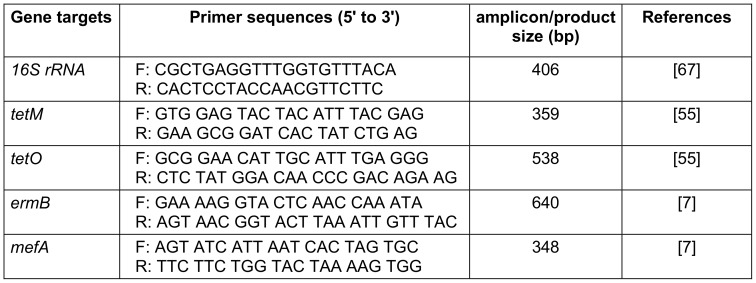
A total of 46 Group-B streptococcus (GBS) isolates from rectovaginal swabs, blood, and urine cultures were obtained from pregnant women (13-35 weeks gestation) attending Central and Gynecological Hospitals in Tehran, Iran. The identification of GBS isolates was conducted using a variety of routine bacteriological techniques and targeted assays for the molecular characterization of the GBS isolates. The antimicrobial susceptibility test was carried out according to the Kirby-Bauer method. PCR was employed to screen for the presence of tetracycline and erythromycin resistance-associated genes. Tungsten oxide (WO) nanomaterials were successfully synthesized and characterized using FE-SEM (field emission scanning electron microscopy), and DLS (dynamic light scattering) techniques. The microdilution assay was used to assess the antimicrobial efficacy of WO nanostructures. Furthermore, real-time PCR was employed to investigate the effectiveness of WO nanostructures in the regulation of the expression of the and resistance genes.
The findings of the antibiotic susceptibility assays demonstrated a considerable proportion of strains with high resistance to tetracycline (87%), erythromycin (71.4%), and clindamycin (63%). Conversely, the resistance rates for chloramphenicol and levofloxacin were 8.7% and 6.5%, respectively. The results of antibiotic susceptibility assays revealed high-resistance strains to tetracycline (87%), erythromycin (71.4%), and clindamycin (63%), while resistance rates chloramphenicol, levofloxacin, penicillin and ampicillin were 33.3%, 14.8%, 11.1%, and 7.4%, respectively. In addition to the mentioned antibiotics, it is worth noting that all strains exhibited sensitivity to other antibiotics such as ceftriaxone, linezolid, and vancomycin. Of the 24 (88.8%) erythromycin-resistant/intermediate isolates, the gene was found in 16 (66.6%), and the gene in 1 (4.2%) isolates. Furthermore, the and genes were recovered by 83.3% and 4.2% of the tetracycline-resistant isolates, respectively. By utilizing FE-SEM and DLS techniques, it was estimated that the average size of the WO nanomaterials were 100 nm and 51.2 nm, respectively. WO displayed varying effectiveness against 27 strains, with minimal inhibitory concentration (MIC) ranging from 500 to 1,000 µg/mL. In addition, the application of nanostructures induced a considerable down-regulation of the antibiotic resistance genes , relative to the untreated isolate.
The findings indicate that tungsten trioxide nanoparticles hold the potential to serve as a promising pathway for the development of new antibacterial substances, with the specific aim of addressing the problem of antibiotic resistance in infections caused by .
孕妇感染 可导致产后宫内感染,并可能给新生儿带来危及生命的感染。现有抗菌药物的有效性正在下降,构成严重威胁。因此,迫切需要开发新型抗菌药物,能够有效且迅速地根除这些感染。为制定管理和减少因 引起的感染的新策略,我们的目标是评估钨纳米颗粒(WO)对从孕妇分离出的 中四环素和红霉素抗性基因表达的抗菌效果。
从伊朗德黑兰中央妇产科医院就诊的孕妇(妊娠13 - 35周)的直肠阴道拭子、血液和尿液培养物中,共获得46株B族链球菌(GBS)分离株。采用多种常规细菌学技术对GBS分离株进行鉴定,并进行靶向检测以对GBS分离株进行分子特征分析。根据 Kirby - Bauer 方法进行抗菌药物敏感性试验。采用PCR筛选四环素和红霉素抗性相关基因的存在情况。使用场发射扫描电子显微镜(FE - SEM)和动态光散射(DLS)技术成功合成并表征了氧化钨(WO)纳米材料。采用微量稀释法评估WO纳米结构的抗菌效果。此外,采用实时PCR研究WO纳米结构对 和 抗性基因表达调控的有效性。
抗生素敏感性试验结果表明,相当比例的 菌株对四环素(87%)、红霉素(71.4%)和克林霉素(63%)具有高抗性。相反,氯霉素和左氧氟沙星的抗性率分别为8.7%和6.5%。抗生素敏感性试验结果显示, 菌株对四环素(87%)、红霉素(71.4%)和克林霉素(63%)具有高抗性,而氯霉素、左氧氟沙星、青霉素和氨苄西林的抗性率分别为33.3%、14.8%、11.1%和7.4%。除上述提到的抗生素外,值得注意的是,所有菌株对其他抗生素如头孢曲松、利奈唑胺和万古霉素均表现出敏感性。在24株(88.8%)红霉素耐药/中介分离株中,16株(66.6%)检测到 基因,1株(4.2%)检测到 基因。此外,分别有83.3%和4.2%的四环素耐药分离株检测到 和 基因。通过FE - SEM和DLS技术估计,WO纳米材料的平均尺寸分别为100 nm和51.2 nm。WO对27株 菌株显示出不同的有效性,最低抑菌浓度(MIC)范围为500至1000 μg/mL。此外,相对于未处理的分离株,纳米结构的应用导致抗生素抗性基因 、 显著下调。
研究结果表明,三氧化钨纳米颗粒有潜力成为开发新型抗菌物质的一条有前景的途径,具体目标是解决由 引起的感染中的抗生素耐药性问题。


