Panickar Radhika, Alexander Benny, Freeman T Edwin, Rangari Vijaya
Department of Materials Science and Engineering, Tuskegee University, Tuskegee, Alabama 36088, United States.
Mars Wrigley, Global Innovation Center,1132 W Blackhawk Street, Chicago, Illinois 60642, United States.
ACS Omega. 2025 Aug 12;10(33):37053-37065. doi: 10.1021/acsomega.5c00830. eCollection 2025 Aug 26.
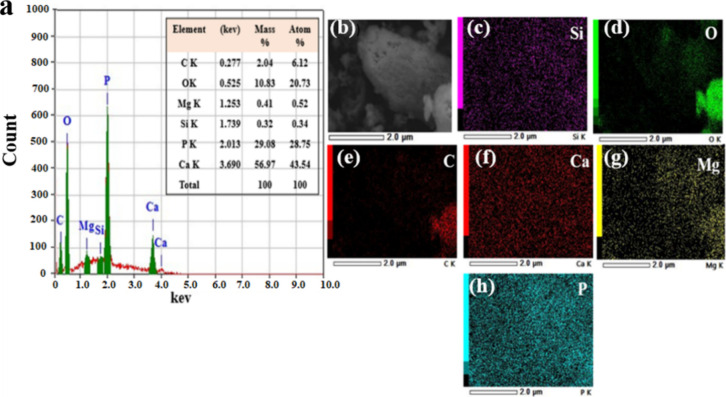
The present study focuses on improving the flexibility of PLA by reinforcing it with a nanohydroxyapatite (n-HAp) filler. The n-HAp was synthesized via pink perch fish scales (PPFS) using a simple and feasible pyrolysis method and was characterized using XRD, FTIR, Raman spectroscopy, TGA, SEM, and TEM. n-Hap of 0.25, 0.5, 0.75, and 1 wt % was used to reinforce the PLA matrix, and PLA_HAp composite blown films were extruded for further studies. The PLA_HAp composite blown films were characterized by using XRD, FTIR, Raman spectroscopy, and SEM to understand the interaction of the n-HAP in the PLA matrix. The thermal and mechanical analyses of the PLA_HAp blown films reveal that a low concentration of n-HAp can reduce the thermal stability and improve the flexibility of the films. The thermal characterizations infer that n-HAp in PLA acts as a nucleating center in the PLA backbone to improve the flexibility of films. Tensile results show that PLA_HAp 0.5 exhibited maximum flexibility with elongation at break of 20%, which is a 400% enhancement compared to neat PLA. The WVTR analysis of PLA-HAp composites, compared to neat PLA blown films, revealed a reduction in water permeability by 56% for PLA_HAp 0.5 and 66% for PLA_HAp 1 under ambient conditions, making them suitable for food packaging applications.
本研究聚焦于通过用纳米羟基磷灰石(n-HAp)填料增强聚乳酸(PLA)来提高其柔韧性。n-HAp是通过粉红鲈鱼鱼鳞(PPFS)采用简单可行的热解方法合成的,并通过X射线衍射(XRD)、傅里叶变换红外光谱(FTIR)、拉曼光谱、热重分析(TGA)、扫描电子显微镜(SEM)和透射电子显微镜(TEM)进行表征。使用0.25、0.5、0.75和1 wt%的n-Hap来增强PLA基体,并挤出PLA_HAp复合吹塑薄膜用于进一步研究。通过XRD、FTIR、拉曼光谱和SEM对PLA_HAp复合吹塑薄膜进行表征,以了解n-HAP在PLA基体中的相互作用。PLA_HAp吹塑薄膜的热分析和力学分析表明,低浓度的n-HAp会降低热稳定性并提高薄膜的柔韧性。热表征推断,PLA中的n-HAp在PLA主链中充当成核中心以提高薄膜的柔韧性。拉伸结果表明,PLA_HAp 0.5表现出最大柔韧性,断裂伸长率为20%,与纯PLA相比提高了400%。与纯PLA吹塑薄膜相比,PLA-HAp复合材料的水蒸气透过率(WVTR)分析表明,在环境条件下,PLA_HAp 0.5的透水性降低了56%,PLA_HAp 1的透水性降低了66%,使其适用于食品包装应用。